Search

OCI closing Korean solar quality polysilicon plants on US$ 636m problems cost
has actually been the ramp of brand-new low-priced polysilicon ability in China, the major market for the high-purity product. Polysilicon procedure stay at
Feb 12, 2020 // Manufacturing News, China, polysilicon, c-si manufacturing, wacker chemie, Asia, Korea, oci chemical, hanwha chemical, tongwei group
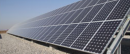
Solargiga’s unaudited Jan-Sept revenue spikes 11% on year
with mono ingot and wafer production, as well as the delay of changes to China’s solar policy.
Last month, Solargiga revealed that it had
Oct 16, 2019 // Manufacturing News, Markets & Finance News, Hong Kong, Solargiga, Taiwan
BYD To Start Supply of Batteries to Tesla Soon
batteries to the leading electric vehicle vendor on the planet-- Tesla. The China-based company's senior exec Lian Yubo said during an interview with the state
Jun 9, 2022 // Markets & Finance News, Toyota, Elon Musk, BYD, electric vehicle, CATL, LFP batteries, Lian Yubo, lithium-iron-phosphate batteries, Wang Chuanfu
China’s October Solar Surge Signals Renewed Momentum
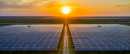
China installed 12.6 GW of solar in October, up 30% from September, lifting year-to-date additions to nearly 253 GW. The rebound follows earlier policy adjustments that slowed approvals and financing, with developers now adapting to new pricing mechanisms and accelerating completions ahead of regulatory shifts expected in early 2026. Annual installs could near 300 GW.Analysts say fundamentals remain strong: robust manufacturing capacity, broad provincial demand, and expanding industrial and commercial rooftops. China’s acceleration is tightening global module inventories and may firm polysilicon and wafer prices, making its installation data a key market signal. Despite policy turbulence, China remains the anchor of global renewable growth.
What does China’s October solar surge signal for 2025 installations and module prices?
Signals higher 2025 baseline: October’s rebound suggests developers can work under new rules, pointing to another 250–300 GW of domestic additions next year if grid and financing hold.
Front‑loaded H1, strong Q3: Expect accelerated build through June on carryover projects and procurement already underway, a midsummer pause for grid hookups, then another push before winter.
Rooftop and distributed remain the swing factor: Industrial/commercial rooftops and county‑level programs likely drive over half of additions, buffering any utility‑scale permitting hiccups.
Grid integration will be the constraint, not factories: Curtailment risks in the north and west shift new capacity toward load centers and force more storage co‑builds, nudging LCOE and timelines.
Storage attachment rises: More 2–4 hour storage paired with new plants in 2025, especially in provinces tightening peak export limits; this supports installation volumes but raises capex per watt.
Module price floor forming: Rapid domestic absorption is drawing down inventories, likely putting a floor under modules in Q1–Q2 2025 after 2024’s steep declines.
Polysilicon/wafer prices stabilize: Utilization rates rise at top‑tier producers, trimming oversupply and reducing the odds of another sharp leg down in upstream pricing.
ASPs: Flat to slightly higher in early 2025, then gentle easing: Expect a modest bounce or stabilization in Q1–Q2, with gradual price softening in H2 as new n‑type capacity and seasonal demand lull return.
Premiums for high‑efficiency modules persist: TOPCon and back‑contact modules keep a small but durable price premium as developers chase yield and BOS savings under tighter grid constraints.
Export spillover tightens global markets: More domestic pull means fewer bargain‑priced exports in early 2025, firming prices in Asia, MENA, and parts of Europe until mid‑year.
Contracting shifts to longer tenors: Developers favor quarterly or semiannual supply deals to hedge price rebounds; spot discounts narrow.
Consolidation continues: Smaller cell/module makers face margin pressure and potential exits; top players gain share, supporting price discipline.
Capex moderation: Manufacturers slow greenfield expansions but debottleneck n‑type lines, keeping technology mix shifting without flooding the market.
Tender behavior: Chinese EPCs bid with tighter module margins but rely on BOS and financing advantages; price‑only tenders recede as quality and delivery risk gain weight.
Shipping/logistics: Fewer ultra‑low‑cost ocean rates than in 2024; slight freight uptick supports module floor prices globally.
Policy watch: Any new provincial curtailment rules or storage mandates in H1 could reallocate demand regionally without reducing national totals; grid investment pace is pivotal.
International trade risks: Ongoing tariff and trade investigations (US/EU/India) could keep regional price spreads wide, but China’s strong domestic pull limits global price crashes.
Net impact: 2025 installations remain very high with a more balanced quarterly cadence; module prices likely find a near‑term floor, with only mild declines resuming late in the year.
Dec 1, 2025 // Markets & Finance News, China, Asia, installations, Renewable Energy, clean power, PV growth
ISA Assembly Concludes With Trillion Dollar Pledge For 2030
EU backing the ISA, it is clear that the next big target for the bloc, where China is not a member yet, will need to be to make sure that solar does not go the
Oct 22, 2021 // Markets & Finance News, narendra modi, ISA, solar manufacturing, challenges before ISA, Fourth ISA General Assembly, OWOSOG, r, R.K Singh, Solar Hydrogen Initiative, total ISA members
Daqo’s polysilicon business takes a dive in Q2
China-based polysilicon producer Daqo New Energy Corp has been impacted by weaker than expected financial results for the second quarter of 2019, due to the lack of demand in China and record low polysilicon prices.
On all key financial metrics, Daqo reported quarter-on-quarter declines.
The company reported second quarter 2019 revenue of US$66.0 million, compared to US$81.2 million in the first quarter of 2019, and US$63.0 million in the second quarter of 2018. Daqo said the decline in revenue was primarily due to lower polysilicon sales volume and lower ASP.
Longgen Zhang, CEO of Daqo New Energy said, "The second quarter of 2019 was a challenging time for polysilicon industry as prices dropped to their lowest levels in history, particularly for multi-grade products. While prices for mono-grade products declined sequentially, they were relatively stable. We believe that polysilicon supply and demand will balance out and begin to improve when Chinese project developers begin to place orders by the end of the third quarter. Incremental demand from China is expected to gradually exceed the additional supply that is currently hitting the market. We believe polysilicon ASP will begin to improve in the third quarter of 2019 to a level that the majority of marginal high-cost players are able to break even on a cash-cost basis, which we estimate to be approximately US$10.5 to US$11/kg. Moreover, the pricing spread between mono-grade and multi-grade polysilicon products will likely remain significant, because output of mono-grade polysilicon still lags behind market demand and new capacities of mono wafer are still growing."
As a result, gross profit in the reporting period was only US$8.6 million, compared to US$18.3 million in the first quarter of 2019 and $25.2 million in the second quarter of 2018.
However, profits were also impacted by higher polysilicon production costs caused by undertaking annual maintenance, due to lack of demand in the second quarter rather than typically in the third quarter of the year as China demand used to peak in that quarter, due to downstream utility-scale FiT reductions in June. Weaker demand in China has been due to the major changes in PV support mechanisms in China that have only recently been ratified. Impacting profits had also been debottlenecking projects.
The company reported a gross margin of 13.0%, compared to 22.6% in the first quarter of 2019 and 40.1% in the second quarter of 2018.
The loss from operations was US$0.4 million, compared to income from operations of US$9.2 million in the first quarter of 2019 and $18.0 million in the second quarter of 2018.
The Company recorded an operating loss, compared to operating margin of 11.3% in the first quarter of 2019 and 28.6% in the second quarter of 2018. EBITDA from continuing operations was US$10.2 million, compared to US$20.0 million in the first quarter of 2019, while EBITDA margin was 15.5%, compared to 24.6% in the first quarter of 2019 and 43.6% in the second quarter of 2018.
Daqo reported it had US$79.6 million in cash, cash equivalents and restricted cash, compared to US$113.7 million as of March 31, 2019 and US$172.5 million as of June 30, 2018.
Polysilicon production volume in the second quarter of 2019 was 7,151MT, compared to 8,764MT in the prior quarter.
Polysilicon sales volume in the reporting period were 7,130 MT in Q2 2019, compared to 8,450 MT in Q1 2019.
Daqo said that average total production cost of polysilicon in the reporting period increased to US$8.12/kg, compared to $7.42 /kg in the previous quarter as a result of the maintenance and debottlenecking.
Polysilicon average cash cost was US$6.65/kg in Q2 2019, compared to US$6.20/kg in Q1 2019.
Polysilicon average selling price (ASP) was US$9.10/kg in Q2 2019, compared to US$9.55/kg in Q1 2019
Manufacturing update
Daqo said that its newly debottlenecked production facilities would enable production volumes in the third quarter to be approximately 9,200MT to 9,500MT of polysilicon, with the total potential costs returning to normal levels of approximately US$7.60/kg.
The company noted that during the second quarter, approximately 80% of polysilicon was sold to monocrystalline customers and that the debottlenecking projects and annual maintenance, would further increase monocrystalline customer sales to account for approximately 85% of total sales in the third quarter of 2019. Upon the full ramp up, we expect that 90% of our total production volumes will be sold to mono customers, including 40% for the N-type mono wafer market.
The company is also undergoing test with select potential customers for its ultra-high purity polysilicon for the N-type mono wafer market. This is being tied into its Phase 4A polysilicon expansion project, which is still expected to be completed by the end of 2019.
Upon the full ramp up, Daqo expected that 90% of total production volumes would be sold to mono customers, including 40% for the N-type mono wafer market.
For the full year of 2019, Daqo reiterated that it expected to produce approximately 37,000MT to 40,000 MT of polysilicon.
Combined with debottlenecking projects, the Phase 4A expansion would lead to a full annual nameplate capacity of 70,000MT by the end of the first quarter of 2020.
However, due to the current market conditions for polysilicon and its balance sheet, plans for Phase 4B expansions were said to be too early to make at that time.
Guidance
Daqo said it expected to produce approximately 9,200MT to 9,500 MT of polysilicon in the third quarter of 2019, with a total production cost of US$7.50/kg. External polysilicon sales would be approximately 9,000 to 9,300MT.
"In early July this year, China's National Energy Administration released a list of 22.8 GW approved solar projects that secured government subsidies for 2019. Combining these approved subsidized projects, grid-parity projects, residential distributed-generation projects, top-runner projects and poverty alleviation PV projects, China is expected to install approximately 40GW to 45GW of new solar PV projects in 2019. During the first half of 2019, China has already installed 11.4GW, which means the installation volumes could triple in the second half of 2019.
Realistically, it will take some time to complete the preparation work for these recently approved subsidized solar projects, which includes detailed designs and rounds of procurement bidding and contract negotiations. All of these stages have to be completed before the actual modules can be shipped. All in all, we anticipate China's solar demand to pick up significantly starting from early September," added Zhang.
For the full year of 2019, Daqo reiterated that it expected to produce approximately 37,000MT to 40,000 MT of polysilicon.
Aug 16, 2019 // Manufacturing News, Markets & Finance News, China, polysilicon, Longgen Zhang, n-type mono, Daqo New Energy Corp, monocrystalline wafer

Coronavirus can trigger PV module, battery cell scarcities in Australia
coronavirus (Covid-19) break out in China can have a months-long effect on the Australian solar field, with PV module accumulations most likely to be worn down
Feb 14, 2020 // Markets & Finance News, Australia, Oceania, Coronavirus

'Nuclear power is currently the most costly kind of generation, with the exception of gas peaking plants'
nuclear reactors were grid-connected last year: three in Russia, 2 in China and also one in South Korea. At the same time, five nuclear plants closed last
Sep 24, 2020 // Market Research, France, South Korea, China, United Kingdom, Europe, Asia, North America, Turkey, Russia, United States

REC Silicon May Sell Montana Facility
expects “a sharp decline” in Q3 shipments, primarily due to lower sales into China and less demand from other semiconductor markets. The softening in demand has
Oct 4, 2019 // Manufacturing News, Markets & Finance News, USA, China, Trump, Asia, North America, REC Silicon, Montana facility, James A. May
As nations reopen, market recovery starts
projects begin building smoothly in the third quarter.
Steady speed
China's solar industry endured relatively couple of impacts from the pandemic, with
Jul 21, 2020 // Opinions, China, Asia, covid-19, MARS CHANG
Debt consolidation proceeds for polysilicon makers
This has driven producers to broaden ability right into areas of western China where electricity prices can be as low as RMB 0.26/ kWh ($ 0.033/ kWh).
Aug 20, 2020 // Manufacturing News, Opinions, China, Asia, Daqo New Energy, TBEA, Cooper Chen

Iraqi govt greenlights Power China's 750-MW solar project
the very first of them involving the release of 250 MW of solar panels.
Power China's ambitions to enter the solar market in Iraq were introduced in 2021. The
May 31, 2023 // Plants, China, Asia, Solar Project, Iraqi govt
China's Solar Sector Faces Prolonged Glut, Longi Seeks Innovation
China's solar sector, including major manufacturer Longi Green Energy Technology Co., is facing continued losses and oversupply for up to two years, according to analysts. Longi has stated that prices are unlikely to surpass costs in the near future, leading to industry-wide losses persisting due to oversupply.The deepening glut in China's solar industry is a result of production exceeding demand, with major firms like Longi reporting losses in the first quarter. Longi is focusing on new technology that is more efficient in converting solar energy into electricity, but it is not yet cost-competitive. Analysts caution against expecting a fundamental recovery in the sector, with Longi predicting only a slight price recovery in the next three months.
Is China's solar industry facing prolonged losses and oversupply?
The oversupply in China's solar industry is expected to persist for up to two years, leading to continued losses for major manufacturers like Longi Green Energy Technology Co.
Longi has stated that prices are unlikely to surpass costs in the near future, further exacerbating the industry-wide losses.
The production exceeding demand in the solar industry has resulted in a deepening glut, with major firms like Longi reporting losses in the first quarter.
Longi is focusing on developing new technology that is more efficient in converting solar energy into electricity, but it is not yet cost-competitive.
Analysts are cautioning against expecting a fundamental recovery in the sector, with Longi predicting only a slight price recovery in the next three months.
Jul 8, 2024 // Markets & Finance News, China, Asia, LONGi
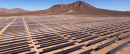
Strategies introduced for 1 GW solar-storage-hydrogen facility in China
Chinese programmer Panda Green states it has discussed exclusive civil liberties to establish a $1.41 billion job in Xinjiang which will include PV as well as photothermal generation, hydrogen production as well as energy storage.
Jun 16, 2020 // Plants, Large-Scale, Commercial, Storage, China, Asia, Panda Green, solar-storage-hydrogen
China establishes first 2022 solar subsidy pot at US$ 357.2 m.
today China's Ministry of Financing laid out its very first tranche of funding for existing sustainable projects for the upcoming year, making RMB3.87
Nov 18, 2021 // Plants, Commercial, Markets & Finance News, China, Asia, subsidy, decarbonisation