Best Solar Inverters (2026 Data): 16 Models, Market Leaders and New Security Rules
Updated: October 2026 · Data: manufacturer datasheets (2024–2026), Wood Mackenzie, company results for 2025, FCC, European Commission · Primary sources listed at the end
Key figures
- 55%: share of the world's 589 GWac of inverter shipments in 2024 that came from Huawei (176 GWac) and Sungrow (148 GWac) (Wood Mackenzie; list.solar calculation)
- 523 GWac: Wood Mackenzie's forecast for 2026, a second year of decline after 577 GWac in 2025
- 28 July 2026: the US FCC added foreign-produced power inverters to its Covered List; new models need a security approval
- 29.6%: Tesla's share of the US residential inverter market in 2025, up 16.5 points; Enphase held 31.7% and SolarEdge 31.3%
- 36% vs 5%: share of lost energy caused by inverters versus modules in a 27-month NREL study
- CNY 13.46 billion: Sungrow's 2025 net profit, while SolarEdge lost $405 million and SMA €181 million
Two Chinese companies make more than half of the world's solar inverters. Huawei shipped 176 GWac in 2024 and Sungrow 148 GWac, together 55% of a 589 GWac market, according to Wood Mackenzie. In 2025 Sungrow earned CNY 13.46 billion, while its rivals SMA and SolarEdge lost €181 million and $405 million.
The choice of inverter used to be about efficiency, price and warranty. Since 2024 it has also become a security decision. Deye inverters were disabled remotely in several countries in November 2024. Reuters reported undocumented radios in Chinese inverters in May 2025. On 28 July 2026 the US FCC put foreign-made inverters on its Covered List. In Europe, Lithuania restricts remote access by Chinese firms and the European Commission has stopped funding projects that use inverters from "high-risk" suppliers. This edition compares 16 current inverters and the companies behind them, and explains what the new rules mean for a homeowner.
Best Solar Inverters of 2026 at a Glance
There is no single best inverter. It depends on the roof, the battery plan and the country. The picks below are by use case. The specification table follows.
| Use case | Pick | Why (key number) |
|---|---|---|
| Microinverters, shaded or complex roofs | Enphase IQ8 series | Panel-level conversion, CEC efficiency up to 97.5%, 25-year warranty in the US and Canada; Enphase was profitable in 2025 (net margin 11.7%) |
| US home with a battery | Tesla Powerwall 3 | Inverter and 13.5 kWh battery in one unit, 6 MPPTs, 20 kW of solar input; Tesla led the US residential inverter market in Q4 2025 with 33.4% |
| Highest efficiency, with optimizers | SolarEdge Home Hub / Nexis | CEC 98.5–99%, module-level optimizers; Nexis launched in 2026 with stackable batteries |
| European-made single-phase hybrid | Fronius Primo GEN24 Plus | Made by an Austrian company, Euro efficiency 96.8–97.2%, backup via PV Point, 10-year warranty after registration |
| Three-phase hybrid | Sungrow SH-RT | 98.4% peak / 97.9% Euro (SH10RT), backup on all three phases including unbalanced loads, 10-year warranty |
| German-made hybrid | SMA Sunny Boy Smart Energy | 98% peak, 3–4 MPPTs, high-voltage battery input; a German maker, outside the EU's restrictions on high-risk suppliers |
| Balcony and small systems | APsystems DS3 / Hoymiles HMS | One microinverter for two or four panels; CEC 97% (DS3), 96.5% (HMS) |
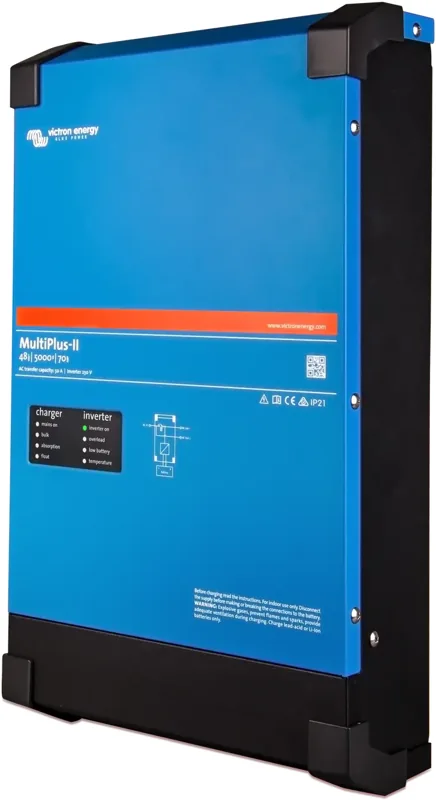
| Off-grid and backup-first | Victron MultiPlus-II | 5 kVA inverter-charger with full UPS function, paired with a separate solar charge controller |
Efficiencies from manufacturer datasheets or launch releases; CEC (US) and Euro are weighted efficiencies, closer to real operation than the peak figure. Sources: datasheets listed under Sources, Wood Mackenzie, company results.
Who Makes the World's Solar Inverters
Wood Mackenzie counted 589 GWac of PV inverter shipments in 2024, up 10% after a 56% jump in 2023. Huawei was first for the tenth year in a row and Sungrow second. Ginlong (Solis), Growatt and Sineng followed, none with more than 5% of the market, and nine of the top ten vendors were Chinese. The consultancy expects shipments to fall 2% in 2025, to 577 GWac, and 9% in 2026, to 523 GWac, before the market stabilises. China, which took 330 GWac in 2024, is cutting installations, and the US market is forecast to shrink 22% in 2026.
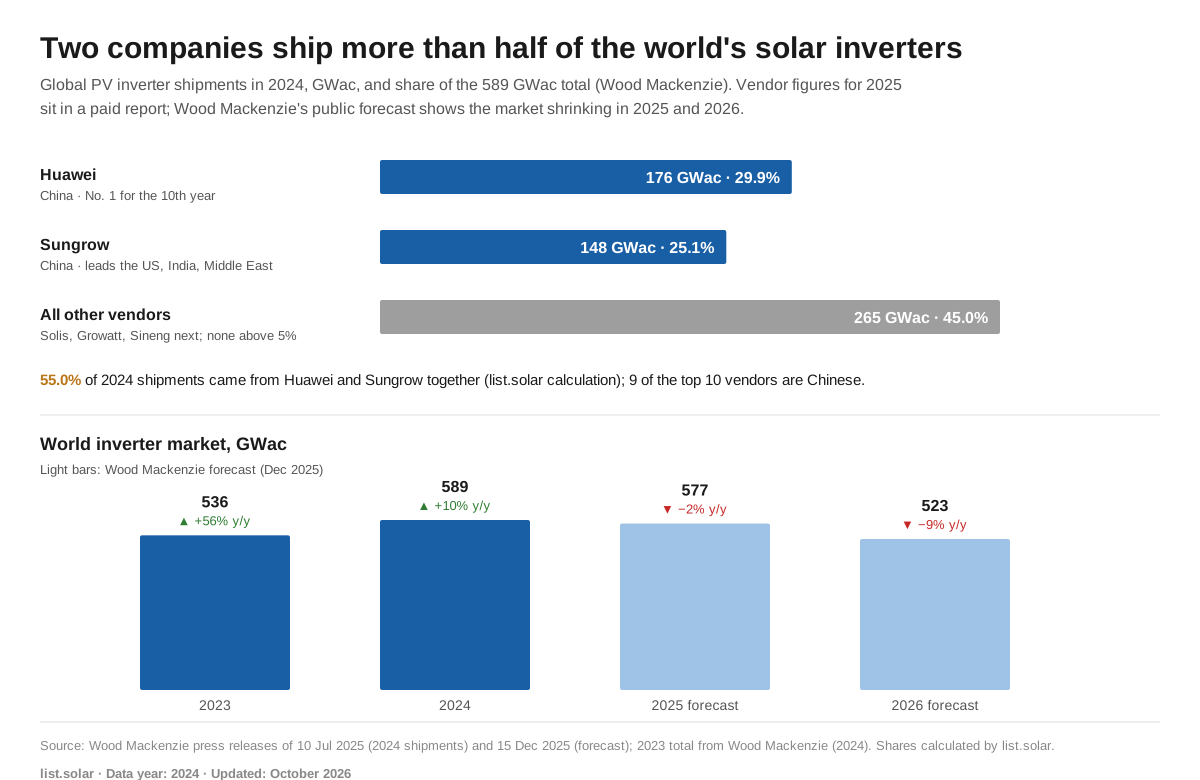
| Year | Global shipments (GWac) | Change y/y | Huawei | Sungrow | Huawei + Sungrow share |
|---|---|---|---|---|---|
| 2023 | 536 | +56% | n/a | n/a | n/a |
| 2024 | 589 | +10% | 176 GWac (29.9%) | 148 GWac (25.1%) | 55.0% |
| 2025 (forecast) | 577 | −2% | not public | not public | not public |
| 2026 (forecast) | 523 | −9% | — | — | — |
GWac. Wood Mackenzie's vendor shipments for 2025 are in a paid report (June 2026) and are not used here. Sungrow says S&P Global ranked it first by 2025 shipments, but published no volume. Shares calculated by list.solar. Sources: Wood Mackenzie press releases of 10 July 2025 and 15 December 2025, pv magazine.
Volume and quality rankings differ. Wood Mackenzie's 2026 manufacturer ranking, which scores companies on eight weighted criteria including service and research, put Sungrow and Huawei joint first. They were the only two that met all eight. SMA came third, and GoodWe and Enphase completed the top five. Hoymiles and APsystems entered the top ten, alongside Solis, SolarEdge, Fronius and Solplanet. The ranking covers 23 makers, 16 of them Chinese, with about 90% of 2025 shipments.
The US home market: Tesla breaks a duopoly
From 2019 to 2024, Enphase and SolarEdge together held more than 80% of US residential inverter sales. In 2025 that ended. Tesla's share rose 16.5 points to 29.6%, and in Q4 it was first with 33.4%, according to Wood Mackenzie. Enphase finished the year at 31.7% (−13 points) and SolarEdge at 31.3%. The driver was Powerwall 3, a battery with a built-in solar inverter. Berkeley Lab notes that it does not work with microinverters or optimizers, so the share of US systems using module-level power electronics fell sharply in 2025. Batteries are now part of the inverter decision: 37% of new US home systems in 2025 included storage, up from 25% in 2024.
| Vendor | US residential share, 2025 | Change vs 2024 | Technology |
|---|---|---|---|
| Enphase | 31.7% | −13 pp | Microinverters |
| SolarEdge | 31.3% | n/a | String inverters with optimizers |
| Tesla | 29.6% (Q4: 33.4%) | +16.5 pp | Powerwall 3 battery with integrated inverter |
Source: Wood Mackenzie, US solar market review, 12 March 2026. In US non-residential inverters, CPS (Chint) led with 30.2% and SMA was second.
Best Solar Inverters of 2026: Specifications Compared
The table lists current residential and small-commercial models. Where a figure comes from a distributor listing rather than the manufacturer's own datasheet, it is marked.
| Model | Type | Power | Peak / weighted efficiency | MPPT | Battery | Backup | Warranty |
|---|---|---|---|---|---|---|---|
| Enphase IQ8 series | Micro | 245–384 VA | 97.7% / CEC 97.0–97.5% | 1 per panel | AC-coupled IQ Battery | With Enphase system | 25 yrs (US, CA) |
| Enphase IQ9N (GaN, June 2026) | Micro | 427 VA | 97.8% / CEC 97.5% | 1 per panel | AC-coupled IQ Battery | With Enphase system | 25 yrs |
| SolarEdge Nexis (N. America, 1-ph) | Hybrid + optimizers | 3.8–13 kW | 99% / CEC 98.5–99% | Optimizers, 4 DC inputs | Nexis HV, up to 16 blocks | 14.5 kW | 10 yrs |
| SolarEdge Home Hub (US) | Hybrid + optimizers | 3.8–11.4 kW | 99.2% / CEC 99% | Optimizers | SolarEdge Home Battery | Up to 11.4 kW | 12 yrs (to 25) |
| SMA Sunny Boy Smart Energy (US) | Hybrid | 3.8–11.4 kW | 98% / CEC pending | 3–4 | HV, 96–500 V | Secure power / whole-home options | 10 yrs (to 25) |
| Fronius Primo GEN24 Plus | Hybrid, 1-ph | 3.0–6.0 kW | 97.6% / Euro 96.8–97.2% | 2 | HV (BYD, Fronius Reserva) | PV Point; full backup with extra hardware | 10 yrs with registration |
| Huawei SUN2000-2-6KTL-L1 | Hybrid-ready, 1-ph | 2–6 kW | 98.4% / Euro 97.8% | 2 | LUNA2000, 350–560 V | n/s | Varies by market |
| Sungrow SH-RS | Hybrid, 1-ph | 3.0–6.0 kW | 97.4–97.7% / Euro 97.0–97.3% | 2 | 80–460 V | Uninterrupted switchover | 10 yrs |
| Sungrow SH-RT | Hybrid, 3-ph | 5–10 kW | 98.4% / Euro 97.9% | n/s | 150–600 V | 100% unbalanced | 10 yrs |
| GoodWe ET | Hybrid, 3-ph | 5–10 kW | 98.0–98.2% / Euro 97.2–97.5% | 2 | 180–600 V | UPS, <10 ms | Varies by market |
| Tesla Powerwall 3 | Battery with integrated inverter | 11.5 kW AC; 20 kW solar input | 97.5% solar-to-home (CEC method) | 6 | 13.5 kWh built in | Whole home | 10 yrs |
| Hoymiles HMS-2000-4T | Micro, 4 panels | 1.6–2.0 kVA | CEC peak 96.5% | 4 | — | — | 12 yrs* |
| APsystems DS3 | Micro, 2 panels | 730–880 VA | 97.3% / CEC 97% | 2 | — | — | 12 yrs (25 optional, AU) |
| Huawei SUN2000-MAP0* | Hybrid, 3-ph | 5–12 kW | 98.6% / Euro 98.2% | n/s | LUNA2000, up to 42 kWh | Via SmartGuard | 10 yrs |
| Deye SUN-5K-SG04LP1-EU* | Hybrid, low-voltage | 5 kW | 97.6% / Euro 97% | 2 | 48 V | UPS | 5 yrs (10 optional) |
| Victron MultiPlus-II 48/5000* | Inverter-charger | 5 kVA (4 kW at 25°C) | 96% | External charge controller | 48 V | Full UPS | 5 yrs |
Peak efficiency first, then CEC (US) or Euro weighted efficiency. Warranty: standard term, extensions in brackets; terms vary by country. * = from distributor listings, not checked against an official datasheet. n/s = not stated. Sources: Enphase, SolarEdge, SMA, Fronius, Huawei, Sungrow, GoodWe, Tesla, Hoymiles and APsystems datasheets and releases dated 2022–2026 (listed under Sources).
Most current inverters sit between 97% and 99% peak efficiency. The gap between the best and the worst grid-tied model here is two to three points, roughly what a week of downtime costs in annual output. Weighted figures (CEC in the US, Euro in Europe) describe performance at partial load better than the headline peak. Things that do differ widely: whether the inverter can run the house during a blackout, which batteries it accepts, how many separate roof faces it can track (MPPTs), and how long the maker will support it.
Enphase IQ8 and IQ9N: the microinverter benchmark
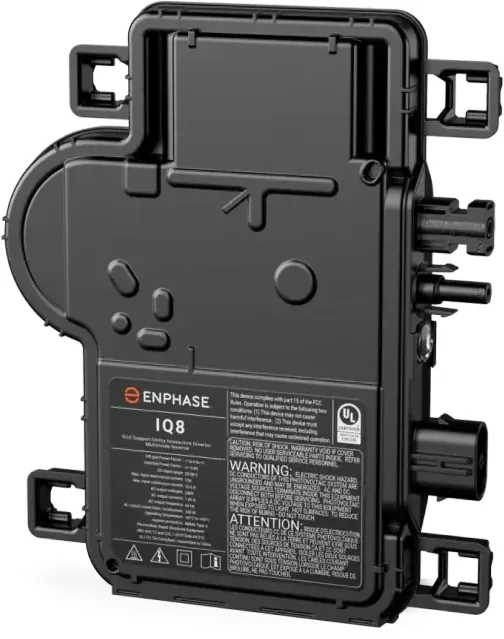
Enphase puts a small inverter under every panel, so one shaded or failed module does not drag down the rest. It reported about 87.8 million microinverters shipped by June 2026, against the 17 million cited in the earlier version of this page. The IQ8 series runs at up to 97.5% CEC efficiency and carries a 25-year warranty in the US and Canada, the longest standard term in this comparison. In June 2026 Enphase launched the IQ9N in the US, which uses gallium nitride transistors and reaches 97.8% peak efficiency. Enphase earned $172.1 million on $1.47 billion of revenue in 2025, but lost 13 points of US residential share to Tesla. The higher cost of panel-level electronics is the trade-off. Wood Mackenzie puts US prices for these products at more than 50% above the global average.
SolarEdge Nexis and Home Hub: highest efficiency, weakest finances
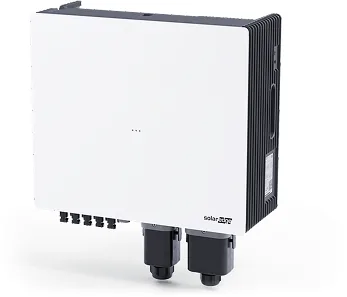
SolarEdge pairs a central inverter with an optimizer on each panel. It gets most of the benefits of panel-level control at higher conversion efficiency: 99% CEC on the Home Hub, 98.5–99% on the new Nexis platform. Nexis, launched in 2026, takes stackable battery blocks (up to 16 in North America) and supplies up to 14.5 kW of backup. The concern is the company. SolarEdge lost $405.4 million in 2025 on revenue of $1.18 billion, after a $1.8 billion loss in 2024. Revenue rose 31% as the market recovered, but a warranty runs 12 to 25 years.
Tesla Powerwall 3: the inverter inside the battery
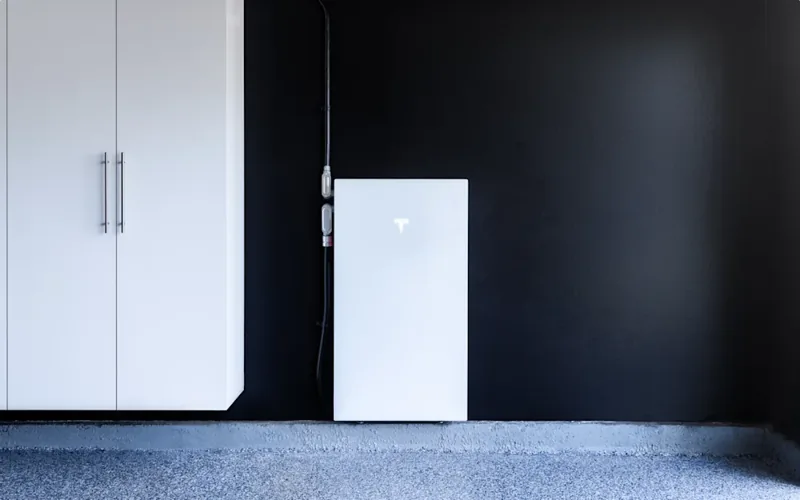
Powerwall 3 combines a 13.5 kWh battery, a hybrid inverter with six MPPT inputs for up to 20 kW of panels, and whole-home backup at 11.5 kW continuous in one wall unit. Tesla rates its solar-to-home efficiency at 97.5%. For a US homeowner who wants storage, it replaces two boxes with one, which is why Tesla took a third of the residential inverter market by Q4 2025. The limits: it does not work with microinverters or optimizers, so shaded roofs lose panel-level control, and the warranty is 10 years.
Fronius Primo GEN24 Plus: the European hybrid
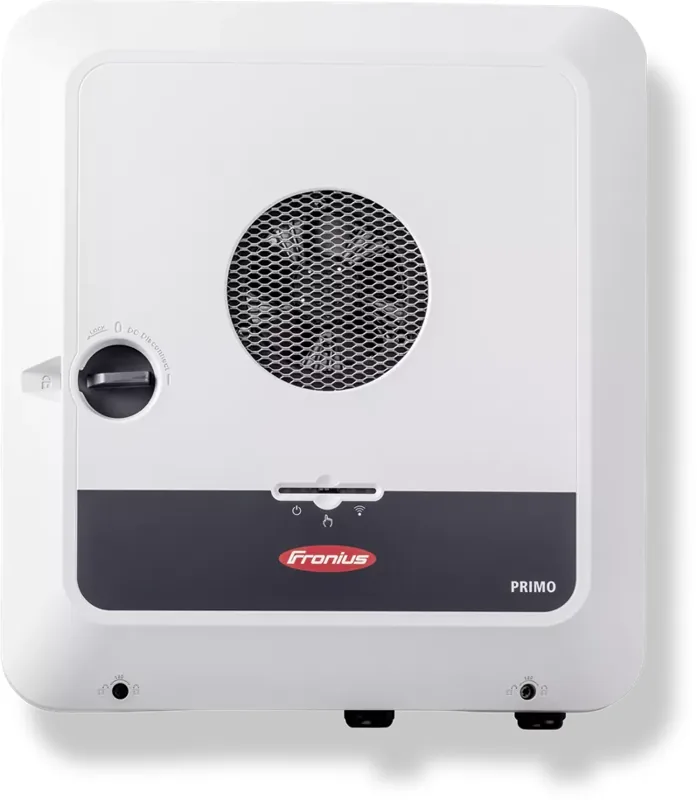
Fronius, a family-owned Austrian company, makes the GEN24 Plus single-phase hybrid in 3–6 kW sizes with two MPPTs and a high-voltage battery input for BYD and Fronius' own Reserva batteries. Its built-in PV Point supplies a backup socket during an outage. Whole-home backup needs extra hardware. Efficiency is modest by 2026 standards, at 97.6% peak and 96.8–97.2% Euro. Fronius offers a 10-year warranty when the system is registered in its Solar.web portal (terms vary by country). It ranked in Wood Mackenzie's 2026 top ten, and as a European manufacturer it is outside the EU's new restrictions on high-risk suppliers.
SMA Sunny Boy Smart Energy: German engineering, loss-making parent
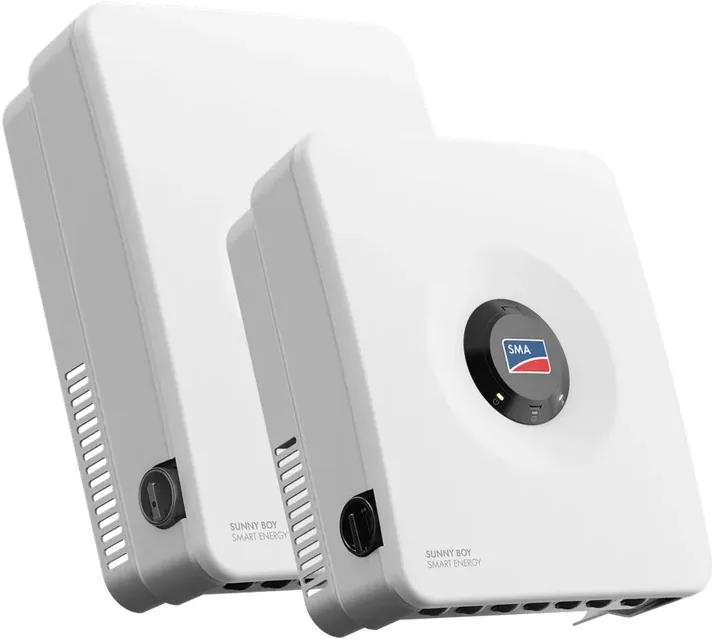
SMA's hybrid for homes comes in 3.8–11.4 kW versions for the US and 3.6–6.0 kW for Europe. It has three or four MPPTs, a high-voltage battery input and up to 98% peak efficiency. The US warranty is 10 years, extendable to 25. SMA ranked third in Wood Mackenzie's 2026 manufacturer ranking and second in US commercial inverters. The home business is where it struggles: its Home & Business division lost €375.6 million at segment level in 2025 on €247.2 million of sales, and the group lost €181.1 million. SMA is the highest-ranked non-Chinese maker in Wood Mackenzie's 2026 ranking, which matters to buyers who want to avoid Chinese suppliers.
Sungrow SH-RS and SH-RT: the profitable all-rounder
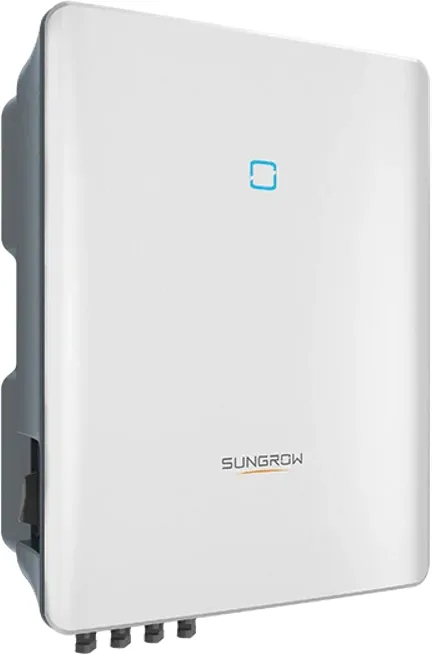
Sungrow's residential hybrids cover single-phase (SH-RS, 3–6 kW) and three-phase homes (SH-RT, 5–10 kW). The SH10RT reaches 98.4% peak and 97.9% Euro efficiency, keeps all three phases running in a blackout even with unbalanced loads, and comes with a 10-year warranty. Sungrow is the most profitable large inverter maker: CNY 13.46 billion of net profit on CNY 89.18 billion of revenue in 2025. Energy storage, at CNY 37.3 billion, now brings in more than its inverters. The company patched a cloud vulnerability in its iSolarCloud platform in 2026, and its products were among those covered by the 2025 SUN:DOWN security disclosure.
Huawei SUN2000 L1 and MAP0: the volume leader
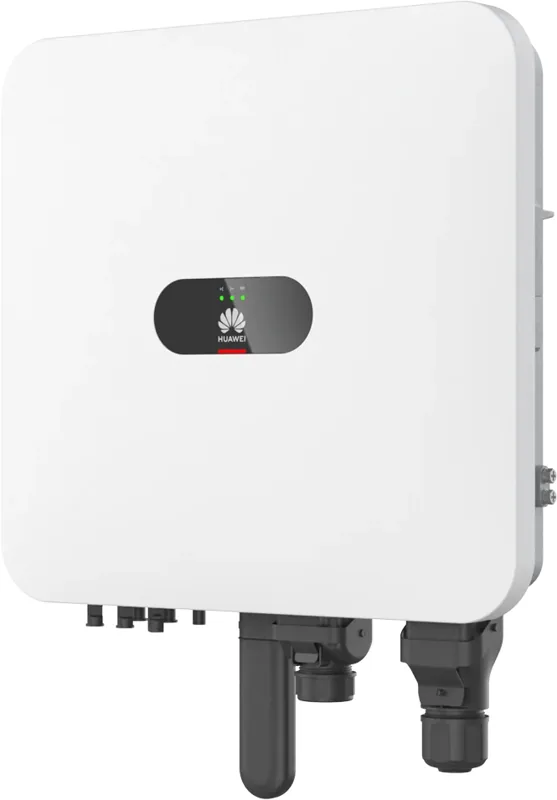
Huawei shipped more inverters than anyone for ten years in a row, 176 GWac in 2024. Its single-phase SUN2000-L1 (2–6 kW) reaches 98.4% peak and 97.8% Euro efficiency and pairs with LUNA2000 batteries. The three-phase MAP0 (5–12 kW) is listed by distributors at up to 98.6%. Technically the range is among the strongest. Politically it carries the most risk. SolarPower Europe moved to exclude Huawei in April 2025 after an EU bribery investigation, then suspended the proceedings in October. The European Commission's 2026 funding restrictions target high-risk suppliers, a category aimed at Chinese makers. The US FCC rule covers all foreign-produced grid-tied inverters with remote connectivity, Chinese or not.
GoodWe ET: Wood Mackenzie top five
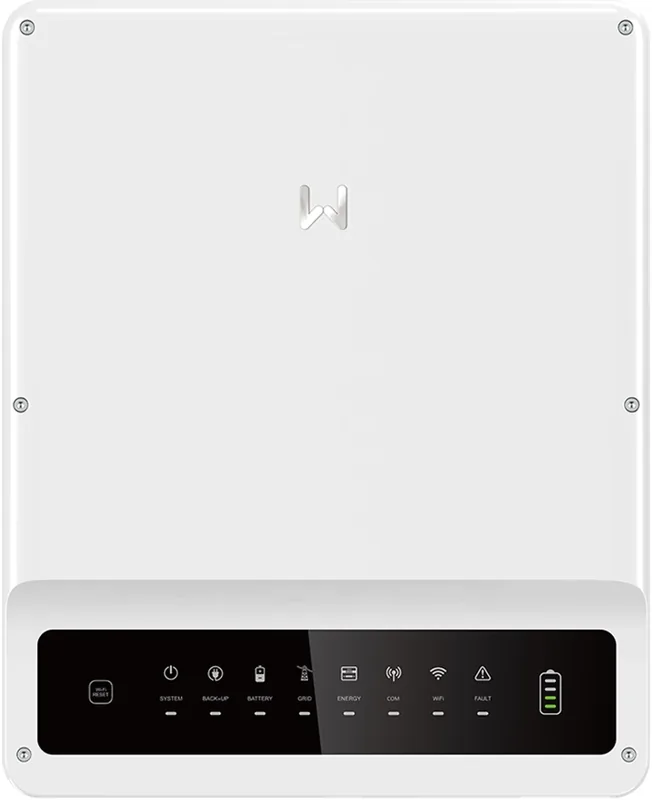
GoodWe's ET three-phase hybrid (5–10 kW) reaches 98.0–98.2% peak and 97.2–97.5% Euro efficiency, accepts 180–600 V batteries and switches to backup in under 10 milliseconds. Wood Mackenzie placed GoodWe in the top five of its 2026 manufacturer ranking. After a loss in 2024, it returned to a small profit of CNY 135 million on revenue of CNY 8.88 billion (+31.9%) in 2025. Warranty terms differ by country and distributor, so check the local certificate.
Microinverters for balconies and small roofs: APsystems and Hoymiles
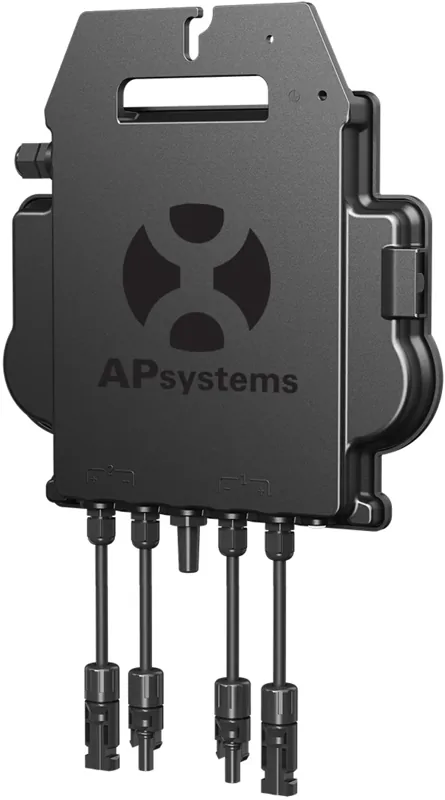
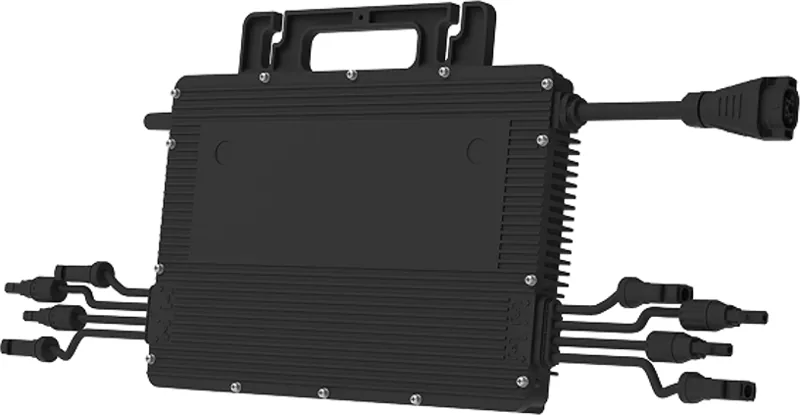
APsystems and Hoymiles build multi-panel microinverters: the DS3 serves two panels (730–880 VA, 97% CEC), and Hoymiles' HMS-2000-4T serves four (up to 2 kVA, 96.5% CEC peak). One device per two or four panels cuts the cost of panel-level conversion, which suits balcony kits and small roofs. Both companies entered Wood Mackenzie's 2026 top ten. Both also reported losses in H1 2026: CNY 132 million for APsystems and CNY 164 million for Hoymiles.
Deye and Victron: off-grid and backup-first systems
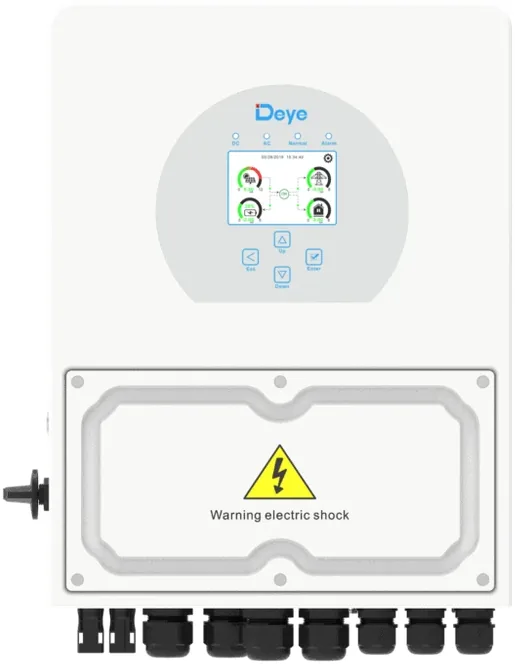
Low-voltage hybrids with 48 V batteries are a common choice for backup-first systems. Deye's 5 kW SG04LP1 is listed by distributors at 97.6% peak efficiency with UPS switching, and Deye earned CNY 3.17 billion in 2025, a 26% net margin, the best in this comparison. Its revenue rose 92% in H1 2026. Deye is also the company whose inverters were disabled remotely in the US, UK, Pakistan and elsewhere in November 2024. For off-grid cabins and boats, Victron's MultiPlus-II 48/5000 inverter-charger (5 kVA, full UPS function) is a common choice, paired with a separate solar charge controller.
Inverters Are Now a Security Decision
An inverter is a computer that controls power flowing into the grid, and most modern units report to the manufacturer's cloud and accept remote firmware updates. A 2025 report for SolarPower Europe by DNV found that compromising 3 GW of generation capacity could disrupt the European grid. Europe has more than 200 GW of solar connected through Chinese inverters, according to the European Solar Manufacturing Council.
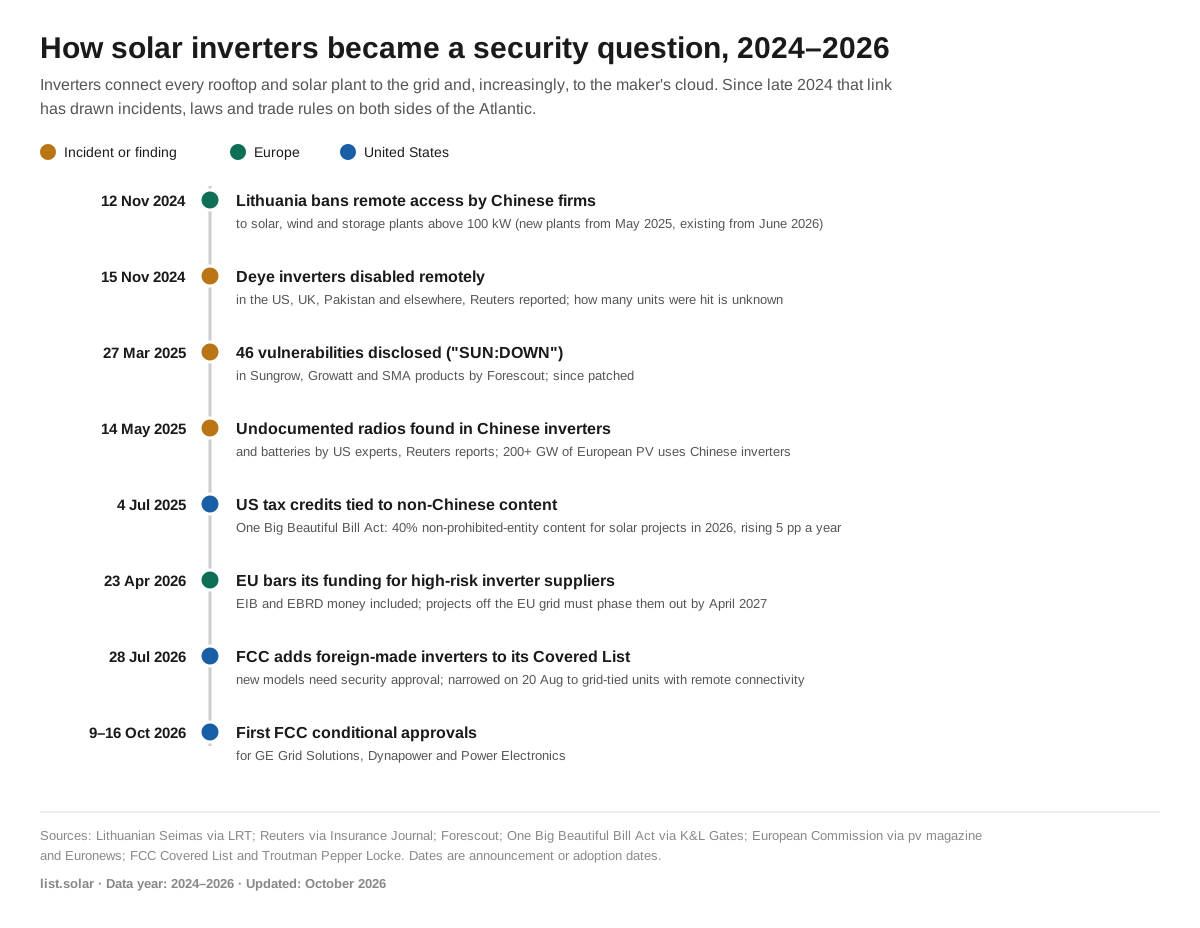
| Date | Where | Measure or event | What it means for buyers |
|---|---|---|---|
| 12 Nov 2024 | Lithuania | Law bars remote access by Chinese firms to solar, wind and storage plants above 100 kW (new plants from 1 May 2025, existing from 1 Jun 2026) | Grid operators can now disconnect non-compliant plants; homes are below the threshold |
| Nov 2024 | US, UK, Pakistan and others | Deye inverters disabled remotely (Reuters) | Proof that cloud control can switch inverters off |
| 27 Mar 2025 | Global | Forescout discloses 46 vulnerabilities in Sungrow, Growatt and SMA products | Patched; keep firmware updated |
| 14 May 2025 | US | Reuters: undocumented communication devices found in some Chinese inverters and batteries | Prompted reviews by grid operators and lawmakers |
| 4 Jul 2025 | US | One Big Beautiful Bill Act: tax credits require at least 40% content from non-prohibited foreign entities in 2026, rising 5 points a year | Chinese inverters make US projects harder to finance |
| 23 Apr–4 May 2026 | EU | No EU funding, including EIB and EBRD loans, for projects using inverters from high-risk suppliers | Affects funded projects first; the Commission says switching adds less than 2% to project cost |
| 28 Jul 2026 | US | FCC adds foreign-produced power inverters to its Covered List; narrowed on 20 Aug to grid-tied units with remote connectivity | New foreign models need security approval; models already authorized can still be sold |
| 9–16 Oct 2026 | US | First FCC conditional approvals: GE Grid Solutions, Dynapower, Power Electronics | The approval route works, but so far only for non-Chinese suppliers |
Sources: LRT and pv magazine (Lithuania), Reuters via Insurance Journal, Forescout, K&L Gates (OBBBA), pv magazine and Euronews (European Commission), FCC Covered List and Troutman Pepper Locke, Solar Power World.
For a homeowner, none of these rules forces an existing inverter off the roof. In the US, models already authorized remain on sale and can receive firmware updates. What changes is the next purchase. New foreign-made grid-tied models with remote connectivity need a security approval, and US tax-credit rules penalise Chinese content. In Europe, public financing is closing to high-risk suppliers, and the proposed revision of the EU Cybersecurity Act would allow a formal list of high-risk vendors. Practical steps: choose an inverter that works locally if the internet connection is cut, keep firmware current, put the inverter on a separate network, and ask where the monitoring data is stored.
Myth: The Inverter Will Last as Long as the Panels
Panels carry 25- to 40-year output warranties and degrade at about 0.5–0.75% a year. Inverters do not keep pace. String inverters typically last 10–15 years and come with 5–12-year standard warranties, extendable to about 20–25. Microinverters can last about 25 years and carry 20–25-year warranties, according to EnergySage. Over a 30-year system life, a string inverter will probably be replaced at least once, and that cost belongs in the payback calculation.
Inverters are also where energy is lost. In a 27-month NREL study cited by Kiwa PVEL, inverters caused 36% of lost energy and modules 5%. NREL puts inverters and power electronics at 8–12% of a PV system's lifetime cost. That is why warranty length, the maker's finances and local service count for more than a fraction of a point of efficiency. Kiwa PVEL, which tests inverters for project financiers, last published a public inverter scorecard in 2019, so independent data on current models is scarce.
Inverter Makers' Results: Who Can Back a 25-Year Warranty
| Company | 2025 revenue | Change y/y | 2025 net result | 2024 net result | Net margin 2025 |
|---|---|---|---|---|---|
| Deye | CNY 12.22 bn | +9.1% | +CNY 3.17 bn | profit | +25.9% |
| Sungrow | CNY 89.18 bn | +14.6% | +CNY 13.46 bn | profit | +15.1% |
| Enphase | $1.47 bn | +11% | +$172.1 m | +$102.7 m | +11.7% |
| GoodWe | CNY 8.88 bn | +31.9% | +CNY 135 m | −CNY 62 m | +1.5% |
| SMA | €1.52 bn | −0.9% | −€181.1 m | −€117.7 m | −11.9% |
| SolarEdge | $1.18 bn | +31% | −$405.4 m | −$1.81 bn | −34.2% |
| Hoymiles | n/a | n/a | −CNY 135–165 m (preliminary) | profit | n/a |
Net result attributable to shareholders (GAAP for Enphase and SolarEdge). Margins calculated by list.solar. Huawei's inverter business is not reported separately; Ginlong (Solis) had not published audited 2025 figures that we could verify. Sources: pv magazine (Sungrow, SMA), Enphase SEC 8-K, SolarEdge Q4 release, TaiyangNews (GoodWe), EnergyTrend (Deye, Hoymiles).
The split runs along the battery line. Sungrow and Deye, the two most profitable makers, sell storage alongside inverters. Sungrow's storage revenue rose 49% in 2025 to CNY 37.3 billion on 43 GWh of shipments. SolarEdge and SMA, which depend more on rooftop solar in Europe and the US, are still losing money.
Solar Inverter Prices
There is no reliable public price index for residential inverters, and the per-watt figures on installer websites are marketing estimates. What is known: Wood Mackenzie says hybrid inverter prices fell 13% in 2024, and US prices for microinverters and optimizers run more than 50% above the global average. It expects Chinese three-phase string inverters to fall below $0.02 per watt by 2034. For large plants, the European Commission puts inverters at about 5% of project capital cost. Berkeley Lab found US home systems with storage cost a median $2.1/W more than solar-only systems bought for cash in 2025.
How to Choose a Solar Inverter in 2026
| Question | Good answer in 2026 | Why it matters |
|---|---|---|
| String, hybrid or micro? | Micro or optimizers for shaded or multi-angle roofs; hybrid if a battery is planned now or later | Avoids replacing the inverter to add storage |
| Weighted efficiency | CEC or Euro ≥97% | Partial-load efficiency matters more than the peak figure |
| MPPT inputs | One per roof face (2–4 for most homes) | Separate tracking stops one face limiting the others |
| Battery compatibility | Named high-voltage or 48 V batteries on the datasheet | Third-party batteries may void warranties |
| Backup | Whole-home or critical-loads backup with switchover under 20 ms | Some "backup" is one socket, usable only in daylight |
| Warranty | 10–12 years standard, 20–25 available; 25 for micros | The inverter will likely need replacing before the panels |
| Connectivity and security | Local control without the cloud, current firmware, clear data location | US and EU rules now treat remote access as a risk |
| Maker's finances and service | Profitable company with a local service centre | Warranty claims need a company that still exists |
Benchmarks from the datasheets in this comparison, Wood Mackenzie, Berkeley Lab and the security measures above.
Ukraine: Imports Up 88%, Deye in Front
Ukraine's blackouts made the inverter as important as the panel. Since 27 July 2024, inverters (customs code 8504 40), lithium-ion batteries and generators have been imported free of VAT and duty, and parliament voted on 3 December 2025 to extend the exemption through 2028. Imports in the wider customs group that includes inverters, transformers and other converters reached $1.12 billion in 2025, up 88%, with China supplying 85.6%, according to State Customs data. In January–May 2026 they rose another 89%.
No credible survey of inverter brand shares in Ukraine has been published. The clearest government data point is Deye: 3,471 of the 10,000 portable power stations bought by the state Decarbonization Fund for children with disabilities were Deye units, and the company announced plans for a service centre and sales office in Ukraine in March 2026. For Ukrainian buyers, the November 2024 remote shutdown of Deye inverters abroad is a reason to keep a system that keeps working offline.
What Happened to the Models on the Old List
The 2024 version of this page listed 37 products, most with data from 2017–2019, including several 12 V car inverters that are not solar inverters. The main replacements: Enphase's IQ 7A gave way to the IQ8 (2021) and IQ9N (2026). SolarEdge's HD-Wave SE5000H was replaced by the Home Hub and then Nexis (2026). Huawei's SUN2000L became the L1 and the three-phase MAP0, both with backup options. Sungrow's SHK series was replaced by the SH-RS and SH-RT. ABB's solar inverter business has belonged to FIMER since 2020.
Panels, Batteries and Monitoring
An inverter is chosen together with the panels and, increasingly, a battery. Our best solar panels of 2026 compares 12 current modules, and the guide to choosing a battery for solar covers storage sizing. Most inverters report through an app or cloud portal. Independent monitoring tools are listed in the solar monitoring platforms directory.
Methodology and Data Sources
Selection. We compared residential and small-commercial inverters on sale in 2026 from the vendors that lead global shipments, Wood Mackenzie's 2026 manufacturer ranking or the US home market. Specifications come from manufacturer datasheets and launch releases dated 2022–2026. Three models (Huawei MAP0, Deye SG04LP1, Victron MultiPlus-II) are listed with distributor data and marked.
Market data. Global shipments come from Wood Mackenzie's public releases. Its vendor-level 2025 figures are in a paid report and are not used. The 55% combined share of Huawei and Sungrow is our calculation from 2024 figures. US residential shares come from Wood Mackenzie's March 2026 review. Financial results are 2025 annual figures, with margins calculated by list.solar from reported net result and revenue.
What we left out. Figures we could not trace to a primary source: Ginlong's 2025 results, Sungrow's 2025 inverter volume (sources disagree), inverter brand shares in Ukraine and per-watt retail prices. list.solar receives no payment from any manufacturer, and this page contains no affiliate links. Updated: October 2026.
FAQ
Will a solar inverter last as long as the panels?
Usually not. String and hybrid inverters typically last 10–15 years, with 5–12-year standard warranties that can be extended to 20–25. Microinverters can last about 25 years. Panels are warranted for 25–40 years, so budget for at least one inverter replacement. In an NREL study, inverters caused 36% of lost energy, versus 5% for modules.
What is the best solar inverter brand in 2026?
By volume, Huawei and Sungrow, which shipped 55% of the world's inverters in 2024. Wood Mackenzie's 2026 ranking put them joint first, followed by SMA, GoodWe and Enphase. For US homes, Enphase, SolarEdge and Tesla each hold about a third of the market. The best brand for a given home depends on the roof, the battery plan and local service.
Are Chinese solar inverters being banned?
Not outright. The US FCC added foreign-produced grid-tied inverters with remote connectivity to its Covered List on 28 July 2026, so new models need a security approval, but authorized models can still be sold. The EU stopped funding projects that use inverters from high-risk suppliers. Lithuania bars remote access by Chinese firms to plants above 100 kW.
Microinverter or string inverter?
Microinverters, or string inverters with optimizers, suit shaded roofs and roofs with several orientations, because each panel works independently. String and hybrid inverters cost less per watt and integrate batteries more simply. Tesla's Powerwall 3 does not work with microinverters or optimizers, which is one reason panel-level electronics lost US share in 2025.
Do I need a hybrid inverter for a battery?
Not always. A hybrid inverter connects panels and a battery on the DC side and is the simplest choice for a new system with storage. Existing systems can add an AC-coupled battery with its own inverter, as Enphase and Tesla systems do. In 2025, 37% of new US home solar systems included a battery, up from 25% in 2024.
Related on List.Solar
- Best Solar Panels (2026 Data): 12 models compared on efficiency, reliability and warranty
- Top Solar Panel Manufacturers: shipments, profits and factories
- Best Solar Batteries: home storage systems
- Top Energy Storage Companies: the battery side of the market
Sources
- Wood Mackenzie, Global PV inverter shipments grew by 10% in 2024 to 589 GWac, 10 Jul 2025; shipments grew 56% in 2023 to 536 GWac, 2024; two-year decline forecast, 15 Dec 2025; pv magazine, Huawei leads global inverter market, 11 Jul 2025
- Wood Mackenzie, Solar inverter manufacturer ranking 2026, 11 Jun 2026; Energetica India, top 10 inverter manufacturers; Wood Mackenzie, US solar in 2025 (residential inverter shares), 12 Mar 2026; Sungrow via pv magazine Australia, S&P Global 2025 ranking (company release), Aug 2026
- Lawrence Berkeley National Laboratory, US Distributed Solar and Storage 2026 Data Update, Aug 2026
- pv magazine, Sungrow 2025 results, 3 Apr 2026, and SMA 2025 results, 26 Mar 2026; Enphase, Q4 2025 results (SEC 8-K), 3 Feb 2026; SolarEdge, Q4 2025 results, 18 Feb 2026; TaiyangNews, GoodWe FY2025; EnergyTrend, Deye 2025 and Hoymiles 2025 forecast; PV Tech, China inverter profitability divide (H1 2026), 11 Sep 2026
- Datasheets and releases: Enphase, IQ9N launch, 23 Jun 2026, and IQ8X datasheet; SolarEdge Nexis datasheet (May 2026) and Home Hub datasheet (2024); pv magazine, SolarEdge Nexis for Europe; SMA Sunny Boy Smart Energy (US) and (EU); Fronius Primo GEN24 Plus datasheet and warranty models; Huawei SUN2000-L1 datasheet (Oct 2024); Sungrow SH-RS datasheet (Oct 2024) and SH-RT datasheet (Jan 2024); GoodWe ET datasheet; Tesla Powerwall 3 datasheet; Hoymiles HMS-1600/2000 datasheet; APsystems DS3 datasheet (Dec 2025)
- Kiwa PVEL, Inverter testing to mitigate revenue risk (NREL study data); pv magazine, How long do residential solar inverters last? (EnergySage), 13 Sep 2023
- Reuters via Insurance Journal, Rogue communication devices found in Chinese inverters, 16 May 2025; pv magazine, Hidden devices found in Chinese-made inverters, 14 May 2025; Born City, Deye deactivates inverters, 28 Nov 2024
- LRT, Lithuania passes law to block Chinese access to solar and wind systems, Nov 2024; pv magazine India, Lithuania's grid operators can now disconnect plants, 11 Jun 2026
- Forescout, SUN:DOWN research, 27 Mar 2025; PV Tech, Sungrow patches cloud vulnerability, 2026
- pv magazine, SolarPower Europe moves to exclude Huawei, Apr 2025, and suspends proceedings, 10 Oct 2025
- K&L Gates, IRS guidance on material assistance from prohibited foreign entities, Mar 2026; Solar Power World, 50 House Republicans ask Commerce to halt Chinese inverter imports, Nov 2025
- pv magazine, EU Cybersecurity Act proposal and high-risk vendors, 20 Jan 2026, and EU restricts funding for projects with high-risk inverters, 23 Apr 2026; Euronews, EU moves to ban high-risk inverters, 4 May 2026
- FCC, Covered List; Troutman Pepper Locke, FCC modifies Covered List entry for foreign-produced power inverters, Aug 2026
- Ukraine: Interfax-Ukraine, VAT and duty exemption for energy equipment, Jul 2024; SUP, exemptions extended for 2026–2028, Dec 2025; NV, imports of transformers and inductors up 88% in 2025; Open4Business, imports up 89% in five months of 2026; State Agency on Energy Efficiency, partnerships with equipment manufacturers (Deye), 12 Mar 2026