Top Energy Storage Companies (2026 Data): 27 Battery Makers and Integrators Ranked
Updated: November 2026 · Data: 2025 shipments and 2026 year-to-date (Benchmark Mineral Intelligence, Wood Mackenzie, InfoLink), company filings, BloombergNEF · Primary sources listed at the end
Key figures
- 60 GWh: BYD's battery storage system shipments in 2025, No. 1 in the world by Benchmark's count, ahead of Tesla (47 GWh) and Sungrow (43 GWh)
- 46.7 GWh: storage Tesla deployed in 2025, up 49% and almost 12 times its 2021 volume; 36.0 GWh in January–September 2026
- 20%: CATL's share of storage cell shipments in 2025 (121 GWh), down from 32% in 2023; all ten of the largest cell suppliers are Chinese
- 307 GWh: energy storage added worldwide in 2025 (112 GW, +48%), with 535 GWh forecast for 2026 (BloombergNEF)
- $70/kWh: average stationary storage battery pack price in 2025, down 45% in a year; storage cells then rose about 22% from October 2025 to April 2026
- 98%: fall in battery storage failure incidents per GWh deployed between 2018 and 2025 (EPRI)
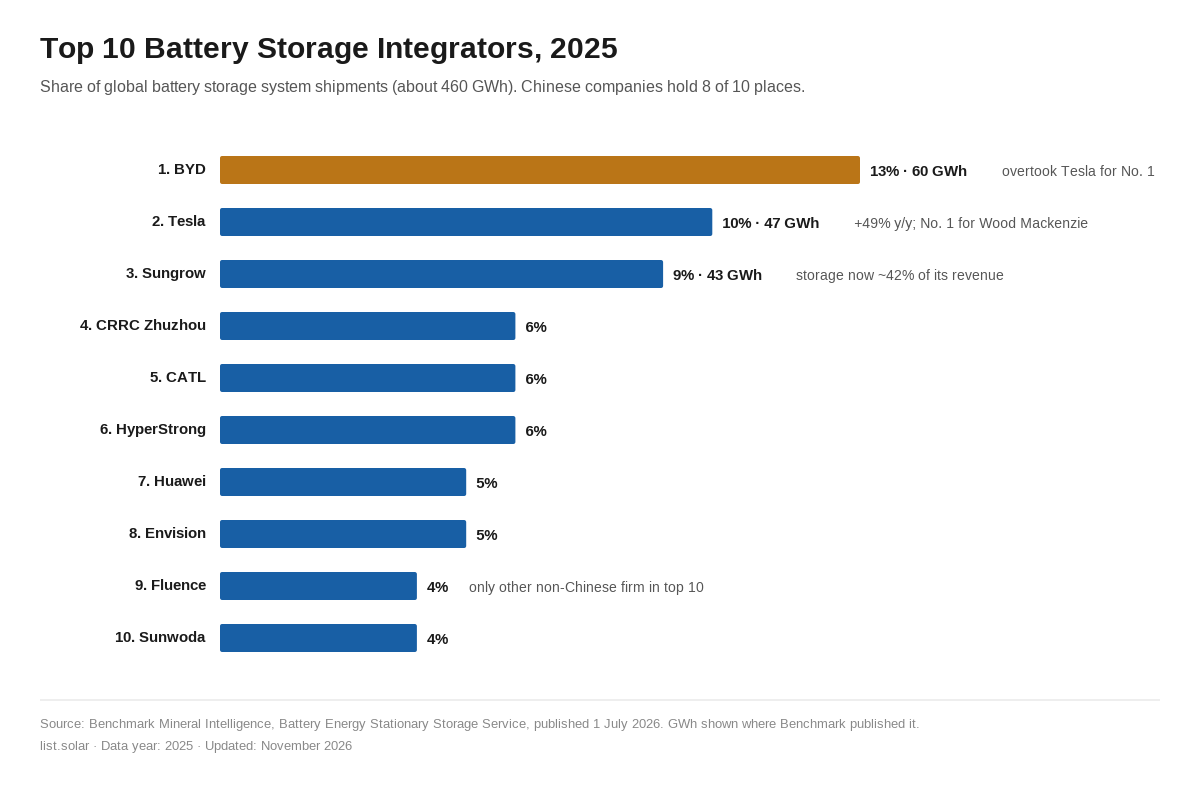
In 2025 a carmaker shipped more grid batteries than Tesla. BYD delivered more than 60 GWh of energy storage systems, according to its annual report, and Benchmark Mineral Intelligence ranks it first among system suppliers with 13% of the market, ahead of Tesla at 10% and Sungrow at 9%. Wood Mackenzie, which counts differently, still puts Tesla on top. Either way, eight of the ten largest integrators are Chinese, and Chinese companies held 76% of the global integrator market in 2025.
The industry is unrecognisable from the one this page described in its earlier edition. Tesla deployed 3.99 GWh of storage in 2021; in 2025 it deployed 46.7 GWh, and the world added 307 GWh in total. Several companies on the old list have since been sold, gone bankrupt or left storage, and some, such as Oracle and Lockheed Martin, never made batteries at all. This edition ranks 27 companies on what they actually ship: integrators of utility-scale systems, the cell makers behind them, home battery brands and long-duration storage developers.
Top Energy Storage Companies at a Glance
The table gives one headline number per company, taken from its own filings where it publishes one and from an independent tracker where it does not. Rankings within each group follow 2025 shipments. Long-duration companies are ordered by commercial progress, since their volumes are still small.
| Company | Role | HQ | 2025 storage figure | Flagship product |
|---|---|---|---|---|
| BYD | Integrator, cells | Shenzhen, China | >60 GWh systems delivered | HaoHan (14.5 MWh unit, 2,710 Ah cell) |
| Tesla Energy | Integrator | Austin, USA | 46.7 GWh deployed | Megapack 3 / Megablock |
| Sungrow | Integrator | Hefei, China | 43 GWh shipped | PowerTitan 3.0 |
| CRRC Zhuzhou Institute | Integrator | Zhuzhou, China | ~6% of system shipments (Benchmark) | 6.X liquid-cooled system (6.25–6.9 MWh) |
| HyperStrong | Integrator | Beijing, China | ~26 GWh shipped (Bloomberg); revenue RMB 11.6 bn | HyperBlock M (3 MWh, 10-ft) |
| Huawei Digital Power | Integrator | Shenzhen, China | No. 3 in H1 2026 (InfoLink); no GWh published | LUNA2000-5015-2S (5 MWh, grid-forming) |
| Envision | Integrator | Shanghai, China | >50 GWh delivered to date | Gen 8 platform (up to 12 MWh) |
| Fluence | Integrator | Arlington, USA | FY2025 revenue $2.26 bn; 17.8 GWh cumulative | Smartstack (7.5 / 10 MWh) |
| Canadian Solar e-STORAGE | Integrator | Kitchener, Canada | 7.8 GWh shipped; revenue $1.37 bn | SolBank 3.0 Plus, FlexBank 1.0 |
| Valo (ex-Wärtsilä) | Integrator | Helsinki, Finland | EUR 694 m sales | GridSolve Quantum3 |
| CATL | Cells, DC blocks | Ningde, China | 121 GWh cells (20% share) | TENER Stack (9 MWh) |
| Hithium | Cells, systems | Xiamen, China | No. 2 cell supplier (~12%) | ∞Power 6.25 MWh, 1,175 Ah cell |
| EVE Energy | Cells | Huizhou, China | 71.05 GWh storage batteries | Mr.Big 628 Ah cell |
| LG Energy Solution | Cells, integrator (Vertech) | Seoul, South Korea | 140 GWh ESS order backlog | JF2 AC/DC LINK (5.1 MWh) |
| Samsung SDI | Cells, systems | Yongin, South Korea | Record quarterly ESS revenue, Q4 2025 | SBB 2.0 (LFP) |
| Sigenergy | Home and C&I systems | Shanghai, China | Revenue RMB 9.0 bn | SigenStor |
| Enphase | Home batteries | Fremont, USA | 706.1 MWh shipped | IQ Battery 10C |
| SolarEdge | Home batteries | Herzliya, Israel | 897.4 MWh; battery revenue $285.4 m | Nexis |
| sonnen | Home batteries, VPPs | Wildpoldsried, Germany | No figure published | sonnenBatterie 10 performance+ |
| FranklinWH | Home batteries | San Jose, USA | No figure published | aPower 2 (15 kWh) |
| Form Energy | Long duration (iron-air) | Somerville / Weirton, USA | ~80 GWh under agreement | 100-hour iron-air battery |
| Eos Energy | Long duration (zinc) | Edison, USA | Revenue $114.2 m | Z3 module |
| Energy Vault | Long duration, developer | Westlake Village, USA | Revenue $203.7 m | B-VAULT, G-VAULT |
| Rongke Power | Long duration (vanadium flow) | Dalian, China | >3.5 GWh deployed to date | EPower series |
| Hydrostor | Long duration (compressed air) | Toronto, Canada | Pre-revenue; 4 GWh Willow Rock | A-CAES plant |
| Invinity | Long duration (vanadium flow) | London, UK | 31.4 MWh sold | ENDURIUM |
| ESS Tech | Long duration (iron flow, sodium-ion) | Wilsonville, USA | Revenue $1.6 m | Horizon, Bridge |
Calendar 2025 unless stated; Fluence's fiscal year ends 30 September. "Shipped", "deployed" and "delivered" follow each company's own wording and are not strictly comparable. Sources: company annual reports and SEC filings; Benchmark Mineral Intelligence (1 July 2026); InfoLink (14 August 2026).
Who Ships the Most: Battery Storage Rankings 2024–2026
Three research houses publish integrator rankings, and in 2025 they disagreed about who came first. Wood Mackenzie counts megawatt-hours whose revenue the supplier recognised in the year, and it put Tesla first for the third year running. Benchmark counts gigawatt-hours shipped and put BYD first with 60 GWh. InfoLink, which ranks all segments from utility-scale to home batteries, had Tesla first for 2025 and then dropped it to fourth in the first half of 2026, behind BYD, Sungrow and Huawei.
| Rank | Wood Mackenzie, 2024 | Wood Mackenzie, 2025 | Benchmark, 2025 | InfoLink, 2025 | InfoLink, H1 2026 |
|---|---|---|---|---|---|
| 1 | Tesla (15%) | Tesla | BYD (13%, 60 GWh) | Tesla | BYD |
| 2 | Sungrow (14%) | Sungrow | Tesla (10%, 47 GWh) | Sungrow | Sungrow |
| 3 | CRRC (8%) | BYD | Sungrow (9%, 43 GWh) | BYD | Huawei |
| 4 | Envision, Huawei (tied) | CRRC | CRRC (6%) | Huawei | Tesla |
| 5 | HyperStrong | Huawei | CATL (6%) | CRRC | HyperStrong |
| 6 | n/a | n/a | HyperStrong (6%) | HyperStrong | CRRC |
| 7 | n/a | n/a | Huawei (5%) | Envision | Envision |
| 8 | n/a | n/a | Envision (5%) | SCETL | CATL |
| 9 | n/a | n/a | Fluence (4%) | Fluence | Sigenergy |
| 10 | n/a | n/a | Sunwoda (4%) | Canadian Solar | Deye |
| Market | n/a | Chinese firms 76% | ~460 GWh shipped | 421.16 GWh | 303.40 GWh |
Wood Mackenzie published shares only for the 2024 top three and the top five places for 2025; "n/a" = not published in the press release. Benchmark's shares are of system shipments; InfoLink publishes order, not volumes. Sources: Wood Mackenzie (7 August 2025; 29 June 2026), Benchmark Mineral Intelligence via Energy-Storage.news (1 July 2026), InfoLink (13 February and 14 August 2026).
Two trends show up in every tracker. The market is spreading out: the top three integrators held 36% in 2024 and 30% in 2025 (Wood Mackenzie), and in Benchmark's data the "others" share rose from 18% to 32%. And home-battery specialists are breaking in. Sigenergy and Deye entered InfoLink's global top 10 for the first time in the first half of 2026, carried by a residential segment that grew 137.67% year on year.
Utility-Scale Battery Storage Integrators
An integrator turns cells into a working power plant: it designs the DC block, adds the power conversion system, cooling, fire protection and software, then signs the performance guarantee. Some, such as BYD and CATL, make their own cells; most, including Tesla until 2026, buy them in. These ten companies shipped most of the world's grid batteries in 2025.
1. BYD Energy Storage: the carmaker that overtook Tesla
BYD's annual report says its storage system deliveries "exceeded 60GWh" in 2025 across more than 650 large projects in over 110 countries. That made it the largest system supplier in Benchmark's count and lifted it five places to third in Wood Mackenzie's. The biggest single order was 12.5 GWh for Saudi Electricity Company, delivered from April 2025; in the Middle East, BYD and Sungrow together took 87% of the market.
Its September 2025 launch, HaoHan, shows how far cell sizes have grown. The system uses a 2,710 Ah Blade cell, more than eight times the 314 Ah cell that was the industry standard two years earlier, and its smallest unit holds 14.5 MWh. BYD kept the momentum into 2026: InfoLink ranked it the world's No. 1 system supplier for the first half.
Founded: 1995 · Listed: HKEX 1211, SZSE 002594 · Employees: ~869,600 (whole group, end-2025)
2. Tesla Energy: twelve times bigger in four years
Tesla deployed 3.99 GWh of storage in 2021 and 46.7 GWh in 2025, according to its 10-K filings. The fourth quarter of 2025 set a record at 14.2 GWh, and the first three quarters of 2026 added 36.0 GWh more. Energy generation and storage revenue reached $12.77 bn in 2025, up 27%, though the line fell 16% year on year in the third quarter of 2026, partly because Tesla refunded $339 m of tariffs to storage customers.
The bigger change is in the supply chain. Tesla unveiled Megapack 3 and Megablock, which joins four Megapack 3s into one medium-voltage unit, in Las Vegas in the third quarter of 2025. Megapack 3 production at a new Houston Megafactory, with up to 50 GWh a year of capacity, starts in 2026, adding to 40 GWh each in Shanghai and Lathrop, California. Tesla also began building Megapacks with its own LFP cells from Nevada in the third quarter of 2026, after years of relying on imported Chinese cells.
Founded: 2003 · Listed: Nasdaq TSLA · Employees: 134,785 (whole company, end-2025)
3. Sungrow: storage now earns more than inverters
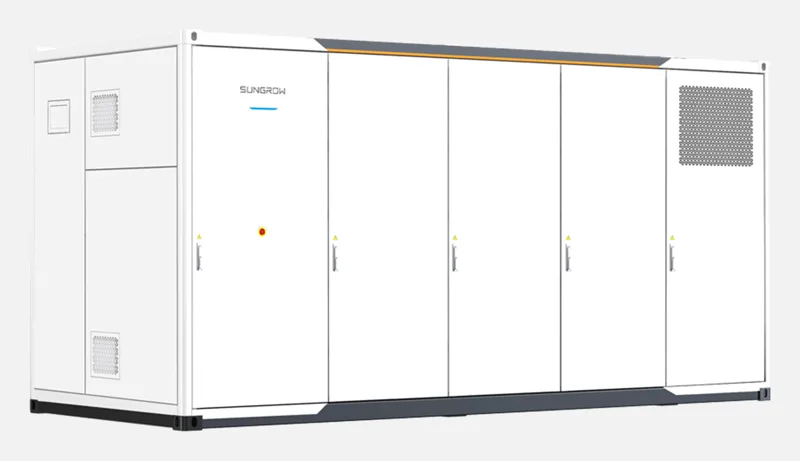
Sungrow PowerTitan. Image: Sungrow
The world's largest solar inverter maker shipped 43 GWh of storage in 2025, up from 28 GWh in 2024 and 10.5 GWh in 2023. Storage revenue rose 49.39% to CNY 37.29 bn, or 41.8% of the group total, and in the first half of 2026 storage reached half of Sungrow's revenue on 25 GWh of shipments. Wood Mackenzie ranks it second globally and first in Europe and Latin America.
On 3 November 2026 Sungrow and BW ESS completed the 1,243 MWh first phase of Hams Hall in the West Midlands, expected to be Europe's largest operating battery by capacity, taking 20 days from grid connection to commercial operation. Two weeks earlier, Sungrow set fire to 28.56 MWh of its new PowerTitan 3.0 at full charge with suppression disabled; the fire did not spread to neighbouring units.
Founded: 1997 · Listed: SZSE 300274
4. CRRC Zhuzhou Institute: a railway engineer in the top five
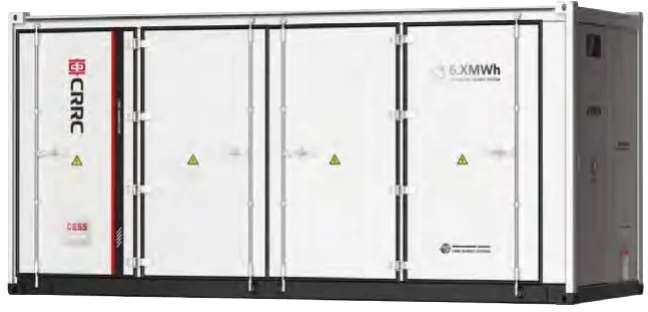
CRRC Zhuzhou 6.X energy storage system. Image: CRRC Zhuzhou Institute
The research institute of China's state train maker came to storage from locomotive traction electronics. It ranked third worldwide in 2024 with 8% of the market and fourth in 2025 (Wood Mackenzie), and it leads Asia-Pacific. Its 6.X platform packs 6.25 MWh into a 20-foot container with 587 Ah cells, or 6.9 MWh with 648 Ah cells.
CRRC buys most of its cells: Hithium agreed in December 2025 to supply it at least 120 GWh of cells and products in 2026–2030. One reference project shows the engineering range: a 60 MW / 300 MWh grid-forming station at 4,282 metres in Tibet.
Founded: 1959 · Listed: no (subsidiary of CRRC Corporation, SSE 601766)
5. HyperStrong: China's largest by installed base
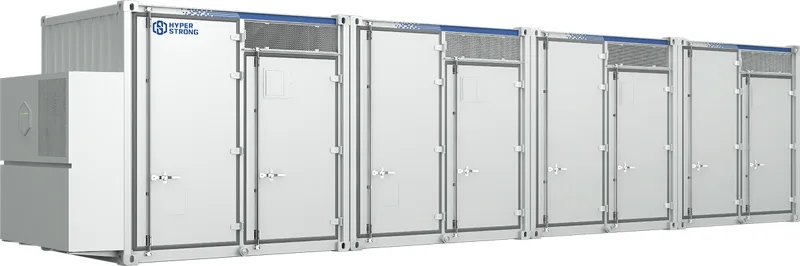
HyperStrong HyperBlock M. Image: HyperStrong
HyperStrong is little known outside China, yet the China Electricity Council ranks it first in the country by cumulative installed storage at the end of 2025. Revenue rose 40.42% to RMB 11.61 bn in 2025, and Bloomberg reported 26 GWh of shipments with a target of 70 GWh for 2026. It listed on Shanghai's STAR Market in 2025.
In April 2026 it signed a three-year deal with CATL for 60 GWh of sodium-ion storage batteries. In Germany it is building the 400 MW / 1.6 GWh GigaBattery Boxberg for LEAG as turnkey contractor.
Founded: 2011 · Listed: SSE 688411
6. Huawei Digital Power: the grid-forming specialist
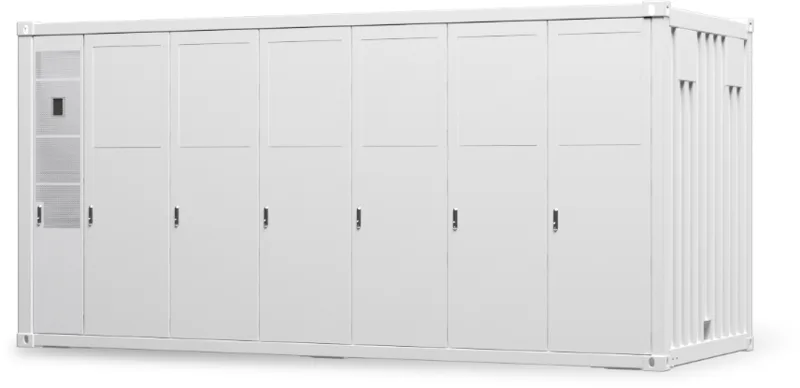
Huawei LUNA2000-5015-2S. Image: Huawei
Huawei does not publish storage volumes, but every tracker places it in the top five: fifth for Wood Mackenzie in 2025, fourth for InfoLink in 2025 and third in the first half of 2026. Its Digital Power division, which also sells inverters, data-centre power and EV chargers, earned CNY 77.31 bn in 2025, up 12.7%. It is second in home batteries too (InfoLink, 2025).
The utility product, LUNA2000-5015-2S, holds 5,015 kWh in a 20-foot container with 314 Ah LFP cells and is built for grid-forming operation, which lets a battery stabilise a weak grid the way a spinning generator does. In November 2026 Huawei told partners it plans price rises of 5% to 15% on storage and solar equipment, citing copper and component costs (ESS News).
Founded: 1987 · Listed: no (employee-owned)
7. Envision: the wind-turbine maker with its own cells
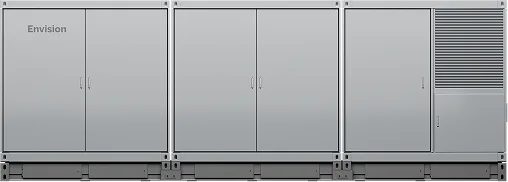
Envision Gen 8 DC block. Image: Envision
Envision started its storage line only in 2020 and now reports more than 50 GWh of delivered storage orders and over 90 GWh in hand. It shares a group with cell maker AESC, which gives it a cell supply most integrators lack. Its largest project, a 12.8 GWh cluster in Inner Mongolia including the 4 GWh Jingyi Chagan Hada station, connected to the grid at the end of 2025.
The Gen 8 platform, rolled out in October 2025, uses 750 Ah-plus cells in 10-foot units configurable from 6 to 12 MWh. In April 2026 Envision began mass production of a 790 Ah LFP cell and signed a $500 m vendor-financing deal with BBVA.
Founded: 2007 · Listed: no
8. Fluence: the largest Western pure play, in a difficult year
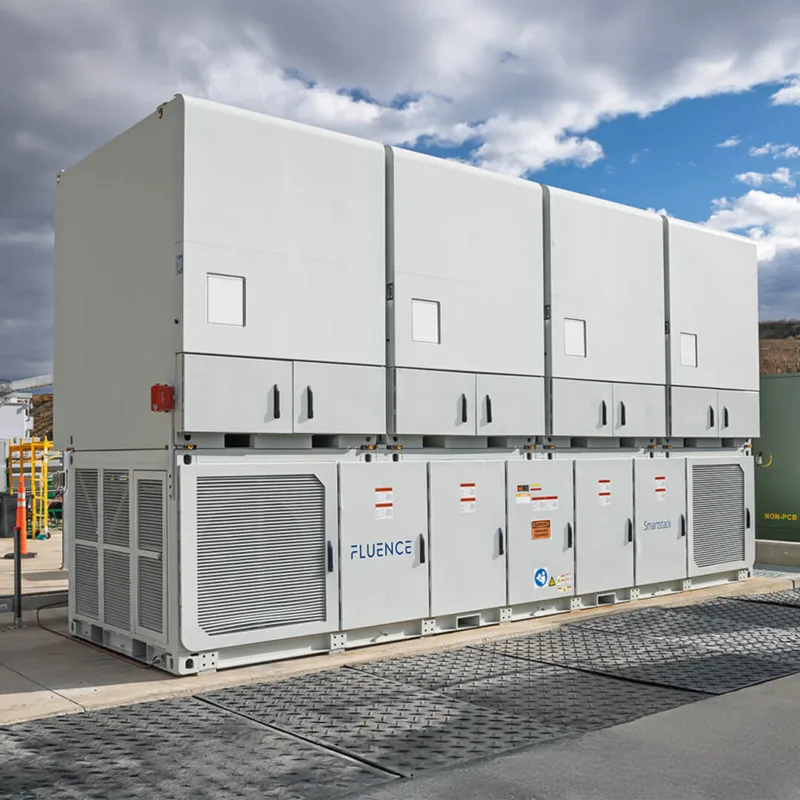
Fluence Smartstack. Image: Fluence
Formed by Siemens and AES in 2018, Fluence had deployed 17.8 GWh in total by September 2025 and 19.3 GWh by June 2026. Revenue fell 16.1% to $2.26 bn in fiscal 2025. In September 2026 it cut its fiscal 2026 revenue guidance to about $2.4 bn, blaming the slow ramp of a contract-manufacturing plant in Houston, and on 2 November 2026 its CEO and CFO stepped down. Full-year results are due on 23 November.
Orders have held up better than results: the company cites a record $6.4 bn backlog, and in October 2026 Vattenfall chose it for the 254 MW / 1 GWh Brunsbüttel battery in Germany. Fluence is also the supplier behind Ukraine's largest battery portfolio (see below). For US projects it buys about half of its cells from AESC in Tennessee to stay within the new foreign-entity rules.
Founded: 2018 · Listed: Nasdaq FLNC · Employees: ~1,670 (September 2025)
9. Canadian Solar e-STORAGE: storage outgrows the panel business
Canadian Solar's storage arm shipped a record 7.8 GWh in 2025, half of it to the US, and storage revenue rose from $0.82 bn to $1.37 bn. In March 2026 it signed a 500 MW / 2,493 MWh order with a US utility for data-centre grid support, to ship between March and July 2027. Its newest product, FlexBank 1.0, holds up to 8.36 MWh in open-frame cabinets with 314 Ah LFP cells.
Founded: 2001 (parent) · Listed: Nasdaq CSIQ · Employees: 12,587 (whole group, end-2025)
10. Valo (formerly Wärtsilä Energy Storage): Europe's last major integrator changes hands
Wärtsilä entered storage by buying Greensmith in 2017 and became the only European company in Wood Mackenzie's global top 10. In June 2026 it decided to stop reporting storage as a business; on 1 October 2026 it moved the unit, with EUR 694 m of 2025 sales and about 450 staff, into Valo, a 50/50 joint venture with Germany's RCT Solutions. Valo inherits more than 20 GWh across 130-plus projects, sells the GridSolve Quantum3 system and in October 2026 won the 400 MW / 1,600 MWh Teebar project in Queensland.
Founded: 2026 (JV) · Listed: no
Just outside this group sit Trina Storage, which shipped more than 8 GWh in 2025 according to a broker note on its annual report, Sunwoda (4% in Benchmark's ranking) and SCETL. In North America, Wood Mackenzie's 2025 table puts the developer NextEra third, behind Tesla and Sungrow.
Battery Cell Makers Behind the Containers
Storage cell shipments almost doubled in 2025, to 612.39 GWh (+94.59%, InfoLink), and the first half of 2026 alone reached 467.84 GWh. Production is even more concentrated than integration: the ten largest suppliers shipped 88.8% of cells, all ten are headquartered in China, and both Korean makers, LG Energy Solution and Samsung SDI, have dropped out of the top 10. Behind the three profiled below come BYD, CALB, REPT BATTERO, AESC, Gotion, Cornex and Great Power.
1. CATL: still No. 1, but its share keeps shrinking
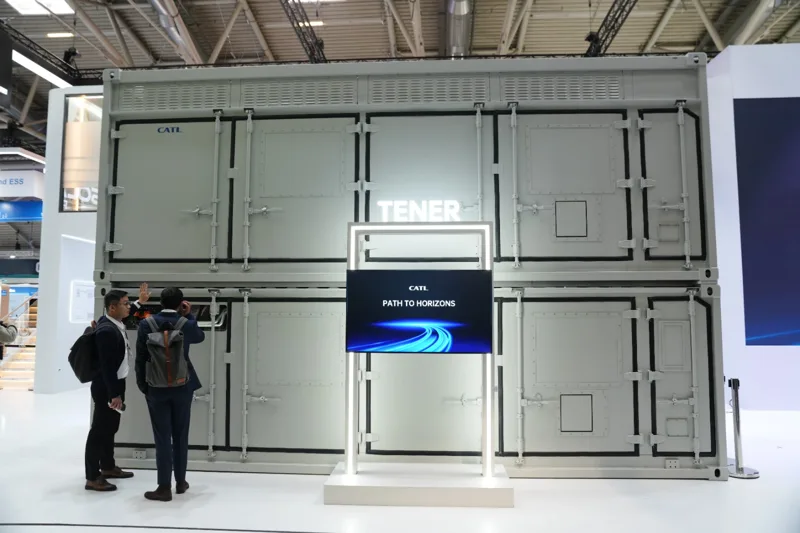
CATL TENER Stack at ees Europe 2025. Image: CATL
CATL shipped 121 GWh of storage cells in 2025 by Benchmark's estimate, more than any rival, yet its market share fell from 32% in 2023 to 29% in 2024 and 20% in 2025 as Hithium, EVE and others added capacity. CATL has answered by selling complete DC blocks. TENER, unveiled in April 2024, put 6.25 MWh in a 20-foot container with a promise of zero capacity loss in the first five years; TENER Stack, in mass production since May 2025, holds 9 MWh. In October 2026 German integrator INTILION signed a memorandum for 3 GWh of TENER systems over five years.
Founded: 2011 · Listed: SZSE 300750, HKEX 3750
2. Hithium: from start-up to No. 2 in six years
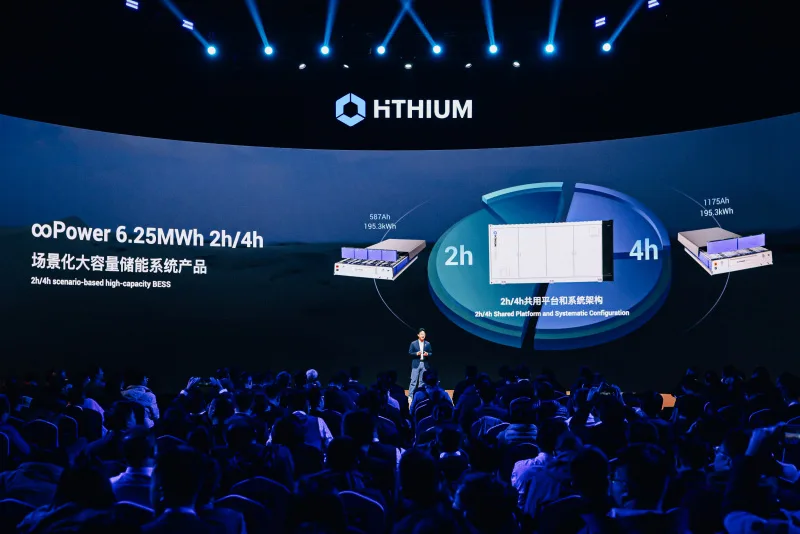
Hithium ∞Power 6.25 MWh launch, December 2024. Image: Hithium
Founded in 2019 and making only storage cells, Hithium climbed from fourth in 2024 to second in 2025 with about 12% of shipments. Its ∞Power 6.25 MWh system, launched in December 2024, uses a 1,175 Ah cell in the 4-hour version, and a 4 GWh order from Saudi Electricity Company followed in August 2025. It opened a module and system assembly plant in Mesquite, Texas, in August 2025 and signed a 2 GWh framework agreement with Ukraine's KNESS in February 2026.
Founded: 2019 · Listed: no
3. EVE Energy: storage overtakes EV batteries
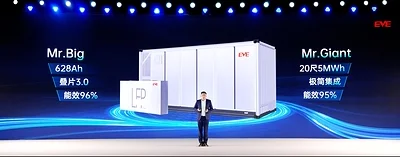
EVE Energy Mr.Big cell and Mr.Giant system at their launch, January 2024. Image: EVE Energy
EVE shipped 71.05 GWh of storage batteries in 2025, up 40.84% and well ahead of its 50.15 GWh of EV batteries; storage brought in RMB 24.44 bn, almost 40% of revenue. Its Mr.Big cell holds 628 Ah, double the 314 Ah standard, which halves the number of cells in a container. The first 400 MWh project built on it was energised in Hebei in September 2025, with 80 containers delivered and connected in a week.
Founded: 2001 · Listed: SZSE 300014 · Employees: 31,213 (end-2025)
4. LG Energy Solution: betting on US-made LFP
LG Chem's battery business became LG Energy Solution in December 2020, and in 2022 it bought the remains of NEC Energy Solutions, now its US integration arm, LG Energy Solution Vertech. It fell out of the storage cell top 10 after years of building mainly nickel-based cells, and is now catching up with LFP in the US. LFP storage cell production started in Holland, Michigan, in May 2025 and at a second Michigan plant in Lansing in August 2026. Its ESS order backlog stood at 140 GWh at the end of 2025.
Founded: 2020 · Listed: KOSPI 373220
5. Samsung SDI: the last nickel holdout switches
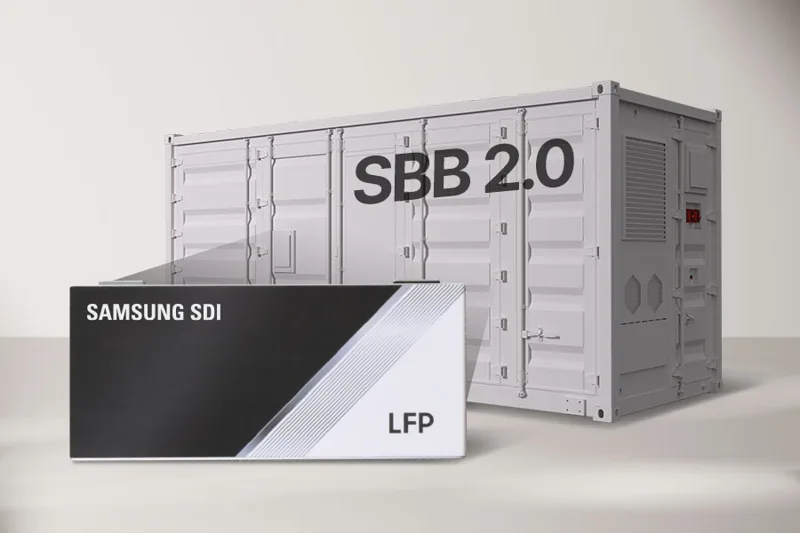
Samsung SDI SBB 2.0. Image: Samsung SDI
Samsung SDI's storage containers ran on nickel-based NCA cells; the SBB 1.7 still packs 6.14 MWh into 20 feet that way. In September 2025 it added SBB 2.0, its first LFP system, and in December signed a three-year LFP cell contract worth more than KRW 2 trillion with a US customer, made in Indiana from 2027. The company lost KRW 1.72 trillion at operating level in 2025, while its storage business posted record quarterly revenue in the fourth quarter.
Founded: 1970 · Listed: KOSPI 006400
Home Battery Companies
Home batteries are a small slice of the market by energy, 35.11 GWh of 421 GWh shipped in 2025, but they are growing fastest: 39.07 GWh in the first half of 2026 alone, up 137.67% (InfoLink). Tesla led residential shipments in 2025, followed by Huawei, BYD, Sungrow and Sigenergy. In the first half of 2026 the order changed to Fox ESS, Sigenergy, Deye, Huawei and GoodWe, with Tesla out of the top five.
| Product | Capacity per unit | Maximum per system | Continuous power | Chemistry | Warranty |
|---|---|---|---|---|---|
| Tesla Powerwall 3 | 13.5 kWh | 94.5 kWh | 11.5 kW (US) | LFP | 10 years |
| FranklinWH aPower 2 | 15 kWh | 225 kWh | 10 kW | LFP | 15 years / 60 MWh |
| Enphase IQ Battery 10C | 10 kWh | expandable | 7.08 kW | LFP | 15 years |
| Sigenergy SigenStor | 5 or 8 kWh modules | 6 modules per controller | 3.0–4.6 kW per module | LFP | n/a |
| Huawei LUNA2000-S1 | 5 or 7 kWh packs | 21 kWh per ESS | up to 10.5 kW per ESS | LFP | up to 15 years |
| BYD Battery-Box Premium HVM | ~2.7 kWh modules | 65 kWh (3 towers) | n/a | LFP | n/a |
| sonnenBatterie 10 performance+ | 11 or 22 kWh | 55 kWh | 12 kW (22 kWh model) | LFP | 10 years / 10,000 cycles |
| SolarEdge Nexis | 4.9 kWh blocks | 78.4 kWh (EU) | n/a | LFP | n/a |
Usable capacity per manufacturer datasheets, November 2026. "n/a" = not stated on the official product page. BYD HVM module size derived from 8.1–21.7 kWh for 3–8 modules. Powerwall 3 chemistry per Tesla's installer briefing, reported by Electrek (April 2024).
Tesla Powerwall 3 and FranklinWH aPower 2: the US whole-home pair
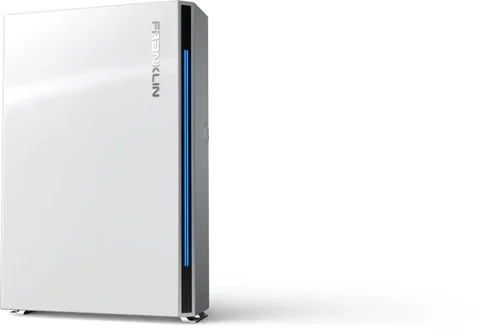
FranklinWH aPower 2. Image: FranklinWH
Tesla passed one million installed Powerwalls in September 2025, about one in four of them enrolled in a virtual power plant. Powerwall 3 adds a built-in solar inverter to the familiar 13.5 kWh box. Its closest US rival, privately held FranklinWH, offers more capacity per unit (15 kWh) and a longer warranty; it takes part in more than 28 utility VPP programmes and expects its Santa Clara factory to quadruple output in 2026.
Sigenergy and Huawei: Chinese all-in-ones take over
Sigenergy was founded in Shanghai in 2022 and by 2025 had revenue of RMB 9.0 bn, 99% of it abroad, according to its Hong Kong listing prospectus as reported in the financial press. It listed in Hong Kong in April 2026 and says S&P Global ranked it first in residential storage for the first half of 2026 with 14% of shipments. SigenStor combines solar inverter, battery, EV charger and energy management in one stack. Huawei's FusionSolar home systems, built around the LUNA2000-S1 battery, serve 4.2 million homes in more than 170 countries.
Enphase, SolarEdge, BYD and sonnen: the established brands
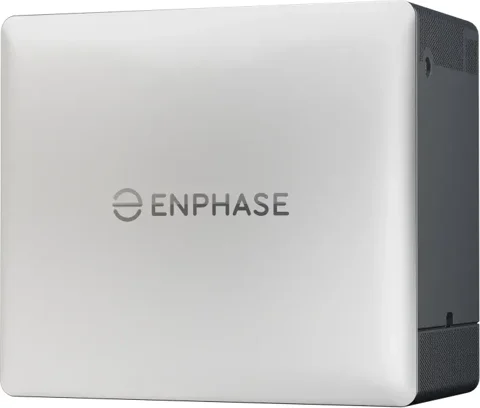
Enphase IQ Battery 10C. Image: Enphase Energy
Enphase shipped 706.1 MWh of IQ Batteries in 2025, up 36%, and launched the 10 kWh IQ Battery 10C in July 2025. SolarEdge recognised 897.4 MWh of battery sales and $285.4 m of battery revenue in 2025 and opened US orders for its modular Nexis battery in July 2026. BYD's Battery-Box remains a European installer standard. sonnen, a German pioneer of battery-based virtual power plants, changed owner in August 2026, when Shell confirmed it had sold the business to the Munich investor Tiven.
Long-Duration Energy Storage Companies
Lithium-ion batteries are cheapest at two to four hours. For eight hours to several days, a separate group of companies uses iron, zinc, vanadium, compressed air or gravity. BloombergNEF expects additions of storage lasting six hours or more to quadruple to 2 GW in 2026: still a niche next to 188 GW of total storage forecast for the year, and a niche where companies often fail.
| Company | Technology | Duration | Flagship project | Status, November 2026 |
|---|---|---|---|---|
| Form Energy | Iron-air | up to 100 h | Xcel / Google, Minnesota: 300 MW / 30 GWh (needs approval) | Factory producing; first pilot being delivered; $750 m raised Aug 2026 |
| Rongke Power | Vanadium flow | 4–12 h | Jimusaer, Xinjiang: 200 MW / 1,000 MWh | World's first GWh-scale flow battery in operation (Dec 2025) |
| Eos Energy | Zinc (aqueous) | 4–16+ h | MN8 Energy: up to 750 MWh supply deal | Revenue rising; 2025 net loss $969.6 m |
| Energy Vault | Lithium-ion, gravity | 2–8 h | Stoney Creek, NSW: 125 MW / 1 GWh | Shifted to owning its projects |
| Hydrostor | Compressed air | 8+ h | Willow Rock, California: 500 MW / 4,000 MWh | Site work begun; DOE loan guarantee conditional |
| Invinity | Vanadium flow | 4–18 h | Laufenburg, Switzerland: up to 1.5 GWh (design stage) | Sales up 504% to 31.4 MWh |
| ESS Tech | Iron flow, now sodium-ion | 1–48 h | SRP, Arizona: 5 MW / 50 MWh | Delisted from NYSE (Oct 2026); going-concern doubt |
Sources: company releases and annual reports (2025–2026); Xcel Energy (24 February 2026); ESS Tech (5 October 2026).
Form Energy: the best-funded bet on multi-day storage
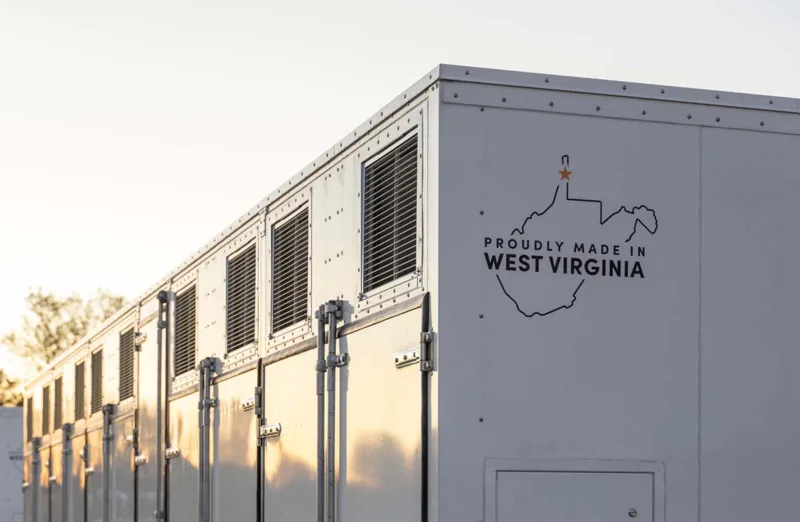
Form Energy iron-air battery enclosures. Image: Form Energy
Form Energy's battery stores energy by rusting iron and reverses the reaction to discharge for up to 100 hours. The company has raised more than $2 bn, including a $750 m Series G in August 2026, and has about 80 GWh under agreement, including 12 GWh for Crusoe's AI data centres and a proposed 300 MW / 30 GWh system for Xcel Energy and Google in Minnesota. Its Weirton, West Virginia, factory is in production. The first commercial pilot, 1.5 MW / 150 MWh for Great River Energy, was still being delivered in March 2026, so iron-air has yet to prove itself at scale.
Rongke Power, Eos and Invinity: flow and zinc reach commercial scale
Rongke Power of Dalian put the world's first gigawatt-hour flow battery into operation at the end of 2025: 200 MW / 1,000 MWh in Xinjiang, next to a 1 GW solar plant. Eos makes zinc batteries in Pennsylvania backed by a $303.5 m DOE loan; revenue rose from $15.6 m in 2024 to $114.2 m in 2025, and it expects 2026 revenue in the lower half of a $300–350 m range. Invinity, listed on London's AIM, sold 31.4 MWh of vanadium flow batteries in 2025 and is designing a system of up to 1.5 GWh for a Swiss data-centre campus.
Energy Vault, Hydrostor and ESS Tech: three different paths
Energy Vault became known for gravity storage, but its growth now comes from lithium-ion projects, increasingly ones it owns, such as the 125 MW / 1 GWh Stoney Creek battery in New South Wales. Revenue rose 340% to $203.7 m in 2025. Hydrostor, which stores compressed air in purpose-built underground caverns, has a conditional $1.76 bn DOE loan guarantee for its 4 GWh Willow Rock plant and began site work in July 2026. ESS Tech shows the downside: revenue of $1.6 m in 2025, 62 staff, NYSE trading suspended in October 2026, and a pivot from iron flow to sodium-ion batteries.
What Happened to the Companies on Our Old List
The previous edition of this page listed 44 companies and institutions. Many are still in business, but few belong on a list of energy storage leaders. The table shows where each of the storage-relevant ones stands in November 2026.
| Company on the old list | What happened | When |
|---|---|---|
| LG Chem | Battery business spun off as LG Energy Solution (listed January 2022) | 1 Dec 2020 |
| NEC Energy Solutions | Stopped taking new business; integration unit later bought by LG Energy Solution (now LGES Vertech) | June 2020; 2022 |
| Greensmith Energy | Acquired by Wärtsilä, whose storage unit moved into the Valo joint venture in 2026 | 3 Jul 2017 |
| Xtreme Power | Chapter 11; assets bought by Younicos, which Aggreko acquired in 2017 | 2014 |
| Powin (not on the old list; No. 3 in North America in 2024) | Chapter 11; FlexGen bought most of its assets and IP | 10 Jun 2025 |
| ElectrIQ Power | Chapter 7 liquidation | 3 May 2024 |
| sonnen | Owned by Shell from 2019; sold to Tiven | Aug 2026 |
| AutoGrid Systems | Acquired by Uplight from Schneider Electric | Feb 2024 |
| Vivint (Solar) | Acquired by Sunrun | 8 Oct 2020 |
| Panasonic | Exited US solar and home battery sales (EVERVOLT) | Apr 2025 |
| General Electric | Energy businesses spun off as GE Vernova; integrates batteries, does not make cells | 2 Apr 2024 |
| MPINarada | Renamed MPI Energy | 20 May 2026 |
| EEnovate / EnerVenue | EnerVenue active; nickel-hydrogen production moved to Changzhou, China | 2026 |
| Bboxx | Administration; assets bought by Bboxx 2.0 (off-grid solar, not storage) | May 2025 |
| Toshiba | Still makes SCiB lithium-titanate cells, mainly for buses, ships and industry | active |
| Leoch | Still mainly a lead-acid maker; 2025 net loss | active |
| e-On Batteries, Instant On | No news or filings found since about 2021; websites unreachable | unverified |
Sources: company releases, SEC and court filings; trade press where no primary notice exists (Panasonic, sonnen). Checked 7 November 2026.
The rest of the old list never made storage products. NextEra (6.2 GW of batteries owned), Invenergy and RES develop and own projects; Black & Veatch builds them; ComEd is a utility. Bloom Energy makes fuel cells, ChargePoint EV chargers, Siemens, ABB, Johnson Controls and Parker Hannifin industrial equipment. Oracle, MarkLogic, UpTake, PrecisionHawk, Veeco, Phononic and Lockheed Martin are software, drone, semiconductor, cooling and defence companies, and Cambridge, Penn State, the University of Minnesota and Fraunhofer are research institutions.
The Energy Storage Market in Numbers, 2022–2026
Global storage additions grew roughly sevenfold in three years, from 16 GW in 2022 to 112 GW in 2025. Tesla grew almost as fast, so its share of the world's new storage energy has stayed at about 15% while Chinese rivals took the rest of the growth.
| Year | Global additions, GW | Global additions, GWh | Change y/y (GW) | Tesla deployed, GWh | Tesla change y/y | Tesla share of global GWh |
|---|---|---|---|---|---|---|
| 2021 | ~10 | n/a | n/a | 3.99 | n/a | n/a |
| 2022 | 16 | n/a | +68% (BNEF) | 6.5 | +63% | n/a |
| 2023 | 44 | 96 | +175% | 14.72 | +126% | 15.3% |
| 2024 | ~70 | n/a | +59%e | 31.4 | +113% | n/a |
| 2025 | 112 | 307 | +48% | 46.7 | +49% | 15.2% |
| 2026 | 188 (forecast) | 535 (forecast) | +45% (BNEF) | 36.0 (Jan–Sep) | n/a | n/a |
Global additions exclude pumped hydro. Figures come from different BloombergNEF editions, which revise history; "e" = list.solar estimate from rounded figures. BNEF's +45% for 2026 is measured against a revised 2025 base. Tesla share = Tesla deployments ÷ BNEF global GWh, a list.solar calculation; deployments and installations are not identical. Sources: BloombergNEF Energy Storage Market Outlooks (2023–2026); Tesla 10-K filings (2021–2025) and production and deployment releases (2026).
Shipments run ahead of installations because systems are counted when they leave the factory. InfoLink counted 421.16 GWh of system shipments in 2025 (+75.48%) and 303.40 GWh in the first half of 2026 (+83.45%); it now expects 662 GWh of system and 1,026 GWh of cell shipments for 2026. China installed 189.48 GWh in 2025 (CNESA) and the US 54.6 GWh (BNEF); Europe added 36 GWh (SolarPower Europe).
Myth: "Tesla Is the Biggest Energy Storage Company"
It depends on what you count, and on most counts it no longer is. Wood Mackenzie, which ranks integrators by revenue-recognised shipments, still has Tesla first. Benchmark, counting gigawatt-hours shipped, puts BYD first with 60 GWh against Tesla's 47 GWh. InfoLink's first-half 2026 ranking places Tesla fourth, behind BYD, Sungrow and Huawei.
At the cell level Tesla barely registers. CATL alone shipped 121 GWh of storage cells in 2025, and none of the top 10 cell suppliers is American. Tesla bought most of its Megapack cells from Chinese suppliers and only began putting its own Nevada-made LFP cells into Megapacks in the third quarter of 2026. It has also signed a $4.3 bn supply deal with LG Energy Solution for cells from 2027 (Energy-Storage.news).
What is true: Tesla is the largest non-Chinese storage company by a wide margin, and the only Western integrator besides Fluence in Benchmark's top 10. It has held about 15% of global storage additions since 2023, a share that held steady while the market grew more than threefold.
Battery Storage Prices in 2026: Record Lows, Then a Rebound
Price is the main reason Chinese suppliers dominate. BloombergNEF's survey put the average stationary storage battery pack at $70/kWh in 2025, down 45% in one year and, for the first time, cheaper than packs for electric cars. A complete turnkey system (battery, power conversion and controls, without installation) averaged $117/kWh worldwide, but the gap between regions is wide: $73/kWh in China, $177 in Europe and $219 in the US.
| Year | Average Li-ion pack price, $/kWh (real 2025) | Change y/y |
|---|---|---|
| 2013 | 827 | n/a |
| 2018 | 224 | n/a |
| 2020 | 169 | n/a |
| 2021 | 159 | −6% |
| 2022 | 170 | +7% |
| 2023 | 148 | −13% |
| 2024 | 118 | −20% |
| 2025 | 108 | −8% |
| 2025, stationary storage only | 70 | −45% |
Volume-weighted average across EVs, buses, two-wheelers and stationary storage, BloombergNEF Lithium-Ion Battery Price Survey (9 December 2025 edition, real 2025 dollars; the 2024 edition gave $115 for 2024 in 2024 dollars). Year-on-year changes for 2021–2024 are list.solar calculations from the chart values. Turnkey system prices from BNEF's Energy Storage System Cost Survey 2025 as reported by Energy-Storage.news (16 December 2025).
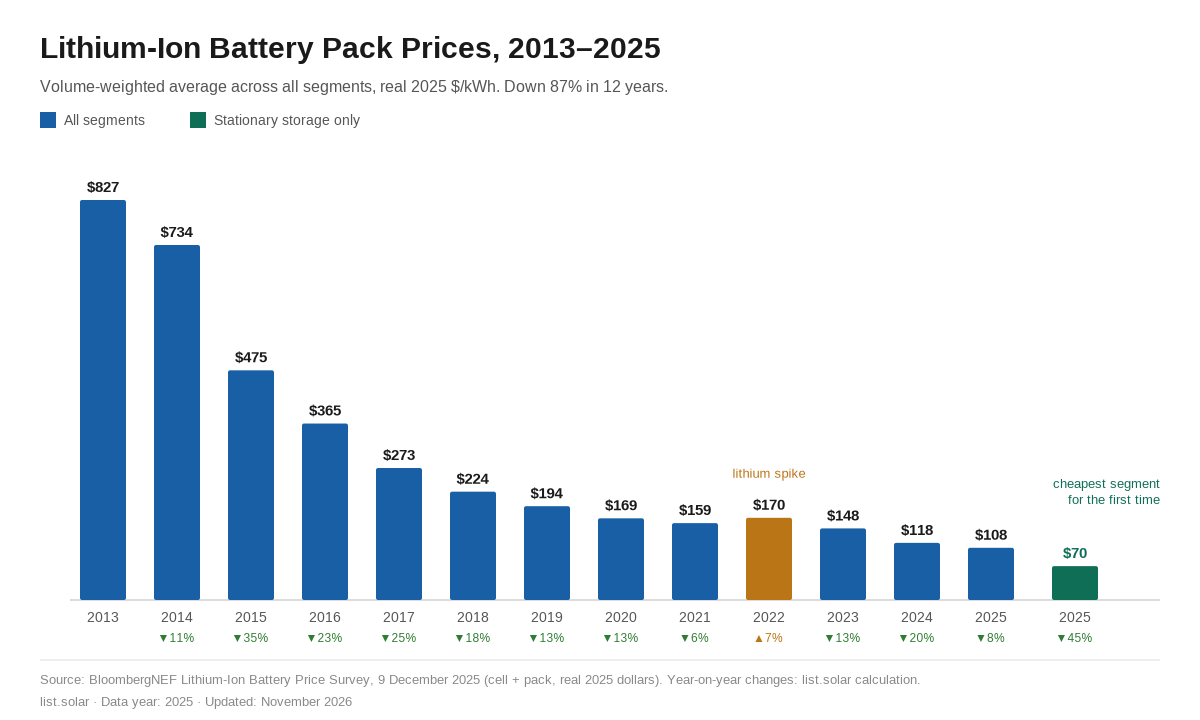
The fall stopped in late 2025. The price of a 314 Ah LFP storage cell in China rose from CNY 0.300/Wh at the end of October 2025 to CNY 0.365/Wh on 20 April 2026, about 22%, as lithium carbonate more than doubled from CNY 73,550 to CNY 181,500 a tonne between October 2025 and January 2026 (InfoLink, SMM). Average winning bids for Chinese storage systems climbed from RMB 0.479/Wh in 2025 to RMB 0.594/Wh in May 2026. The bigger cells now arriving cut costs in the other direction: BNEF found DC systems built with cells of 300 Ah or more 50% cheaper than those with smaller cells.
Policy: US Tariffs, Foreign-Entity Rules and the EU Resilience Test
Governments in the US and EU are trying to reduce dependence on Chinese batteries, with mixed results so far. Wood Mackenzie still ranked Sungrow second in North America in 2025.
| Measure | What it does | In force |
|---|---|---|
| US Section 301 tariff, Chinese non-EV lithium-ion batteries | Raised from 7.5% to 25% | 1 Jan 2026 |
| US Section 301 "forced labour" action | Additional 12.5% on Chinese goods; list.solar estimates the total duty on a Chinese storage battery at about 41% if no exemption applies | 24 Jul 2026 |
| US "One Big Beautiful Bill Act" | Storage keeps the 48E investment tax credit; projects starting construction after 2025 must source at least 55% of costs from outside "prohibited foreign entities", rising to 75% after 2029 | 4 Jul 2025 (sourcing rule from 2026) |
| US Executive Order 14421 | Lets the Energy Secretary ban grid equipment, explicitly including battery storage, from "covered foreign entities"; no implementing rules yet | 26 Aug 2026 |
| US duties on Chinese anode graphite | Commerce set 160–170% rates, but the USITC found no injury, so no duties apply | blocked 12 Mar 2026 |
| EU Battery Regulation 2023/1542 | Digital battery passport for every industrial battery over 2 kWh | 18 Feb 2027 |
| EU Net-Zero Industry Act | Non-price and resilience criteria on at least 30% of renewable auction volume; battery cells, materials and BMS listed as components | 30 Dec 2025 |
| China Document 136 | Ends mandatory storage pairing as a condition for new wind and solar; pushes demand to standalone grid batteries | 9 Feb 2025 |
Sources: Federal Register 89 FR 76581 (18 September 2024), 91 FR 47318 (28 July 2026), 91 FR 55995 (31 August 2026); Public Law 119-21; USITC (12 March 2026); EUR-Lex; NDRC (9 February 2025). The 41% figure (3.4% MFN + 25% + 12.5%) is a list.solar estimate.
The US rules have started to move factories. LG Energy Solution and Samsung SDI now make LFP storage cells in Michigan and Indiana, Tesla makes its own in Nevada, and Fluence sources about half of its US cells from AESC in Tennessee. China's end of forced pairing had the opposite effect from what many expected: Chinese storage tenders still grew 68% to 477.3 GWh in 2025, led by standalone projects.
Safety: Failures per GWh Down 98% Since 2018
Battery fires draw headlines out of proportion to their frequency. EPRI's failure database, updated in October 2026, shows incidents per gigawatt-hour deployed falling 98% between 2018 and 2025, to 0.04 per GWh, a rate EPRI calls comparable to large oil-filled transformers. 93% of incidents caused no injuries. Indoor installations and older systems fail more often; EPRI could not show that cell chemistry on its own is the deciding factor.
The most serious recent case shows both points. On 16 January 2025 fire broke out in the 300 MW / 1,200 MWh first phase of Vistra's Moss Landing plant in California, which used LG NMC batteries installed inside a former turbine hall. About 1,200 residents were evacuated for 24 hours; the cause is still officially unknown, and crews had removed more than 39,000 modules by late 2026. Standards have tightened since: the 2026 edition of NFPA 855 adds large-scale fire testing, and UL 9540A's sixth edition came out in March 2026. Sungrow, Hithium and others now burn full-size containers in public to prove that fire does not spread.
Ukraine: Batteries as Grid Defence
Ukraine went from almost no grid batteries to one of Europe's largest storage markets in two years. Ukrenergo CEO Vitalii Zaichenko put grid-connected battery capacity at about 2 MW in 2024 and about 600 MW in late April 2026, with grid connection conditions issued for another 1.4 GW. SolarPower Europe ranks Ukraine fourth in Europe for 2025 with 2.9 GWh installed, a figure that includes portable and home units. Imports of batteries reached $1.48 bn in 2025, 76% of them from China (State Customs Service).
The largest single portfolio belongs to DTEK and Fluence: six sites of 20–50 MW in the Kyiv and Dnipropetrovsk regions, 200 MW / 400 MWh in total, energised in September 2025 after less than six months of construction. Ukrainian banks led by Oschadbank lent €67 m, and in September 2026 the US DFC approved further financing, €85 m according to Reuters. Most of the remaining growth came through Ukrenergo's ancillary-service auctions, which brought 398 MW of batteries online by the end of 2025; all four auctions together committed up to 810 MW of new generation and storage, due by 21 November 2026. Among private developers, KNESS, which Oschadbank describes as the holder of Ukraine's first storage licence, builds with Hithium equipment and has a 2 GWh framework agreement with the Chinese maker.
The state is slower. Ukrhydroenergo's 197 MW of batteries at hydropower plants, backed by $282 m from the World Bank, is still in procurement, with contracts expected from February 2027. Policy has helped private buyers: Law 2046-IX of 2022 made storage a licensed activity without double grid charges, import duty and VAT exemptions for batteries now run to 1 January 2029, and in 2026 the regulator lifted the licence requirement for systems up to 5 MW.
From Companies to Products: What to Buy and What to Invest In
This page ranks companies. For the products themselves, from home batteries to portable stations, see our guide to the best solar storage products and the list of top portable power stations. Investors can follow the listed names, among them Tesla, Fluence, Sungrow, CATL, Eos and Energy Vault, in our energy storage stocks table and the energy storage ETFs overview. Software for monitoring batteries is listed in the battery monitoring category of List.Solar Apps, and daily company news is in the storage news section.
Methodology and Data Sources
Companies are grouped by role (integrator, cell maker, home battery brand, long-duration) and ordered within each group by 2025 shipments as reported by Benchmark Mineral Intelligence, Wood Mackenzie and InfoLink, or by the company's own filings. Where the trackers disagree, the text names each source. Long-duration companies are ordered by commercial progress.
Company figures come from annual reports, SEC filings and company press releases. Trade press (Energy-Storage.news, ESS News, pv magazine) is used where no primary copy is public, and the text says so; this applies to the BNEF turnkey system prices, Sungrow's 2024–2025 volumes, HyperStrong's shipments and the sale of sonnen. Tesla's share of global additions divides its reported deployments by BloombergNEF's global GWh; the two are measured differently, so the share is indicative. BloombergNEF revises historical figures in each edition, which is why the 2026 growth rate it reports does not match the 2025 figure it published earlier. Products were checked against the manufacturers' datasheets in November 2026.
This page was rewritten in November 2026. It will be updated after Fluence's fiscal 2026 results (23 November 2026) and the 2026 rankings from InfoLink (early 2027) and Wood Mackenzie and Benchmark (mid-2027).
FAQ
Is Tesla the biggest energy storage company?
Not on every measure. Wood Mackenzie ranks Tesla first among integrators for 2025, but Benchmark puts BYD first with 60 GWh of systems shipped against Tesla's 47 GWh, and InfoLink placed Tesla fourth in the first half of 2026. In cells, CATL shipped 121 GWh in 2025 and Tesla is not in the top 10. Tesla is the largest non-Chinese storage company.
Who makes the most battery storage cells?
CATL, with about 121 GWh and 20% of 2025 storage cell shipments according to Benchmark. Hithium and EVE Energy follow with about 12% each, then BYD, Cornex, REPT BATTERO and CALB. All ten of the largest suppliers are Chinese; LG Energy Solution and Samsung SDI fell out of the top 10 in 2025, while total cell shipments almost doubled to 612 GWh (InfoLink).
What are the largest battery storage companies in the US?
Tesla is the largest supplier in North America, followed by Sungrow and the developer NextEra (Wood Mackenzie, 2025). Fluence is the largest US-listed pure-play integrator. NextEra owns about 6.2 GW of batteries. US cell production for storage comes from LG Energy Solution in Michigan, Samsung SDI in Indiana, Tesla in Nevada and AESC in Tennessee.
How much does battery storage cost in 2026?
Stationary battery packs averaged $70/kWh in 2025 and turnkey systems $117/kWh worldwide, according to BloombergNEF: $73 in China, $177 in Europe and $219 in the US. Prices turned up in 2026, with Chinese LFP cells about 22% dearer in April 2026 than in October 2025 and system bids in China up about a quarter on the 2025 average.
Are battery storage systems safe?
Failures are rare and falling. EPRI counts 0.04 failure incidents per GWh deployed in 2025, 98% fewer than in 2018, and 93% of incidents caused no injuries. Risk is higher for indoor and older installations, as the January 2025 Moss Landing fire showed. New standards, NFPA 855 (2026) and UL 9540A (sixth edition), now require large-scale fire testing.
Which energy storage companies work in Ukraine?
Fluence supplied DTEK's 200 MW / 400 MWh portfolio, Ukraine's largest, energised in September 2025. Hithium equips projects by KNESS, one of the first licensed storage operators, under a 2 GWh framework deal. Ukrenergo's auctions have committed up to 810 MW of new generation and storage, of which 398 MW of batteries were online by the end of 2025, and Ukraine installed 2.9 GWh of storage in 2025 including home and portable units.
Related on List.Solar
Sources
- Benchmark Mineral Intelligence (Iola Hughes), "2025 BESS cell and system shipments", Energy-Storage.news, 1 July 2026: energy-storage.news
- Wood Mackenzie, global BESS integrator ranking 2026, 29 June 2026: woodmac.com
- Wood Mackenzie, global BESS integrator ranking 2025, 7 August 2025: woodmac.com
- InfoLink, 2025 global ESS shipment ranking, 13 February 2026: infolink-group.com
- InfoLink, H1 2026 global ESS shipment ranking, 14 August 2026: infolink-group.com
- InfoLink, 2025 global storage cell shipment ranking, 6 February 2026: infolink-group.com
- InfoLink, H1 2026 storage cell shipment ranking, 11 August 2026: infolink-group.com
- BYD Company, Annual Report 2025, 27 March 2026: hkexnews.hk
- Tesla, Form 10-K for 2021–2025 and quarterly production and deployment releases 2026: sec.gov (FY2025); Q3 2026 release, 2 October 2026: sec.gov
- Tesla, Q3 2025 Update (Megapack 3, Megablock, Houston), 22 October 2025: sec.gov
- pv magazine, Sungrow 2025 results, 3 April 2026: pv-magazine.com; Energy-Storage.news, Sungrow H1 2026, 2 September 2026: energy-storage.news
- Sungrow, Hams Hall commissioning, 3 November 2026: sungrowpower.com
- CRRC Zhuzhou Institute, 6.X energy storage system, 26 January 2026: crrcgc.cc
- HyperStrong, company profile and HyperBlock M: hyperstrong.com; CATL, CATL–HyperStrong sodium-ion agreement, 6 May 2026: catl.com
- Huawei, LUNA2000-5015-2S datasheet (2026) and Annual Report 2025: solar.huawei.com; huawei.com
- Envision, Gen 8 platform, 27 October 2025: prnewswire.com
- Fluence, Form 10-K FY2025, 25 November 2025: sec.gov; revised guidance, 16 September 2026: fluenceenergy.com; leadership change, 2 November 2026: fluenceenergy.com
- Canadian Solar, Q4 and full-year 2025 results, 19 March 2026: canadiansolar.com
- Wärtsilä, closing of the Valo joint venture, 1 October 2026: wartsila.com
- CATL, TENER (9 April 2024) and TENER Stack (7 May 2025): catl.com; catl.com
- Hithium, ∞Power 6.25 MWh launch, 18 December 2024: hithium.com
- EVE Energy, Annual Report 2025, March 2026: cninfo.com.cn
- LG Energy Solution, 2025 results, 29 January 2026: lgensol.com; Lansing plant, 18 August 2026: lgensol.com
- Samsung SDI, SBB 1.7 and SBB 2.0, 9 September 2025: samsungsdi.com; LFP supply contract, 10 December 2025: samsungsdi.com
- Enphase Energy, Form 10-K FY2025, 17 February 2026: sec.gov; SolarEdge, Form 10-K FY2025, 25 February 2026: sec.gov
- Tesla, Powerwall 3 datasheet: tesla.com; FranklinWH aPower 2: franklinwh.com; Sigenergy, 2025 ESG Report, 29 April 2026: sigenergy.com
- ESS News, "Shell sells sonnen to Tiven", 28 August 2026: ess-news.com
- Form Energy, Series G financing, 12 August 2026: formenergy.com; Xcel Energy, Google data centre in Minnesota, 24 February 2026: xcelenergy.com
- Rongke Power, Jimusaer GWh-scale flow battery, 31 December 2025: rkpstorage.com
- Eos Energy, Form 10-K FY2025 (26 February 2026) and Q3 2026 pre-release (19 October 2026): sec.gov; Energy Vault, FY2025 results, 17 March 2026: sec.gov
- Hydrostor, Willow Rock project: hydrostor.ca; Invinity, 2025 Annual Report, June 2026: invinity.com; ESS Tech, move to OTC trading, 5 October 2026: essinc.com
- FlexGen, court approval of Powin asset purchase, 6 August 2025: flexgen.com; Electriq Power, Chapter 7 filing, 3 May 2024: businesswire.com
- BloombergNEF, "Energy storage enters the 100-gigawatt era", 7 May 2026: bnef.com; 2H 2026 outlook, 22 October 2026: bnef.com
- BloombergNEF, Lithium-Ion Battery Price Survey, 9 December 2025: bnef.com; Energy-Storage.news on BNEF system cost survey, 16 December 2025: energy-storage.news
- ESS News citing InfoLink, storage cell prices, 22 April 2026: ess-news.com; Energy-Storage.news, China bidding report, 18 August 2026: energy-storage.news
- USTR, 89 FR 76581, 18 September 2024: federalregister.gov; USTR, 91 FR 47318, 28 July 2026: federalregister.gov; Executive Order 14421, 91 FR 55995, 31 August 2026: federalregister.gov
- Public Law 119-21 ("One Big Beautiful Bill Act"), 4 July 2025: govinfo.gov; USITC, graphite determination, 12 March 2026: usitc.gov
- Regulation (EU) 2023/1542: eur-lex.europa.eu; Implementing Regulation (EU) 2025/1178: eur-lex.europa.eu; NDRC Document 136, 9 February 2025: ndrc.gov.cn
- ESS News citing EPRI, failure rate down 98%, 15 October 2026: ess-news.com; Vistra, Moss Landing response: mosslandingresponse.com
- Fluence, DTEK portfolio energised, 11 September 2025: fluenceenergy.com; Energy-Storage.news, DFC support for the DTEK portfolio, 18 September 2026: energy-storage.news
- Interfax-Ukraine quoting Ukrenergo, auction results, 31 December 2025: interfax.com.ua; EcoPolitic quoting Interfax-Ukraine (Zaichenko), 28 April 2026: ecopolitic.com.ua
- Oschadbank, KNESS financing, 26 March 2025: oschadbank.ua; Hithium, KNESS agreement, 10 February 2026: hithium.com
- World Bank, Ukrhydroenergo financing, 30 June 2021: worldbank.org; Law of Ukraine 2046-IX: zakon.rada.gov.ua; Laws 4698-IX and 4710-IX: zakon.rada.gov.ua
- SolarPower Europe, European Battery Market Outlook 2026–2030, 23 June 2026: solarpowereurope.org; ESS News, Ukraine in Europe's top five, 20 August 2026: ess-news.com
- Interfax-Ukraine quoting the State Customs Service, battery imports, 21 January 2026: interfax.com.ua