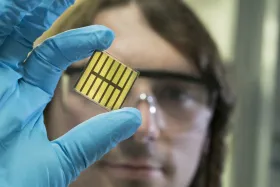
IIT-M creates new tech of hydrogen production from saltwater
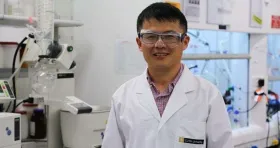
A research team from India’s IIT-M has created an innovative method of climate-safe hydrogen generation from saline water.
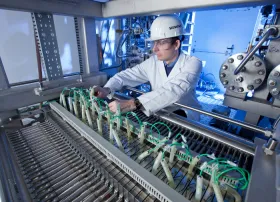
A tiny spark in the UK’s hydrogen revolution has been lit – at a university campus near Stoke-on-Trent.
The Danish government has agreed to provide $19 million in funds for two large-scale hydrogen projects under development on the Jutland peninsula. The two projects will produce green hydrogen for the transport sector from renewables sources. Denmark’s largest energy company, Ørsted, has also announced plans for an ambitious 2 MW electrolysis plant with appurtenant hydrogen storage.
The British company, which has tested its liquid air energy storage technology in the U.K., says it is preparing to deploy its first plant on U.S. soil. Highview claims its CRYOBattery is half the price of utility scale lithium-ion storage.
Three major companies from Netherlands are going to turn the Drenthe-based excessive clean power capacity into green hydrogen. The partners are investigating which green power projects can be excluded from electricity grid.
The Australian state of Tasmania has approached international investors to present its unique potential for the production of hydrogen from renewable sources, as it aims to position itself at the forefront of the nation’s green hydrogen push.
New research led by Curtin University explores the use of methanol as a storage for hydrogen fuel, providing a potential green option for the extraction and creation of this zero pollution energy source.
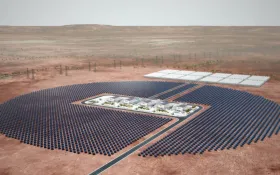
The Australian energy storage company is planning the acquisition of SolarReserve Australia II, owing three solar sites in Australia. 1414 Degrees is about to create a huge solar park with 400 megawatts of photovoltaic capacity and a few thousand MWh of thermal storage.
The government has been seen as slow to act on climate change, while Labor offered an ambitious carbon reduction policy.
The solar field will become operational in Q2 of 2021. This is the project for deployment of phase five of the huge 5-gigawatt Mohammed bin Rashid Al Maktoum solar farm.
The research group from the University of Houston has found a novel catalyst which is likely to help effectively split hydrogen from seawater. This innovation is supposed to considerably advance the seawater electrolysis development for commercial hydrogen production.
The advanced technology developed by the startup funded by Bill Gates is aimed at minimization of gas emissions from heavy industries.
France-based utilities have signed an agreement for joint deployment of the green hydrogen project, forecasted to generate 1.3 TWh of solar electricity per year as well as 10,440 t of renewable hydrogen by 2027.
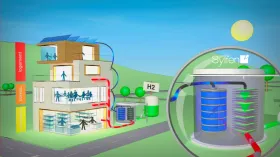
Smart Energy Hub system can work both as an electrolyser and as a fuel cell. In the first case, it stores energy in the form of biogas. In the second case, it converts gas into heat and electricity. The system has been developed by Sylfen and French Alternative Energies and Atomic Energy Commission.
This has been a breakthrough year for non-battery storage, with key advances in pumped hydro, power-to-gas, and thermal storage technologies. Many industry players are moving beyond pilot projects to contracted projects, which could lead to increased scale and lower costs.
A team of scientists led by the University of Glasgow has discovered a more efficient method of splitting water into hydrogen and oxygen using electricity which it says could almost double the amount of hydrogen produced per millivolt.
Analyst WoodMac has spelled out the urgent need to decarbonize the global hydrogen production industry. While the fuel can offer a sustainable grid balancing act for intermittent renewables, in its current fossil-fuel driven form it is pumping out more than 800 tons of carbon into the atmosphere every year.
The long-duration energy storage provider plans to eventually build a portfolio of 50 MW/250 MWh liquid air systems throughout the United Kingdom.
In a bid to reduce its carbon footprint the oil giant is ramping up its renewable energy production at a refinery in the Philippines. The news was announced by the company in a week which saw it named seventh worst corporate contributor to the climate crisis since awareness of emissions-related damage first emerged.
The offer was apparently submitted by Saudi energy giant ACWA Power, which refused to confirm the bid when asked by pv magazine. The second lowest bid – $0.0175/kWh – was reportedly submitted by a consortium formed by Emirati developer Masdar, French utility EDF and Chinese PV panel maker JinkoSolar.
Germany has long been a global leader in driving acceptance of clean technologies through its progressive energy policies and regulations. Its influence in addressing climate change extends well beyond its borders, and the country is taking an active role to support the global energy transition through international cooperation. Germany has bilateral energy partnerships with approximately 20 countries, and its strong partnership with California is focused on creating a route to the future – a carbon-neutral one. State Secretary at the Federal Ministry for Economic Affairs and Energy Andreas Feicht met with pv magazine to discuss the country’s partnership with California, and its journey toward decarbonization.
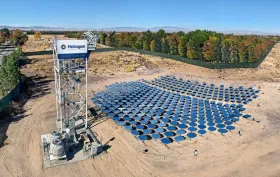
Developer Hydrogen Renewables Australia (HRA) and German engineering giant Siemens have unveiled plans for a hydrogen production facility in Western Australia, meant to be powered by a whopping 5GW of wind and solar.
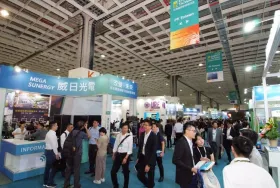
Global experts are set to gather in Taipei in less than a month to take stock of the island’s strengths and challenges as it embarks on a multi-gigawatt renewable transformation by 2025.
The International Renewable Energy Association says the integration of hydrogen into the energy transition will not happen overnight and electrolysis costs will not be halved until the 2040s. That hydrogen and related products could revolutionize the world energy landscape, however, is not in doubt.
A new report in Sweden suggests that renewables are an ideal source of power for marine vessels, based on a case study in which solar PV and proton-exchange membrane fuel cells, combined with a diesel generator, were used to reduce the greenhouse gas and particulate emissions of cruise ships by almost 10%
Australia’s Northern Territory has unveiled a new target of net-zero carbon emissions by 2050 in a policy document that touts solar and backs a proposed 10GW/20-30GWh solar-plus-storage plant earmarked to provide energy to the region and Singapore.
EuPD Research has calculated what needs to be done to replace the nuclear and coal generation to be phased out in Germany. Accelerated expansion of PV appears the best short-term option. However, storage capacity will need to increase 30-fold by 2040 so solar can become the main pillar of the country’s energy system.
French developer Neoen wants to build an energy superpark in South Australia that comprises 1.2GW of wind, 600MW of solar and 800MW of battery storage capacity.
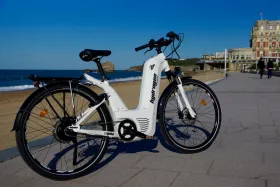
With the 200 hydrogen bikes offered to journalists and world leaders at the G7 summit in Biarritz proving popular, manufacturer Pragma Industries has received an order for 1,000 of them from Chilean president Sebastian Pinera. The company’s founder, Pierre Forté, wants the bike to have a societal impact in developing countries.
Two of Germany’s leading research institutes and a CIGS module maker have announced plans to work on the development of perovskite-CIGS tandem cells with a target of producing thin film modules with better than 30% efficiency.