GAIL Plans 600-MW Solar Plus 550-MWh Storage in UP
Apr 14, 2026 03:48 PM ET
- GAIL India’s 600-MW solar plus 550-MWh storage project in Uttar Pradesh aims to “firm” output, smooth evening ramps, and deliver fast grid services—pivoting from gas to large-scale power.
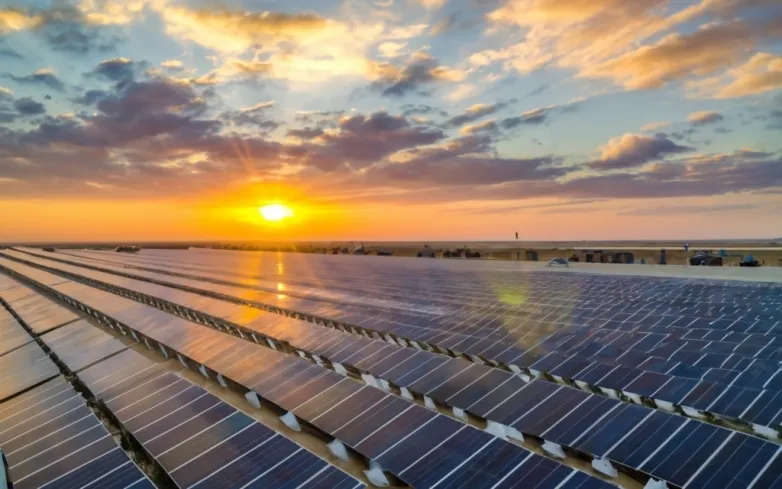
GAIL India plans to develop a 600-MW solar power project in Uttar Pradesh paired with a 550-MWh battery energy storage system, marking a shift beyond its traditional gas-focused business toward large-scale power infrastructure.
The pairing is designed to “firm” solar output by storing excess midday generation and delivering controllable supply in the evening, helping smooth ramps, shave peaks, and provide fast-response grid services. The project would likely use a modern hybrid design with high-efficiency PV and an energy management system to co-optimize shifting and ancillary services while managing battery degradation. Key next steps include securing land, grid interconnection, and procurement.
How will GAIL’s 600-MW solar and 550-MWh storage shift its focus in Uttar Pradesh?
- GAIL’s 600-MW solar-plus-550-MWh storage project in Uttar Pradesh signals a move from a gas-centric business model toward utility-scale, grid-supporting power development.
- The company will likely reorient its core capabilities toward renewable project execution—covering solar engineering, battery system integration, and long-term operations focused on performance and reliability rather than fuel sourcing.
- Pairing the 600 MW solar with 550 MWh of storage will shift the operational goal from “generate when the sun shines” to “deliver on-demand electricity,” enabling GAIL to schedule output around grid demand peaks typical of evening hours.
- By using storage to absorb midday excess and release it later, GAIL can reduce steep net-load ramps and support grid stability in Uttar Pradesh’s transmission and distribution nodes where solar intermittency is most challenging.
- The project’s dispatch strategy is expected to emphasize “firmed” solar generation—targeting smoother daily generation profiles and more predictable supply for offtakers and grid operators.
- GAIL’s focus may expand toward providing fast-response grid services (such as frequency and voltage support where required by regulations and grid codes), since batteries can react quickly compared with conventional generation.
- The company may prioritize an advanced hybrid control approach—co-optimizing solar output and battery dispatch—to balance energy shifting, power limits, and battery wear management.
- Storage planning will likely drive increased attention to lifecycle economics in Uttar Pradesh: managing battery degradation, cycling depth, and replacement/repowering planning as part of long-term asset stewardship.
- Uttar Pradesh’s project execution will likely require a broader stakeholder footprint—strengthening workstreams for land acquisition, evacuation infrastructure, grid interconnection studies, and compliance approvals.
- GAIL’s near-term priorities are expected to include confirming the most suitable site(s) based on land availability and grid access, completing interconnection and evacuation planning, and securing key equipment and power/energy management system procurement packages.