Search
Ichigo commissions 2.7-MW solar plant in Japan
neighborhood homes.
The plant is Ichigo's 60th operational solar farm in Japan. With this new addition, its capacity reaches 169.17 MW, the firm
Jan 5, 2022 // Plants, Large-Scale, Commercial, Japan, Asia, PV Power Plant, Ichigo
Japan Targets Big Solar Subsidies, Revives Nuclear Push
Japan’s ruling Liberal Democratic Party proposed ending feed-in-tariff subsidies for solar projects over 1 megawatt, arguing falling costs make them viable and citing energy-security concerns over Chinese-made panels. Prime Minister Sanae Takaichi is prioritizing self-sufficiency and supports reviving nuclear power, with restarts planned at several plants including the Kashiwazaki-Kariwa facility.The LDP’s draft bill, expected to be tabled in fiscal 2026 and likely to pass with coalition backing, follows environmental warnings about large solar farms and local pushback, including Kushiro’s declaration. Japan targets solar at 23%-29% and nuclear at about 20% of power by FY2040, while promoting next-gen perovskite panels.
How will Japan's FIT phaseout for >1MW solar reshape project economics and supply chains?
Shift from subsidy-backed IRRs to merchant/contracted revenue: projects >1 MW will lean on corporate PPAs, retail wheeling, and balancing market revenues; basis and price cannibalization risks will require higher equity returns or longer PPA tenors.
Higher financing costs: lenders will demand stronger offtake quality, hedging, and reserve accounts; WACC rises 100–300 bps without FIT floors, pushing developers toward club deals and balance-sheet financing.
Contract structuring evolves: inflation-linked PPAs, floor-price collars, and hybrid merchant-plus-PPA models become standard; curtailment and imbalance penalties are increasingly priced into contracts.
Co-location premium on storage: DC/AC-coupled batteries used to capture peak prices, reduce curtailment, and provide FCR/FRR services; capacity revenues and arbitrage become key to bankability.
Site selection repriced: fewer marginal land projects pencil; higher value on interconnection-ready, low-curtailment nodes and behind-the-meter industrial sites; agrivoltaic and rooftop-mega projects gain share.
BOS and EPC optimization: tighter engineering to raise capacity factors (bifacial + trackers where terrain allows), higher inverter loading, and O&M digitalization to shave LCOE in the absence of FIT.
Greater use of advanced modules: n-type TOPCon/HJT and high-wattage bifacials to lower capex per watt and balance cannibalization; more scrutiny on long-term degradation and PID/LETID warranties.
Rise of corporate clean-power procurement: export manufacturers, data centers, and chemicals anchor long-tenor PPAs; RE100 and Scope 2 goals underpin demand but require granular hourly matching.
Grid and market integration costs internalized: projects budget for congestion, redispatch fees, and curtailed hours; value shifts to flexibility, forecasting, and participation in ancillary markets.
Consolidation among developers/EPCs: smaller players struggle without guaranteed tariffs; M&A and platform roll-ups accelerate to achieve scale in procurement, financing, and O&M.
Domestic supply-chain push: incentives for local cells/modules, inverters, and EMS; tighter origin tracing, cybersecurity, and ESG due diligence raise compliance costs but diversify away from single-country dependence.
Potential trade measures: anti-circumvention reviews and standards on forced-labor and carbon footprint tighten module sourcing; longer lead times and working-capital needs for compliant supply.
Price volatility management: module ASPs remain globally driven, but Japan-specific logistics, certification, and yen FX hedging gain importance; developers seek multi-call procurement and indexed pricing.
Recycling and end-of-life economics: without FIT, residual value matters—take-back schemes and glass/silver recovery can improve project IRRs and satisfy permitting.
Insurance and performance guarantees: stronger reliance on availability guarantees, curtailment extensions, and merchant revenue cover; insurers probe extreme weather and wildfire exposure.
Repowering and hybridization: older FIT sites evaluated for repower plus storage to capture market revenues; interconnection rights become strategic assets.
Community and permitting dynamics: projects bundle local benefit schemes, agrivoltaics, and biodiversity plans to expedite approvals and reduce opposition that can erode merchant economics.
Developer capabilities shift: trading desks, forecasting, and battery dispatch expertise become core; partnerships with retailers and aggregators scale route-to-market.
Timelines and pipeline triage: late-stage FIT-sized projects race to COD; early-stage >1 MW pipeline is reprioritized toward contracted, storage-ready, and grid-favored zones.
Dec 19, 2025 // Markets & Finance News, Japan, Asia, subsidy, LDP
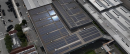
Bridgestone launches solar arrays at tyre factories in Japan
were installed atop the Shimonoseki and Kitakyushu factories in southern Japan, and also now supply electrical energy under power acquisition agreements
Feb 17, 2023 // Plants, Rooftop PV, Japan, Asia, Bridgestone
First Solar, Toshiba ESS to develop close to 60 MW of PV parks in Japan
First Solar Japan has actually awarded a full complete engineering, purchase and building (EPC) agreement to Toshiba ESS for the 31.9-MW Yatsubo Solar
Sep 16, 2020 // Plants, Large-Scale, Commercial, Japan, First Solar, Asia, PV Power Plant, Toshiba ESS
Japan Awards 79MW FIP; X-Elio Wins 30MW
Japan awarded 79 MW in its 27th solar FIP auction across 11 bids, the Green Investment Promotion Organisation said. The round drew 38 projects totaling 198.1 MW. Prices slid: the weighted average was JPY 4.61/kWh versus JPY 7.13 previously, under a JPY 8.68 cap; the highest bid was JPY 6.49.Manako Solar won the largest project at 29.9 MW; Minomoto Power’s 400‑kW bid cleared at JPY 0.00/kWh. Spain’s X‑Elio took 10 MW from the 15‑MWp Minetomari at JPY 5.12 and 20 MW from the 27‑MWp Kishiro Niino at JPY 4.67. Both Hokkaido plants are under construction, due online in 2027.
What drove Japan’s record-low solar FIP prices and zero-bid outcome?
Sharp fall in module and inverter prices since 2023, plus cheaper trackers and BOS, cut capex enough to sustain much lower premiums
Performance gains from bifacial modules, single‑axis trackers, and better layout/ALM reduce LCOE and improve capture rates
Intense competition from both domestic utilities and new foreign entrants lowered bids to win scarce grid capacity and bankable sites
Developers expect sufficient merchant revenues from JEPX and capacity/ancillary markets, making a zero premium a viable strategy at favorable sites
Long FIP tenor and lender comfort with FIP accreditation (even at zero premium) support financing with modest leverage
EPC and O&M costs fell as local supply chains matured; standardized designs and digital O&M trimmed lifecycle expenses
Some projects pair with storage or curtailment‑mitigation strategies to boost value and hedge price volatility, enabling tighter bids
Grid reinforcement plans and interregional links reduce expected curtailment in select areas, improving revenue certainty for 2027+ CODs
Corporate PPA demand and RE100 procurement provide alternative offtake routes, allowing bidders to rely less on premium revenue
Carbon and energy transition policies signal firmer mid‑term power prices as thermal units retire, improving merchant outlook
Developers raced to secure auction wins before possible rule tightening or lower caps in future rounds, intensifying price pressure
Yen weakness raised imported equipment costs, but the global price collapse more than offset FX drag for many bidders
Prequalification and risk allocation under FIP (forecasting/imbalance exposure) reward experienced operators, who can bid leaner
Some small bids aim to lock interconnection or project rights; offering a zero premium can be a strategic, low‑cost path to secure them
Mar 11, 2026 // Plants, Large-Scale, Commercial, Japan, Asia, x-elio
Maxeon Solar Technologies Files Patent Action Against Canadian Solar in Japan
legal action declaring affirms Canadian Solar Japan infringes Maxeon's Japan Patent No. JP6642841B2 (" Shingled Solar Cell Module") for the proprietary
Sep 29, 2020 // Manufacturing News, Japan, Canadian Solar, Asia, Maxeon Solar, patent, Jeff Waters, Lindsey Wiedmann
Canadian Solar Begins Work on 26.6 MW Solar Projects in Japan
begun building and construction on 2 solar photovoltaic (PV) power projects in Japan.
The initial is a 13.6 MWp project in the Ibaraki Prefecture. The project
Feb 20, 2020 // Plants, Large-Scale, Commercial, Japan, Canadian Solar, Asia, International, Shawn Qu
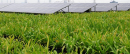
Canadian Solar brings online 100-MW solar park in Japan's Fukushima
0.259/ EUR 0.249) per kWh under an over 18-year agreement authorized under Japan's feed-in-tariff programme.
Found at a 460-acre (186-ha) site, the solar farm
Nov 18, 2022 // Plants, Japan, Canadian Solar, Asia, Fukushima, Solar Park
Largest solar power stations in Japan
biggest solar photovoltaic power stations in Japan.
(Updated May 2026)
Solar power stations, PV farms 2026 in
May 13, 2026
Ichigo commissions 1-MW solar plant in Japan
Obu City solar farm is Ichigo's 61st functional renewable energy plant in Japan. With the brand-new enhancement, Ichigo gets to 170.18 MW of capacity, the
Mar 2, 2022 // Plants, Large-Scale, Commercial, Japan, Asia, PV Power Plant, Ichigo
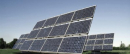
Enfinity Global protects US$ 242 million for 70MW of solar PV in Japan
Nomura acted as initial lead arranger and also single bookrunner while Japanese commercial financier Aozora Bank worked as lead arranger.
Back in
Aug 8, 2022 // Markets & Finance News, Japan, UTILITY-SCALE SOLAR, Asia, japan solar, Enfinity Global, Japan FiT
Japan Launches Agrivoltaic Solar Cell Demonstration Test
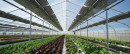
Chemical and TERRA have initiated Japan's first joint demonstration test for agrivoltaic systems, utilizing film-type perovskite solar cells in Sosa City,
Aug 22, 2024 // Technology, Japan, Asia, solar cell
Japan's policymakers authorize higher 2030 renewable energy target
with the fourth and 5th editions established in 2014 and 2018.
About 18% of Japan's electrical power came from renewables in the 2019 Japanese fiscal
Oct 25, 2021 // Markets & Finance News, Japan, Asia, policy, decarbonisation, net zero, cop26, deployment target, energy security
Japan to Recycle Solar Modules Using Blockchain Technology
solar panels using blockchain technology, as part of a programme supported by Japan's Ministry of the Environment.
Mitsubishi Research Institute will
Aug 25, 2021 // Manufacturing News, Japan, Asia, recycling, solar modules, Ministry of the Environment, Mitsubishi Research Institute, Next Energy
JinkoSolar Launches SunGiga Liquid-Cooling ESS in Japan
called SunGiga for C&I application and showcased it in this year's PV Japan Expo 2023.
JinkoSolar had actually launched the SunTank residential ESS in
Mar 21, 2023 // Storage, Japan, JinkoSolar, Asia, C&I application, intelligent frequency conversion, SunGiga, SunTank