Search
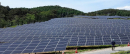
Sonnedix begins commercial op of 14-MWp solar farm in Japan
Sonnedix Hirono plant is the business's sixth project in Japan to start commercial operation in 2022, the IPP team claimed on Wednesday.
Sonnedix employed Juwi
Nov 2, 2022 // Plants, Large-Scale, Commercial, Japan, Sonnedix, Asia, solar farm
Japan Boosts Perovskite Solar Tech with Tariff Incentives
Japan's government plans to promote perovskite solar technology through the feed-in tariff system, setting the price of energy produced from perovskite cells at 10 yen per kilowatt-hour or more starting in fiscal 2025. The light, flexible perovskite cells can generate electricity in places where traditional solar panel installation is not feasible, such as building walls and windows. Japanese companies are heavily involved in research and development of the technology, focusing on quality and durability, while Chinese companies are leading in commercialization.With limited land area for solar panel installation, Japan sees the potential for new power generation sites, especially in urban areas, through the spread of perovskite technology. The government aims to support perovskite technology as part of its decarbonization strategy, positioning it as a key pillar for the future. Domestic companies like Sekisui Chemical and Toshiba are working towards commercialization, with Sekisui targeting 2025 for mass production.The expert panel will work out the details for the feed-in tariff system in fiscal 2024, which requires power companies to buy electricity generated using renewable energy at a higher price than conventional power for 10 to 20 years. Japan's focus on perovskite technology comes as it faces intense competition with overseas companies in the solar market, particularly from China. The government's support for perovskite technology is seen as crucial for maintaining Japan's position in the global market and securing a stable supply of key raw materials like iodine.
How will Japan's feed-in tariff system promote perovskite solar technology?
The feed-in tariff system in Japan will set the price of energy produced from perovskite cells at 10 yen per kilowatt-hour or more starting in fiscal 2025, promoting the adoption of this innovative solar technology.
Perovskite cells are light and flexible, making them suitable for installation in places where traditional solar panels may not be feasible, such as building walls and windows, opening up new possibilities for power generation in urban areas.
Japanese companies are heavily involved in research and development of perovskite technology, focusing on improving quality and durability, while Chinese companies are leading in commercialization.
The government aims to support perovskite technology as part of its decarbonization strategy, positioning it as a key pillar for the future of renewable energy in Japan.
Domestic companies like Sekisui Chemical and Toshiba are working towards commercializing perovskite technology, with Sekisui targeting mass production by 2025.
The expert panel will work out the details for the feed-in tariff system in fiscal 2024, which will require power companies to buy electricity generated using renewable energy at a higher price than conventional power for 10 to 20 years, incentivizing the adoption of perovskite technology.
Japan's focus on perovskite technology is crucial for maintaining its position in the global solar market and securing a stable supply of key raw materials like iodine, as the country faces intense competition from overseas companies, particularly from China.
Mar 8, 2024 // Technology, Japan, Asia, perovskite
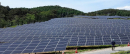
Sonnedix buys 2.3-MW solar park in Japan
plan, Sonnedix stated.
Following the most up to date purchase, Sonnedix Japan KK has 135.4 MW of operational capacity under management as well as over 380
Aug 31, 2020 // Plants, Large-Scale, Commercial, Markets & Finance News, Japan, Sonnedix, Axel Thiemann, pv power plants, Asia
Japan Promotes Perovskite Solar Cells for 2040 Goals
Japan's industry ministry is advancing its plan to utilize perovskite solar cells to generate 20 gigawatts of electricity by 2040, equivalent to the output of 20 nuclear reactors. This initiative aims to enhance renewable energy use as the country aims to reduce carbon emissions. The proposal will be incorporated into Japan's updated basic energy program, targeting a renewable energy share of 36% to 38% by fiscal 2030.To facilitate this transition, the government will subsidize the higher costs associated with perovskite solar cells from fiscal 2025 onward, addressing the technology’s current expense compared to conventional alternatives. The support will include R&D funding for Japanese manufacturers and the establishment of mass-production systems, with companies like Sekisui Chemical planning to commercialize these cells for high-rise buildings by 2025.
What measures is Japan taking to promote perovskite solar cell adoption by 2040?
To further promote the adoption of perovskite solar cells in Japan by 2040, the government and associated bodies are implementing a range of strategic measures:
Increased Research and Development Funding: The Japanese government will allocate significant resources to R&D specifically targeting perovskite solar technology, aiming to improve efficiency, durability, and scalability.
Collaboration with Academic Institutions: Partnerships between industry and Japan’s leading universities will be encouraged to foster innovation and break new ground in perovskite solar cell technologies.
Pilot Projects: The government plans to initiate demonstration projects in various ecological and urban settings. These projects will serve as real-world applications to test the efficacy and performance of perovskite cells under different conditions.
Regulatory Support: Streamlining the approval process for new perovskite solar technologies and reducing bureaucratic hurdles to speed up the adoption and integration of these systems into the energy grid.
Public-Private Partnerships: The government will foster partnerships between public entities and private companies to leverage resources, share knowledge, and accelerate the commercialization of perovskite technologies.
Educational Programs and Awareness Campaigns: Initiatives to educate the public and businesses about the advantages of perovskite solar cells will be launched to increase acceptance and promote investment in this new technology.
International Collaboration: The Japanese government is also looking to engage in international collaborations and joint ventures with other countries that are leading in solar cell innovations, which could facilitate technology transfer and knowledge sharing.
Environmental Incentives: Offering tax breaks or other financial incentives for companies and households that opt to install perovskite solar systems can stimulate demand and hasten widespread adoption.
Energy Storage Solutions: Investment in complementary technologies such as energy storage systems to ensure that the energy generated from perovskite solar cells can be effectively stored and utilized even when sunlight is not available.
Long-term Energy Strategy Integration: The adoption of perovskite solar technology is set to be part of a broader, long-term energy strategy that aims for carbon neutrality by 2050, ensuring that perovskite is seen as an integral component of the country's future energy landscape.
These measures highlight Japan's commitment to leading the renewable energy sector through innovation and strategic planning, aiming to position perovskite solar cells as a cornerstone of its energy transition efforts by 2040.
Nov 26, 2024 // Technology, Manufacturing News, Japan, Asia, solar cell, perovskite
Japan Consortium Tests Floating Data Centre in Yokohama
Japanese consortium has launched a floating data-centre pilot in Yokohama to test whether modular compute infrastructure can be deployed at sea, using seawater
Mar 26, 2026 // Technology, Plants, Japan, Asia, cooling, data centres, floating infrastructure, Yokohama
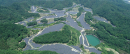
juwi Shizen Energy finishes up work with 54-MWp solar park in Japan
after some 19 months of construction.
The solar project was established by Japan-based renewables designer and financier Pacifico Energy KK.
Shizen Energy
Jun 7, 2022 // Plants, Japan, Asia, Solar Park, juwi Shizen Energy
Japan Makes Installation of Solar Panels Have To for New House in Tokyo
Japan-- the fifth biggest carbon emitter in the world-- is honking for home photovoltaic panels for each upcoming home in Tokyo, the resources city of Japan. All new houses that will certainly be built in Tokyo blog post April 2025 will be required to always mount solar power panels. With the objective of minimizing carbon emissions from the city households, the new regulation is now gone by the regional assembly of Tokyo.
Tokyo is likewise the first prefecture of Japan and the required is the first of its kind for a municipality in the country. Specifically, the ruling will require around 50 major developers and also contractors to ensure that their residences having an area of 2,000 square metres or 21,500 square feet to be fitted with renewable resource power sources. Solar energy panels are the most typical source to generate green electricity.
Recently, the Governor of Tokyo, Yuriko Koike pointed out that the city has simple 4 percent structures that get the installation of solar power panels currently.
The local government of Tokyo urban wishes to reduce the greenhouse gas emissions in the city to half by the end of this years. The reduction will certainly be based on the standard of 2000 levels.
According to reports, Risako Narikiyo, a participant from Tomin First no Kai, Koike's local event, stated in the neighborhood body assembly, "In addition to the existing international climate crisis, we face a power crisis with a long term Russia-Ukraine war. There is no time at all to waste."
Japan intends to achieve carbon neutrality by 2050-- the center of the century-- but the parody is that the country had actually switched over to coal-fired nuclear power plant following the nuclear reactors' problem in 2011 Fukushima tsunami.
In September, the Tokyo Metropolitan Government shared plans according to which it was mulling to make the solar installation in houses necessary. The strategy envisaged in September that the regulations will relate to the structures as well as homes that will have a total flooring space of less than 2,000 square meters yet will leave out the ones that will have a total floor area of less than 20 square meters.
Dec 15, 2022 // Residential, Rooftop PV, Japan, Asia, carbon emissions, Governor of Tokyo, Risako Narikiyo, Solar Power Panels, Tokyo Metropolitan Government, Tokyo rooftop solar, Tomin First no Kai, Yuriko Koike
Japan awards just 39.8MW in fifth solar auction
small in size with the largest at just 2MW of capacity, echoing the results of Japan’s fourth auction where the majority of projects were less than 2MW in
Jan 28, 2020 // Plants, Large-Scale, Commercial, Markets & Finance News, Tariffs, Japan, Asia, auction, tariff, METI
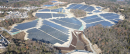
Japan awards 208MW in oversubscribed eighth solar auction
(US$ 0.09048).
That proposal is the same as the most affordable quote in Japan's sixth auction last November and also down 4.6% on the minimal quote seen in
Jul 1, 2021 // Plants, Markets & Finance News, Grids, Policy, Japan, Canadian Solar, tender, Asia, auction, ssfasia
Pattern Energy Exits Japan: 6GW Clean Energy Assets Sold
Energy Group LP announced on Friday the sale of its Japanese renewable energy assets and its entire shareholding of Japan-based affiliate Green Power
Aug 7, 2023 // Markets & Finance News, Japan, Asia, pattern energy

X-ELIO Launches 14-MW Solar Power Plant in Yamaguchi, Japan
roughly 18 GWh a year—enough to meet the demand of about 5,000 average Japanese households and avoid more than 10,000 tonnes of CO₂ annually.
Every
Jul 2, 2025 // Plants, Japan, Asia, x-elio, Yamaguchi
Ichigo starts up small solar plant in Japan
the company stated.
The plant is Ichigo's 57th functional solar ranch in Japan. With this new enhancement, the company's capability reaches 162.72 MW.
In
Nov 24, 2021 // Plants, Japan, Asia, solar plant, Ichigo
Sonnedix Japan brings 39MW online as developing PV market targets additional price declines
procedure of the Sonnedix Oita Solar project on 16 March 2020 brings its Japan profile approximately 95MWp of already-operational possessions. The firm on
Mar 27, 2020 // Manufacturing News, Plants, Large-Scale, Commercial, Markets & Finance News, Japan, Sonnedix, auctions, Asia, modules, feed-in tariff, grid connection, soft costs
Next-generation solar R&D critical to Japan net zero bid: PM
yesterday (26 October 2020), Japan's Prime Minister Yoshihide Suga-- chosen in September adhering to the resignation of Shinzo Abe-- unveiled a
Oct 27, 2020 // Manufacturing News, Policy, Japan, Asia, perovskite, r&d, yoshihide suga, suga administration, shinzo abe
Pacifico Energy Commences Work on 77 MW Solar Plant in Japan
has now started building on fourteenth (14) solar energy plants throughout Japan (consisting of the Plant) completing 1,172 MW(DC), nine (9) of which
Dec 21, 2020 // Plants, Large-Scale, Commercial, Japan, pv power plants, Asia, Pacifico Energy, sharp energy solutions corporation