Search
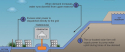
UPC/AC Renewables invest in 550 MW of pumped hydro and solar in Australia
Renewables Australia have entered into a conditional share purchase agreement for the acquisition of 51% stake in the 250 MW Baroota Pumped Hydro and the 300 MW
Aug 16, 2019 // Plants, Large-Scale, Commercial, Markets & Finance News, Storage, storage, Australia, AC Renewables, UPC Renewables, pumped hydro project, Bridle Track Solar Farm, Rise Renewables, PHES plant, Anton Rohner, Brer Adams
Australia Approves 300-MW Solar Project in Queensland
Australian federal government has approved a 300-MW solar project in Queensland, named the Cambridge Solar Farm, developed by Cambridge JMD Australia. This
Sep 20, 2024 // Plants, Large-Scale, Commercial, Australia, queensland, Oceania, Solar Project
Australia Faces Bill Shock as Renewables Rollout Lags
Australia’s energy regulator warns that delayed renewables, storage and transmission risk pushing household bills higher even as 2030 targets promise cheaper, cleaner power. With coal retirements looming, data-center growth, electrification and extreme weather, slow build-outs force reliance on aging thermal and diesel plants, lifting wholesale and retail prices.AEMC urges faster planning approvals, clearer curtailment rules, and bundling two‑to‑four‑hour batteries into projects for evening peaks and frequency response. Shovel‑ready transmission needs social license, biodiversity safeguards and landowner compensation. Households can help via rooftop solar paired with batteries or smart hot water, time‑of‑use tariffs and virtual power plants. Keep climate targets; sequence connections, then capacity, then coal exits.
How can faster approvals, battery bundling, and social license prevent higher Australian electricity bills?
- Faster approvals cut financing costs- Shorter permitting windows lower developers’ risk and interest during construction, reducing the cost per megawatt-hour that retailers pass through.- Bringing generation and storage online before coal units retire avoids expensive emergency procurements and spot price spikes.- Earlier grid connections reduce constraint payments and losses from congestion, stabilizing wholesale prices.- Faster approvals avoid costly reliance on legacy plant- Timely renewables and storage displace high‑marginal‑cost gas and diesel at peak, capping evening price surges.- Less unplanned outage exposure from aging units means fewer scarcity events and volatility premiums in retail tariffs.- Bundling batteries with new wind and solar lowers system costs- Co‑located two‑to‑four‑hour storage shifts daytime output into the evening peak, trimming the most expensive half‑hour prices that drive bills.- Shared grid connections and control systems reduce network augmentation needs and connection fees compared with stand‑alone assets.- Batteries provide fast frequency and system‑strength services, cutting ancillary service costs that retailers recover from customers.- Onsite storage soaks up local oversupply, reducing curtailment and improving project economics, which feeds into lower power purchase prices.- Battery bundling increases reliability without new fuel costs- Firming from storage allows retailers to hedge more cheaply than with gas peakers, lowering contract premiums embedded in bills.- Grid‑forming capabilities can defer some stability equipment, moderating network charges.- Strong social license accelerates transmission at lower risk- Early, genuine engagement with communities and First Nations, clear benefit‑sharing, and fair land access reduce objections and delays that inflate capital costs.- Thoughtful routing, biodiversity safeguards, and selective undergrounding where justified limit legal challenges and rework, shortening delivery and interest costs.- Faster delivery of priority lines unlocks cheaper renewable zones sooner, replacing higher‑cost generation and reducing congestion charges on bills.- Social license improves investor confidence- Lower planning and legal risk shrinks required returns (WACC), enabling cheaper bids in auctions and PPAs that flow through to end‑users.- Predictable timelines let system planners sequence connections before retirements, avoiding scarcity pricing.- Combined impact on household bills- Smoother supply during peaks, fewer volatility events, lower ancillary and network costs, and reduced financing risk translate into flatter wholesale prices and more competitive retail offers.
Dec 5, 2025 // Markets & Finance News, Storage, Policy, Australia, Oceania, transmission, electricity prices
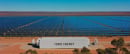
Australia Clears Tonic’s Solar Park With 440-MWh Battery
Group won planning approval for an Australian solar park with a 440-MWh battery, aligning with operators’ push for renewables that behave like dispatchable
Feb 18, 2026 // Plants, Large-Scale, Commercial, Storage, Battery Storage, Australia, Oceania, Solar Park, Planning Approval, Grid reliability
Greatcell Australia and also First Graphene discover graphene enhancements to perovskite solar cells
Australia has actually supposedly established a pilot plant in New South Wales and remains in the innovative phases of testing its series of perovskite solar
Apr 4, 2023 // Technology, solar cell, perovskite, Graphene, Greatcell Australia, First Graphene
Fluence Energy and Atmos Renewables Revolutionize Australia's Renewables Portfolio
Atmos Renewables to optimize an 870 MW portfolio of wind and solar assets in Australia's National Electricity Market. Atmos Renewables will use Fluence's Nispera
Feb 12, 2024 // Plants, Australia, Oceania, Fluence Energy, Atmos Renewables
Australia's biggest solar ranch to be constructed in Queensland-- after numerous incorrect begins
taxpayers of at the very least $45 million. The termination was condemned by Australian researcher David Mills on the Newman LNP and also Palaszczuk Labor state
May 7, 2020 // Plants, Large-Scale, Commercial, Australia, Oceania, PV power plans, Jackie Trad

Rio Tinto studies eco-friendly hydrogen potential in Australia
Australian Renewable Energy Agency (ARENA) is partnering with worldwide mining group Rio Tinto to research whether eco-friendly hydrogen can change gas in alumina
Jun 16, 2021 // Storage, Solar to Fuel, Australia, hydrogen, Oceania, ARENA

Australia is boosting shift to commercial EV fleets
is no surprise the Australian Renewable Energy Agency (ARENA) is looking to boost the transition to electric vehicles (EVs). According to the government’s 2018
Oct 10, 2019 // Markets & Finance News, Transport, Australia, Oceania, Darren Miller, Ausgrid, NRMA, Dan Hilson
Wärtsilä to deliver record DC-coupled hybrid battery in Australia NEM
to deliver what it calls the largest DC-coupled hybrid battery system in Australia’s National Electricity Market, a project sized to power up to 120,000
Oct 30, 2025 // Storage, Australia, solar-plus-storage, NEM, Oceania, Wärtsilä, DC-coupled storage
Australia Boosts Renewable Target to 40 GW by 2030
Australia's federal government has increased its Capacity Investment Scheme (CIS) target to 40 GW of new renewable and dispatchable capacity by 2030, adding 8 GW to the program. This expansion aims to unlock approximately AUD 73 billion in private capital for large-scale batteries, solar farms, and wind projects. Of the additional capacity, 5 GW is designated for storage and 3 GW for new generation assets, supporting the national goal of sourcing 82% of electricity from renewables by 2030. The CIS offers long-term revenue underwriting to de-risk investments, a strategy praised by the Clean Energy Council.Critics argue that the scheme requires faster grid-connection approvals and better planning coordination to avoid becoming a bottleneck. Rystad Energy highlights ongoing challenges such as turbine-price spikes and curtailment risks that could hinder wind investment. Despite these concerns, companies like Neoen and Origin have shown interest in upcoming auctions due to improved revenue visibility. The government plans to conduct two national tenders annually, focusing on firming capacity and renewable generation, with the first round in 2026 targeting battery systems in New South Wales and Queensland. If fully realized, the scheme could power 23 million Australian homes, bolstering Australia's status as a renewables leader.
How will Australia's expanded CIS target impact renewable energy investment and grid challenges?
The expanded CIS target is expected to significantly boost renewable energy investment by providing a more attractive and secure environment for investors, potentially accelerating the deployment of large-scale renewable projects across Australia.
By increasing the target to 40 GW, the scheme aims to attract approximately AUD 73 billion in private capital, which could lead to a surge in the construction of solar farms, wind projects, and battery storage systems.
The allocation of 5 GW for storage and 3 GW for new generation assets is designed to enhance grid stability and reliability, addressing one of the key challenges in integrating a higher share of renewables into the energy mix.
The long-term revenue underwriting offered by the CIS reduces financial risks for investors, making it easier for companies to secure funding and commit to large-scale projects.
Faster grid-connection approvals and improved planning coordination are essential to prevent delays and ensure that new projects can be integrated into the grid efficiently.
Addressing turbine-price spikes and curtailment risks is crucial to maintaining investor confidence and ensuring the economic viability of wind energy projects.
The government's plan to conduct two national tenders annually will provide regular opportunities for companies to participate in the scheme, fostering a competitive market environment and encouraging innovation.
The focus on firming capacity and renewable generation in the tenders will help balance supply and demand, reducing the risk of blackouts and enhancing energy security.
If successful, the scheme could power 23 million Australian homes, significantly contributing to the national goal of sourcing 82% of electricity from renewables by 2030 and reinforcing Australia's position as a global leader in renewable energy.
Jul 30, 2025 // Markets & Finance News, Australia, Oceania
Australia's NEM Hits Record 47.2% Solar, Wind Share
Australia's National Electricity Market achieved a new milestone with utility-scale solar and wind supplying a record 47.2% of grid electricity. This shift highlights the rapid transformation of the energy generation landscape, driven by increased commissioning of photovoltaic systems, onshore wind, and battery storage. Enhanced controls are enabling the shift of solar energy from midday to evening, crucial as coal power phases out. Hybrid assets and long-duration storage are becoming essential for maintaining grid reliability while advancing decarbonization.Operators are utilizing co-located batteries to store excess daytime solar output for use during higher-demand periods, complementing demand-side flexibility programs in South Australia and Victoria. This strategy supports the integration of renewable energy and favors proven battery technologies and plant-level controls for fast frequency response. Policy initiatives, such as Western Australia's Capacity Investment Scheme, are promoting dispatchable clean capacity, encouraging standardized hybrid designs and efficient project execution. If current trends continue, the period from 2026 to 2028 will see significant storage integration alongside photovoltaic expansion.
How is Australia's electricity market transforming with increased solar and wind energy integration?
Increased investment in renewable energy infrastructure, including large-scale solar farms and wind turbines, is driving the transformation of Australia's electricity market.
The integration of advanced battery storage systems is crucial for balancing supply and demand, allowing excess renewable energy to be stored and used during peak demand periods.
Policy frameworks and government incentives are supporting the transition to renewable energy, encouraging investment in clean energy technologies and infrastructure.
The development of smart grid technologies is enhancing the efficiency and reliability of electricity distribution, facilitating the integration of variable renewable energy sources.
The phase-out of coal-fired power plants is accelerating the shift towards a more sustainable energy mix, with renewables increasingly filling the gap left by retiring fossil fuel capacity.
Collaboration between energy companies, technology providers, and government agencies is fostering innovation and the deployment of new energy solutions.
Public awareness and support for renewable energy are growing, contributing to increased adoption of solar panels and other clean energy technologies at the residential and commercial levels.
The electricity market is adapting to new regulatory and market structures that prioritize renewable energy integration and grid stability.
Research and development in renewable energy technologies are leading to more efficient and cost-effective solutions, further driving the market transformation.
The focus on decarbonization and achieving net-zero emissions targets is a key driver of the ongoing changes in Australia's electricity market.
Sep 1, 2025 // Plants, Large-Scale, Grids, Australia, NEM, Oceania
Greek Developer Mytilineos Secures Funding for 230 MW Solar Projects in Australia
the last closing of the secondly of projects pipe that come from Mytilineos in Australia.
Mytilineos claimed that the financing assistance for the solar projects has
Jan 17, 2023 // Markets & Finance News, Australia, Oceania, Westpac, ANZ, Mytilineos, australia renewable energy, Kingaroy, Moura, three solar farms, Wyalong
Australia's initial energy scale solar farm is currently four times larger
River was the very first energy scale solar farm to be integrated in Australia, as well as opened up in 2012, supplying power to the neighborhood
Oct 9, 2020 // Plants, Large-Scale, Commercial, Australia, Oceania, solar farm, Tom Frood

Native shrubs and also photovoltaic panels operating in tandem in South Australia
Australian energy SA Water is growing nearly a lots of indigenous grass and also saltbush seed under hundreds of solar panels across the state to safeguard the
Jul 21, 2020 // Technology, Markets & Finance News, Australia, Oceania, PV panel, SA Water