Stanford University

Technology ·

Solar cell maintains working long after sun sets

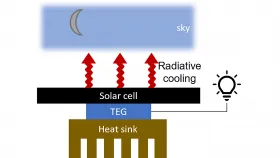
Concerning 750 million people on the planet do not have accessibility to power in the evening. Solar cells supply power during the day, yet saving energy for later use requires substantial battery storage.

Technology ·

Researchers obtain photovoltaic panel tech to produce brand-new ultrahigh-res OLED display screen

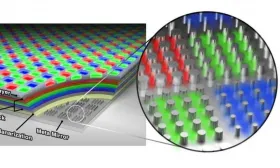
By expanding on existing layouts for electrodes of ultra-thin solar panels, Stanford scientists as well as collaborators in Korea have actually created a brand-new design for OLED-- natural light-emitting diode-- shows that could allow televisions, mobile phones as well as online or enhanced fact devices with resolutions of as much as 10,000 pixels per inch (PPI). (For contrast, the resolutions of new smart devices are around 400 to 500 PPI.).

Technology ·

A new approach increases lithium-ion battery efficiency as well as produces fires, too

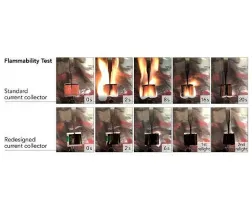
In a completely brand-new technique to making lithium-ion batteries lighter, more secure and also extra effective, researchers at Stanford University and also the Department of Energy's SLAC National Accelerator Laboratory have reengineered among the heaviest battery elements - sheets of copper or aluminum foil known as present enthusiasts - so they evaluate 80% much less and promptly relieve any kind of fires that flare up.

Technology ·

Forecasting the slow-moving death of lithium-ion batteries

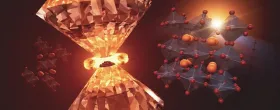
Batteries discolor as they age, slowly losing power and storage capacity. As in people, aging plays out differently from one battery to an additional, as well as it's beside difficult to gauge or model all of the connecting systems that contribute to decline. Therefore, the majority of the systems utilized to handle charge degrees sensibly and to approximate driving variety in electrical automobiles are almost callous changes in the battery's internal functions.

Technology ·

Coating could lead to commercial lithium-metal batteries

A new coating developed by scientists at Stanford promises to bring lithium metal batteries ‘closer to reality’, by significantly extending their operational lifetime and limiting the occurrence of dendrites at the anode, which can cause short circuiting and fires.