Search


Home Solar Demand Surges Through the Roof in 2020
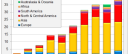
Germany, capability of sub-10kW solar systems mounted from January to August 2020 is 22% more than for the entire of 2019, according to Bundesnetzagentur
Nov 18, 2020 // Residential, Market Research, USA, Germany, Australia, Europe, Oceania, North America
Leading 10 Polysilicon Rankings for 2020- The Future To be 90 Percent China
to as the "Seven Sisters". Hemlock Semiconductor (USA). Wacker Chemie (Germany). Advanced Silicon Materials (Currently REC Silicon/USA). Tokuyama
May 17, 2021 // Manufacturing News, Markets & Finance News, Market Research, Tongwei, China, polysilicon, wacker chemie, Asia, Waaree Energies, bernreuter research
German Greens call for larger PV auctions as tariffs drop below 5-cent-per-kWh mark
Germany is crippling solar’s ability to produce large volumes of ever-cheaper electricity even as it retains too-large tenders for wind that end in undersubscription, the country’s Greens have said. Last Friday, the party urged the federal government led by chancellor Angela Merkel to stop restricting solar tender sizes after the latest exercise only awarded 153MW – in line with its initial target of 150MW – of all 648MW in bids put forward by PV players. The 27 project winners of the oversubscribed PV-only auction of 1 October were contracted at average tariffs of €0.049/kWh (US$0.054/kWh), a drop on the prices reached at prior solar tenders in March (€0.0659/kWh or US$0.073/kWh) and June (€0.0547/kWh or US$0.061/kWh) this year. Speaking after the results were unveiled by Germany’s Federal Network Agency (FNA), Julia Verlinden of the German Greens criticised the government for “preventing investments” in solar despite the fact that the electricity source is running “reasonably well.” “Instead of finally increasing tendering volumes and producing more solar power for less than 5 cents per kilowatt-hour, the government is putting a lid on it,” said the spokeswoman. “The result: Three-quarters of all bidders for solar projects were left empty-handed this round.” Velinden contrasted the solar auction’s oversubscription and price drops with the lack of appetite for an onshore wind tender also held on 1 October, which triggered 204MW in bids – all of which were rewarded with contracts – for a total target size of 675MW. The Greens’ spokeswoman rued Germany’s decision to keep wind tenders large even as it fails to act against bureaucracy and land scarcity for these projects. The latest PV and wind results, Verlinden said, show the federal government is “doing everything wrong” with renewable policy. Tender-buoyant PV eyes 98GW-by-2030 goal The 1 October PV tender at the centre of the political row marked a victory for Bavarian solar players. According to the FNA, the state’s decision to expand its quota of project-suitable arable land helped the territory’s PV schemes secure 130MW of the 153MW contracted nationwide. In Germany, the autumn solar auction is the latest of a series to end in major oversubscription. The aforementioned March tender triggered 869MW in bids for the 500MW that was on offer, while the June edition recorded 556MW of requests for a 150MW pot of contracts. The industry has also steamrolled at Germany’s latest technology-neutral auctions. At tenders last November and in April, PV players snapped up all contracts where wind secured none, scoring respective average prices of €0.0527/kWh (US$0.058/kWh) and €0.0566/kWh (US$0.063/kWh). Solar’s continued buoyant performance has emerged as the Merkel-led coalition government acts to make the technology a key engine of the renewable transition. Under newly-adopted plans, installed PV capacity should more than double between 2019 (48GW) and 2030 (98GW). In parallel, the coalition between Merkel’s conservatives and the social democrats has agreed to axe a PV subsidy cap that would have otherwise applied once the market reached 52GW. While relieved at the move, PV association BSW has recently called for its urgent implementation. Some PV operators are however opting to sidestep subsidies altogether, joining the subsidy-free shift underway in Spain, Italy, the UK and others. This past year alone, zero-subsidy projects have been announced by EnBW (180MW), THEE’s and CEE (500MW), BayWa r.e. (8.8MW) and others. As lawyers told this publication for a recent PV Tech Power feature, German operators are slowly warming up to the power purchase agreement approach. Researchers believe the country could unlock a €2 billion (US$2.25 billion) market if it acted to de-risk these deals.
Oct 21, 2019 // Markets & Finance News, Tariffs, Germany, tender, Europe, auction, tariffs
Wave of research study boosts case of eco-friendly investments in post-COVID period
efficiency of provided eco-friendly portfolios in the United States, the UK, Germany as well as France over the years. The investment returns overtook, they
Jun 2, 2020 // Markets & Finance News, USA, UK, LCOEs, Europe, IRENA, North America, IEA, Coronavirus, covid-19
Northvolt secures $1.6 bn support for twin battery gigafactories
Swedish monetary group SEB as well as compatriot lending institution Swedbank; Germany's Siemens Bank, Japan's SMBC; and also a capitalist referred to as APG, as
Jul 29, 2020 // Markets & Finance News, Storage, NORTHVOLT, Sweden, Germany, Poland, Europe, Norway, Alexander Hartman, Peter Carlsson
Retrofitting facades and also solar panels easily with ultra-thin glass
Fraunhofer joint booth, No. C2-528, during BAU 2023, April 17-- 22, in Munich, Germany. In 2021, photovoltaics covered 8.9% of gross electricity consumption in
Jan 26, 2023 // Technology, Fraunhofer Institute for Organic Electronics, Electron Beam and Plasma Technology, FEP
Germany’s Home PV Installs Drop 28% Amid Headwinds
Germany’s solar boom is shifting away from single-family rooftops. The German Solar Association says installs on detached homes are down about 28% year over year, citing higher financing costs, a comedown from 2023’s rush, and changing incentives. Demand hasn’t vanished—homeowners still chase bill savings—but decisions take longer, systems are smaller, and batteries are often deferred. Retailers push PV bundles with heat pumps and EV chargers; tariffs increasingly reward self-consumption. Cities expand balcony solar and streamline permits.Utility-scale and C&I projects lead growth, backed by corporate PPAs and maturing storage. If rates ease in 2026 and grid fees value flexibility, virtual power plants could reignite residential. How will financing, tariffs, and VPPs reshape Germany’s post-boom residential solar? Financing- Higher base rates keep cash purchases scarce; KfW “climate-friendly home” loans and green mortgages will tilt buyers toward smaller PV-plus-ready systems with prewired battery ports to add storage when rates ease.- Third‑party ownership, leasing, and heat‑as‑a‑service bundles shift capex off books, expanding access for middle‑income households and renters via rooftop and balcony portfolios.- Aggregator-backed revenue guarantees (flexibility-sharing contracts) make home batteries bankable by underwriting a portion of future VPP income, lowering spreads on solar+storage loans.- Neighborhood cooperatives and energy‑community SPVs pool roofs and credit scores, cutting acquisition costs and enabling sub-5 kWp rollouts where single-home economics are marginal.- Insurers and OEMs will package performance warranties with downtime compensation, improving lender comfort and resale value of used batteries.Tariffs- Smart‑meter rollout unlocks spot‑indexed and time‑of‑use retail offers; households will size PV to daytime loads and use small batteries for tariff arbitrage rather than maximum export.- Grid charge reform favoring flexible consumption (peak‑shaving discounts and controllable‑device clauses) steers investment toward inverter‑limited PV, heat pumps, and EV chargers that can curtail on command.- Declining export remuneration pushes “self‑consumption first” designs: more east‑west arrays, load‑shifting automation, and community sharing to keep surplus behind the meter.- Dynamic EV tariffs anchor residential demand response, making car‑to‑home and managed charging the primary sink for midday PV, with batteries reserved for evening peaks.- Tariff transparency rules and supplier switching tools will intensify competition on flexibility value, not just cents per kWh, rewarding homes that provide predictability.Virtual Power Plants (VPPs)- Aggregators will stack revenues—day‑ahead/imbalance markets, local congestion relief, and fast‑frequency response—turning 5–10 kWh home batteries into yield assets instead of pure bill savers.- Standardized API access to inverters, heat pumps, and wallboxes enables portfolio control at scale; opt‑in, privacy‑preserving modes broaden participation beyond early adopters.- VPPs will offer “firmed self‑consumption” products: guaranteeing a capped retail rate in exchange for limited control windows, stabilizing household bills and aggregator dispatch.- DSOs procure non‑wires alternatives from VPPs in constrained feeders; in red zones, connection approvals favor PV systems enrolled in curtailment-ready VPPs.- As rates soften, VPP income plus cheaper capital revives residential storage attach rates, with paybacks driven more by flexibility payments than by pure export compensation.- Energy‑community VPPs share revenues locally, funding shared storage or micro‑grid upgrades and improving social acceptance in dense urban districts.Net effect on the post‑boom market- Smaller, smarter systems dominate; storage attach rises when financing and VPP guarantees converge.- Value shifts from kilowatt‑peak installed to controllable kilowatts; installers pivot to software, device integration, and aggregator partnerships.- Households prioritize predictable bills and resilience over gross generation, with EVs and heat pumps orchestrated as primary flexibility assets.
Dec 9, 2025 // Residential, Markets & Finance News, Policy, Germany, Europe, residential solar, policy, BSW-Solar, financing
Solar Power Finds Ripe New Market in Crop Protection
and black berries. It is also trying out combining of solar with apples (in Germany) as well as pears (in Netherlands). " We are planning even more fruit tests
Sep 10, 2020 // Market Research, USA, Japan, France, Germany, South Korea, China, Europe, Asia, Netherlands, North America, baywa r.e., tata power solar, Ashish Khanna, Stephan Schindele, Sascha KrauseTunker, Maximilian Vorast, Sohini Gupta, Ajit Jain
Building starts on 27 MW Netherlands drifting solar plant
research study by German research study institute the Fraunhofer ISE ended Germany likewise flaunts excellent drifting solar capacity. The institute asserted the
Feb 11, 2020 // Plants, Large-Scale, Commercial, Floating PV, Germany, Europe, Netherlands, baywa r.e., Benedikt Ortmann
Encavis elevates EUR450 million after year of European solar expansion
its eco-friendly possession profile this year with even more solar parks in Germany, France and the Netherlands. Encavis likewise sped up the growth of 2 solar
Jan 19, 2021 // Plants, Large-Scale, Commercial, Markets & Finance News, UTILITY-SCALE SOLAR, Spain, France, Europe, encavis, Karsten Mieth, encavis ag, bayern lb
Spain posts 30% boost in self-consumption solar PV installs
up the third-highest amount of PV ability in 2020, at 2.6 GW, trailing just Germany and the Netherlands. With the majority of last year's installations backed by
Jan 29, 2021 // Markets & Finance News, C&I, Spain, UNEF, Europe, rooftop solar, self-consumption, José Donoso, sfi con london, commercial and industrial
EnBW transforms sod on 300MW German solar
construction of 2 subsidy-free solar projects completing 300MW in Brandenburg, Germany. The two projects, 150MW each, lie simply under 40km away in the
Mar 18, 2021 // Plants, Large-Scale, Commercial, Germany, Europe, enbw, solar projects, Thorsten Jorse
RWE to supply VW with German solar
Supply & Trading will certainly source electrical energy from Germany's largest subsidy-free solar park from 2022 onwards as well as provide it to automaker
Apr 30, 2021 // Plants, Markets & Finance News, Germany, Europe, Solar Park, RWE Supply & Trading, Ulf Kerstin, Anja Dotzenrath
US corporate clean energy procurement platform opens in Europe
clean energy generated at projects in Ireland, France, Spain, the Netherlands, Germany, Italy and the U.K. In a press release published to announce its
Oct 3, 2019 // Markets & Finance News, USA, North America, LevelTen Energy, Bryce Smith
Jinko is assured American authorities will decline Hanwha accusation
filed a patent violation case against Jinko along with REC in Germany, as well as two lawsuits against them and Longi in the United States at the
Nov 14, 2019 // Manufacturing News, USA, Germany, Australia, Europe, Oceania, LONGi, North America, Jinko, Hanwha Q-Cells, REC, patent, Hanwha