Search
Harmony Energy Begins New Zealand's Largest Solar Project
First Renewables, has commenced construction on a 202-MWp solar project in New Zealand, marking the largest solar initiative in the country. The groundbreaking
Apr 3, 2025 // Plants, New Zealand, Oceania, PV Power Plant
New Zealand fast-tracks Lodestone’s 220-MW South Island solar project application
Energy has cleared a critical procedural hurdle for one of New Zealand’s largest solar builds. The developer has been granted access to a fast-track
Sep 24, 2025 // Plants, New Zealand, Oceania, PV Power Plant, Lodestone Energy
New Zealand's 'New Era' of Power: Lodestone's Kaitāia Solar Farm
New Zealand's largest solar farm has begun generating power, opening up a new era for energy in the country. The Lodestone Energy's Kaitāia farm is the first solar farm in NZ to bid into the electricity market, and has employed more than 125 installers and technicians, involved more that 22 equipment suppliers and service providers. The farm has over 61,000 solar panels generating 55 GWh of power annually, which is earmarked for residential and commercial energy consumers, most notably the Warehouse Group. This agri-voltaic design maximises the production of electricity while maintaining productive farming activity. Lodestone Energy's Phase 1 capital programme includes more solar farms, and this project ushers in a new era for New Zealand to help meet its climate goals.
How Has NZ's Largest Solar Farm Opened a New Era?
The Kaitāia Solar Farm is the first of its kind in New Zealand with 61,000 solar panels generating 55 GWh of power annually.
This project has employed over 125 installers and technicians, involved more that 22 equipment suppliers and service providers.
The solar farm is part of Lodestone Energy's Phase 1 capital programme, which includes more solar farms.
The farm is designed to be agri-voltaic, meaning it can produce electricity while maintaining productive farming activity.
The solar farm's power is earmarked for residential and commercial energy consumers, most notably the Warehouse Group.
The Kaitāia Solar Farm is part of New Zealand's plan to meet its climate goals.
The farm's 55 GWh of power can provide energy for up to 20,000 homes and businesses around the country.
Nov 27, 2023 // Plants, New Zealand, Oceania, PV Power Plant
Aquila Capital as well as FNSF team up for 1GW Solar Farm in New Zealand
New Zealand will soon have a large-scale solar farm start to generate 1GW. That is a big deal, because TOTAL solar capaciy in New Zealand has hardly gone across 200 MW till date.
German financial investment clothing Aquila Capital as well as local PV project programmer Much North Solar Farm have joined their hands to work together to make this large-scale solar farm functional this year. In a declaration released on May 12, both Aquila and FNSF expressed their keenness to proceed on the portfolio of solar projects they have been establishing across NZ and which could amount to 1GW of combined capacity, when finished.
" We can't wait to begin creating the solar PV sites we have actually planned and also consented," claimed FNSF NZ director, John Telfer including even more, "To be partnering with such a committed worldwide financier in clean energy generation as Aquila Capital, and also on the scale that we collectively plan, is amazing not only for us but likewise the whole country."
Both the firms shared the journey describing how significant capital and also sources were invested to pick, examine suitable project sites, acquire permits and also consents to obtain them to "ready-to-build"-standing-- enough to start on "a handful of chosen projects" this year. As and when the 1GW pipelines are laid, it will certainly put several project sites on a single thread across the North and also South Island, providing around 4 per cent of the country's complete annual energy demand, or around 11% of New Zealand's existing clean energy generation capacity.
"This partnership is ready to support the federal government's exhausts budget plan targets set to be introduced by Climate Change Minister James Shaw next week and also to assist provide on the guarantee of expanding the renewable energy field within New Zealand," Telfer said.
Relevance lies in the truth that New Zealand currently has a target to reach 90 percent renewable power supply by 2025, with levels sitting just over the 80% mark, primarily supplied by hydro, wind as well as geothermal resources.
Just last month, another partnership of very same kind was introduced by Lightsource bp and NZ utility Contact Energy concerning their own prepare for a big solar growth spree across Aotearoa, targeting multiple projects of at the very least 50MW in size.
May 13, 2022 // Plants, Large-Scale, Commercial, New Zealand, Oceania, solar farm, Aquila Capital, Far North Solar Farm, FNSF NZ director, John Telfer
Hive Energy team targets 350MW PV in New Zealand
venture called HES Aotearoa to establish up to 350MW of solar properties in New Zealand.
The three UK-based companies claimed they have complementary abilities,
Sep 2, 2021 // Plants, New Zealand, Oceania, hive energy, Giles Redpath
New Zealand airport intends 150-MW solar park as part of wider project
residential electricity use.
"There is nothing else similar to this in New Zealand-- it's cutting-edge, much ahead of its time and also absolutely world-leading
Dec 3, 2021 // Plants, New Zealand, Oceania, PV Power Plant, Christchurch Airport

New Zealand might get to 6 GW of solar by 2050
New Zealand might cover its power need with a generation mix based solely on wind, solar, geothermal and also hydropower by 2050, according to Transpower New Zealand, a state-owned venture in charge of electrical power transmission.
The power company claimed it might see the share of renewables expand from around 80% presently to 95% in 2035 as well as 100% by 2050.
Under their probably situation-- the Accelerated Electrification base instance-- electrical power need is anticipated to elevate from 42 TWh in 2020 to 70 TWh by 2050, as a result of population growth and also the climbing electrification of warm as well as transportation. "It is essential to keep in mind that while electrical power need is approximated to raise by 68%, peak need just enhances by 40%, showing the significantly vital function of need feedback remedies," the business stated.
This situation, according to Transpower, pictures a typically favorable international context, with expanding social and also political stress to decarbonize. It likewise thinks that electrification will certainly remain to be sustained by the New Zealand federal government as a high concern method to decarbonize the economic situation, they stated.
Under these problems, the share of solar will certainly expand from simply 0.2% in 2020 to 0.5% in 2025 as well as 1.7% in 2030. After one more 5 years, this portion is anticipated to get to 4.3% and also in 2040 is anticipated to find in at 5.7%. In 2045 it ought to get to 7.6% and also lastly 9.3% in 2050.
By the center of the century, continuing to be electrical energy need will likely be 24.8% satisfied by hydropower, 19.6% by wind, 12.5% by geothermal power, as well as 3.8% by various other small renewable resource resources.
In regards to mounted ability, solar is anticipated to boost from around 100 MW in 2020 to just 300 MW in 2025 and also 1.1 GW in 2030. A lot of the ability released up until now is anticipated to find from dispersed generation, with massive PV having just a low duty. In 2035, set up solar energy must get to 2.7 GW, consisting of 1 GW of utility-scale as well as 1.7 GW of dispersed generation. With utility-scale PV seeing its share the same at 1 GW till 2050, dispersed sources are anticipated to expand to 2.6 GW in 2040, 3.8 GW in 2045 and also 4.9 GW in 2050.
" Distributed solar uptake is anticipated to be driven by the proceeded dropping price of photovoltaic panels, enhanced installment procedures, financial motivations and also altering social worths," the utility kept in mind.
Dispersed storage space is anticipated to raise from 750 MW in 2035 to 2.5 GW by 2050. "Uptake of dispersed batteries is anticipated to be sustained by recurring expense decreases from $2,200 per kW today to $1,500 in 2035 and also $1,000 in 2050," the firm claimed.
Utility-scale storage space is anticipated to expand from 400 MW in 2034 to 700 MW in 2040. "Utility-scale battery expenses are anticipated to decrease by 5% each year, ending up being feasible for release in the late 2020s," the utility claimed.
Additionally, the firm anticipates that the electrification of warm as well as transportation, combined with an expanding populace, can bring about a 68% boost in power need, from 42 TWh in 2020 to 70 TWh by 2050.
" Getting to 95% sustainable generation by 2035 is attainable yet tough. It likewise stands for the most affordable price generation mix for customers," the utility claimed. "However, obtaining from 95% to 100% sustainable power by 2050 will certainly be possibly pricey and also extremely difficult."
Apr 6, 2020 // Markets & Finance News, New Zealand, Oceania, Transpower
New Zealand's First Big Battery Project of 200MWh & Solar Farm in Offing From TotalEnergies
of French power major, TotalEnergies, has landed a project to establish New Zealand's very first huge grid-connected battery. Saft was contending against Tesla
Jan 19, 2023 // Plants, Storage, TESLA, Fluence, Saft, TotalEnergies, grid-connected battery, Meridian, Neal Barclay, New Zealand's biggest solar farm, New Zealand's first big battery, renewable generation

New Zealand court greenlights 178-MW North Island solar project plan
Farm (FNSF) has secured resource consent for a 178-MW photovoltaic project on New Zealand’s North Island, following an Environment Court decision that balances
Nov 7, 2025 // Plants, New Zealand, UTILITY-SCALE SOLAR, Oceania, permitting, Far North Solar Farm, grid integration
New Zealand clears 179-MW solar-storage project, boosting North Island reliability
New Zealand’s Environmental Protection Authority (EPA) has issued resource consents for a utility-scale project combining a 179-MW solar park with a co-located battery energy storage system (BESS) on the North Island. The ruling moves a major hybrid scheme from concept to delivery path at a time when the grid needs more daytime generation and evening flexibility.
The approval reflects a maturing approach to large renewables. Consent conditions typically require noise and glare controls, storm-water and erosion management, and biodiversity measures—species-rich groundcover under arrays, riparian buffers, and sensitive construction windows. Visual-impact mitigation and traffic plans for rural roads are also standard, as are decommissioning provisions to return the site to prior use at end of life.
Technically, the design will mirror modern bankable PV: high-efficiency modules—often bifacial—on single-axis trackers, a DC/AC ratio tuned for strong annual yield, and plant controls that deliver reactive power, ride-through, and rapid curtailment response aligned with New Zealand codes. The battery, likely with two to four hours of duration, will soak up midday surpluses and discharge across the evening ramp while providing fast frequency response and voltage support.
Why it matters: the North Island’s demand is growing with data-rich industries and electrification. Hydro provides a flexible backbone but can be constrained in dry periods; thermal plants still cover peaks. A hybrid solar-plus-storage site cuts fuel exposure, dampens price spikes, and reduces curtailment of other renewables. Co-location also shares an interconnection, reducing round-trip losses versus standalone storage and simplifying dispatch via a unified controller.
For nearby communities, construction translates into jobs and local procurement, followed by permanent O&M roles and steady rates income. Transparent reporting on performance and environmental compliance will be key to sustaining social licence.
With consents in hand, the developers can push into procurement of long-lead electrical gear and finalize EPC contracts. If delivery tracks the conditions of consent, the project will add a meaningful block of clean, dispatchable capacity where the system needs it most.
Oct 20, 2025 // Plants, Large-Scale, Commercial, Storage, New Zealand, solar-plus-storage, Oceania, North Island, Grid reliability, EPA consent

FRV Australia, Genesis buy 52-MW solar project in New Zealand
in late 2021 with a goal to establish approximately 500 MW of solar energy in New Zealand over the following 5 years. The Lauriston project that they simply acquired
Feb 7, 2023 // Plants, Large-Scale, Commercial, Markets & Finance News, New Zealand, Oceania, Solar Project, Genesis, FRV Australia
Lodestone Energizes New Zealand with South Island Solar Park
has commenced construction on a 27.7-MWp solar power plant near Rangiora in New Zealand's South Island. This marks Lodestone's first project in the region, aiming to
Aug 4, 2025 // Plants, Large-Scale, Commercial, New Zealand, Oceania, PV Power Plant, Lodestone Energy
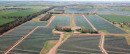
Genesis, FRV to develop JV for 500 MW of fresh solar in New Zealand
between the two parties, Genesis stated in a bourse filing on Thursday. The New Zealand firm, which is majority-owned by the federal government, will hold a 60% stake
Nov 11, 2021 // Plants, Large-Scale, Commercial, New Zealand, Oceania, frv, PV Power Plant, Genesis
New Zealand's South Island to Harness Solar Power and Agriculture in Lodestone's Three PV Parks
Lodestone Energy has been granted consent to build three solar power plants in New Zealand's South Island. The Clandeboye, Mount Somers, and Dunsandel plants will
Jan 23, 2024 // Plants, New Zealand, Oceania, PV Power Plant
Pukenui Solar Farm delivers clean power to New Zealand’s Far North
North Solar Farm (FNSF) have switched on the 20.8-MWp Pukenui Solar Farm in New Zealand’s Far North District, a milestone that adds dependable daytime
Oct 16, 2025 // Plants, Large-Scale, Commercial, New Zealand, Oceania, Far North Solar Farm, Aquila Clean Energy APAC