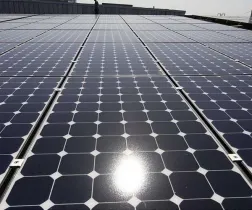
The road to low-cost hydrogen production is riddled with gaps and power losses. Scientists in Australia have demonstrated reconsidering solar innovation as well as missing electrolysers could hold great pledge for reaching the hydrogen holy grail.
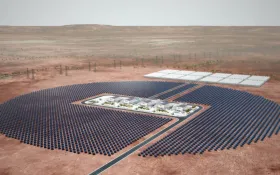
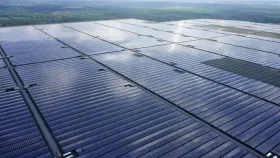
The Australian energy storage company is planning the acquisition of SolarReserve Australia II, owing three solar sites in Australia. 1414 Degrees is about to create a huge solar park with 400 megawatts of photovoltaic capacity and a few thousand MWh of thermal storage.
The solar field will become operational in Q2 of 2021. This is the project for deployment of phase five of the huge 5-gigawatt Mohammed bin Rashid Al Maktoum solar farm.
The research group from the University of Houston has found a novel catalyst which is likely to help effectively split hydrogen from seawater. This innovation is supposed to considerably advance the seawater electrolysis development for commercial hydrogen production.
France-based utilities have signed an agreement for joint deployment of the green hydrogen project, forecasted to generate 1.3 TWh of solar electricity per year as well as 10,440 t of renewable hydrogen by 2027.
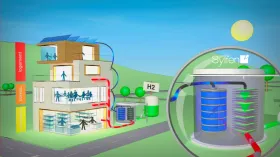
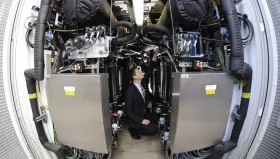
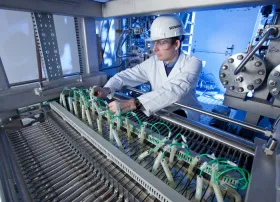
Smart Energy Hub system can work both as an electrolyser and as a fuel cell. In the first case, it stores energy in the form of biogas. In the second case, it converts gas into heat and electricity. The system has been developed by Sylfen and French Alternative Energies and Atomic Energy Commission.
This has been a breakthrough year for non-battery storage, with key advances in pumped hydro, power-to-gas, and thermal storage technologies. Many industry players are moving beyond pilot projects to contracted projects, which could lead to increased scale and lower costs.
A team of scientists led by the University of Glasgow has discovered a more efficient method of splitting water into hydrogen and oxygen using electricity which it says could almost double the amount of hydrogen produced per millivolt.
Analyst WoodMac has spelled out the urgent need to decarbonize the global hydrogen production industry. While the fuel can offer a sustainable grid balancing act for intermittent renewables, in its current fossil-fuel driven form it is pumping out more than 800 tons of carbon into the atmosphere every year.
In a bid to reduce its carbon footprint the oil giant is ramping up its renewable energy production at a refinery in the Philippines. The news was announced by the company in a week which saw it named seventh worst corporate contributor to the climate crisis since awareness of emissions-related damage first emerged.
The offer was apparently submitted by Saudi energy giant ACWA Power, which refused to confirm the bid when asked by pv magazine. The second lowest bid – $0.0175/kWh – was reportedly submitted by a consortium formed by Emirati developer Masdar, French utility EDF and Chinese PV panel maker JinkoSolar.
Germany has long been a global leader in driving acceptance of clean technologies through its progressive energy policies and regulations. Its influence in addressing climate change extends well beyond its borders, and the country is taking an active role to support the global energy transition through international cooperation. Germany has bilateral energy partnerships with approximately 20 countries, and its strong partnership with California is focused on creating a route to the future – a carbon-neutral one. State Secretary at the Federal Ministry for Economic Affairs and Energy Andreas Feicht met with pv magazine to discuss the country’s partnership with California, and its journey toward decarbonization.
Developer Hydrogen Renewables Australia (HRA) and German engineering giant Siemens have unveiled plans for a hydrogen production facility in Western Australia, meant to be powered by a whopping 5GW of wind and solar.
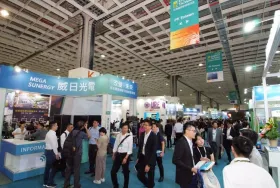
Global experts are set to gather in Taipei in less than a month to take stock of the island’s strengths and challenges as it embarks on a multi-gigawatt renewable transformation by 2025.
The International Renewable Energy Association says the integration of hydrogen into the energy transition will not happen overnight and electrolysis costs will not be halved until the 2040s. That hydrogen and related products could revolutionize the world energy landscape, however, is not in doubt.
A new report in Sweden suggests that renewables are an ideal source of power for marine vessels, based on a case study in which solar PV and proton-exchange membrane fuel cells, combined with a diesel generator, were used to reduce the greenhouse gas and particulate emissions of cruise ships by almost 10%
Australia’s Northern Territory has unveiled a new target of net-zero carbon emissions by 2050 in a policy document that touts solar and backs a proposed 10GW/20-30GWh solar-plus-storage plant earmarked to provide energy to the region and Singapore.
EuPD Research has calculated what needs to be done to replace the nuclear and coal generation to be phased out in Germany. Accelerated expansion of PV appears the best short-term option. However, storage capacity will need to increase 30-fold by 2040 so solar can become the main pillar of the country’s energy system.
French developer Neoen wants to build an energy superpark in South Australia that comprises 1.2GW of wind, 600MW of solar and 800MW of battery storage capacity.
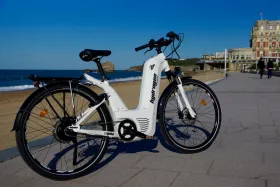
With the 200 hydrogen bikes offered to journalists and world leaders at the G7 summit in Biarritz proving popular, manufacturer Pragma Industries has received an order for 1,000 of them from Chilean president Sebastian Pinera. The company’s founder, Pierre Forté, wants the bike to have a societal impact in developing countries.
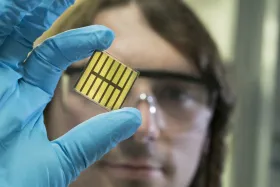
Two of Germany’s leading research institutes and a CIGS module maker have announced plans to work on the development of perovskite-CIGS tandem cells with a target of producing thin film modules with better than 30% efficiency.
The Emirati utility and the Chinese communications giant and inverter maker have discussed how they can work together to roll out solar and storage in Dubai as well as collaborating on cyber security and the use of AI to analyze cyber threats.
The Dubai Water and Electricity Authority will use energy from the gigawatt-scale Mohammed Bin Rashid Al Maktoum Solar Park to provide a new hydropower plant with pumped storage capacity. The state-owned utility has announced a number of innovations for the project in recent months, including plans for hydrogen and large-scale storage capacity.
Scientists at the Australia National University have observed a key stage in the process of photosynthesis which could be copied to greatly increase the efficiency of sunlight-powered water splitting processes used to produce hydrogen.
Michael van der Gugten, Sales and Marketing Executive at Smit Thermal Solutions, is convinced that perovskite solar cells have reached maturity, and that they are ready to make the step from the lab to production. He is leading the organization of a conference on this topic and expects that the perovskite community, production equipment suppliers and crystalline silicon cell manufacturers will discuss the implementation of perovskite-silicon tandem cells or the production of standalone perovskite modules.
French renewables developer Neoen has won development approval from the South Australian government for a major renewable energy project, with 125 MW of wind, 150 MW of solar PV and 130 MW/400 MWh of lithium-ion battery storage. The project could also include up to 50 MW of on-site hydrogen production capability.
Researchers at Siberian Federal University, together with colleagues from the Royal Institute of Technology (Stockholm, Sweden), discovered new properties of material based on palladium, which can increase the performance of solar cells.
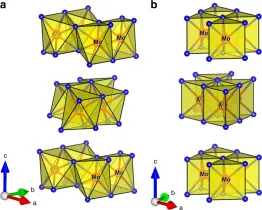
Batteries power our lives: we rely on them to keep our cell phones and laptops buzzing and our hybrid and electric cars on the road. But ever-increasing adoption of the most commonly used lithium-ion batteries may actually lead to increased cost and potential shortages of lithium - which is why sodium-ion batteries are being researched intensely as a possible replacement. They perform well, and sodium, an alkali metal closely related to lithium, is cheap and abundant.