Enhanced Stability for Perovskite Solar Cells Achieved
Revolutionizing solar technology: Researchers boost perovskite cell efficiency over 25% using tin oxide, enhancing stability and paving the way for affordable, sustainable energy solutions!
Revolutionizing optoelectronics: Researchers integrate chiral perovskite with III-V semiconductor to control electron spin in LEDs, paving the way for faster, more efficient technology.
Unlocking the potential of tandem solar cells for a brighter, more efficient future in renewable energy. Collaboration is key to commercialization success.
Discover the connection between electric vehicle ownership and solar panel adoption in this insightful study. Find out how EV owners are more likely to invest in photovoltaics and the role of social influence in technology adoption.
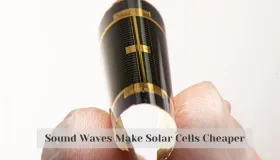
Discover how scientists are using a new process called acoustic spalling to reduce the cost of manufacturing III-V solar cells. This technique promises to create a cleaner, reusable surface, while maintaining cell efficiency. Research reveals that this technology could be commercially viable.
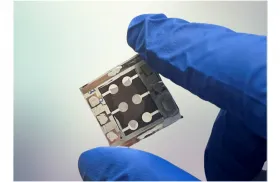
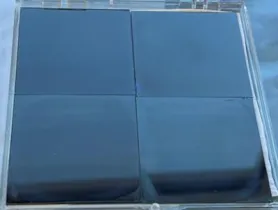
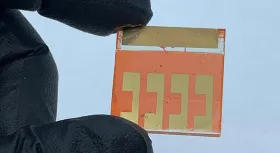
Perovskite solar cells (PSCs) are taken into consideration an appealing candidate for next-generation photovoltaic innovation with high effectiveness and low manufacturing cost, potentially changing the renewable energy industry. However, the existing layer-by-layer production process presents challenges that have actually hindered the commercialization of this technology.
Global experts on solar power highly urge a commitment to the continued development of photovoltaic (PV) production and release to power the world, arguing that lowballing projections for PV growth while waiting for an agreement on various other energy paths or the emergence of technical final miracles "is no longer an alternative."
Researchers from North Carolina State University, University of North Carolina at Chapel Hillside, Massachusetts Institute of Technology (MIT), National Renewable Energy Laboratory, Duke University, Wayne State University and The Hong Kong University of Science as well as Technology have actually created a mixed magnon state in an organic hybrid perovskite product by making use of the Dzyaloshinskii-Moriya-Interaction (DMI).
Scientists at the National Renewable Energy Laboratory (NREL), City University of Hong Kong, École Polytechnique Fédérale de Lausanne (EPFL), University of Kentucky, University of Colorado, University of Toledo as well as Brown University have actually created a concept that simplifies the process of manufacturing perovskite solar cells, which can increase their path towards commercialization.
New study from US National Renewable Energy Laboratory finds perovskite-based thermochromic windows could lead to massive energy savings and reduce carbon emissions in buildings across all climate zones in the US.
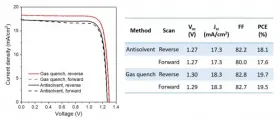
A new technique to manufacturing perovskite solar cells has actually addressed previous problems as well as yielded devices with high effectiveness and superb stability, scientists at the National Renewable Energy Laboratory (NREL) report in the new issue of the journal Science.
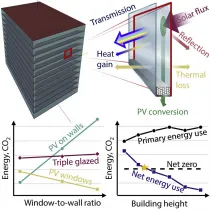
Skyscrapers dominate city sky lines, however these massive glass-walled structures can be made a lot more power efficient via the addition of thermally effective solar (PV) windows, according to an evaluation by scientists at the National Renewable Energy Laboratory (NREL).
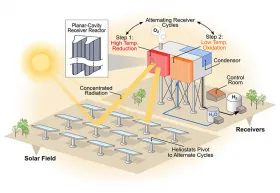
Perovskite products may hold the potential to play an important duty in a procedure to create hydrogen in a renewable manner, according to an analysis from researchers at the National Renewable Energy Laboratory (NREL).
This new method for screening perovskite solar cells leads the way for their usage in powering objects that require the cells' radiation firmness and durability.
A new partnership in between the United States Department of Energy's (DOE) National Renewable Energy Laboratory (NREL) and the International Code Council (ICC) will certainly aim to enhance the adoption of software that instantly authorizes permits for rooftop solar systems.
The United State Department of Energy's (DOE's) National Renewable Energy Laboratory (NREL), signed up with by companions at Sandia National Laboratories and the Australian Solar Thermal Research Institute, has revealed the launch of the Heliostat Consortium (HelioCon): a worldwide initiative to drive down the cost of heliostats.
Researchers at the National Renewable Energy Laboratory (NREL) and affiliated organizations throughout the country have actually strengthened the performance of perovskite solar cells by as high as 16%.
NREL choices a modular, economical, build-anywhere particle thermal energy storage technology Energy storage space in sand offers affordable path for trusted electrical power and warm supply in renewable energy era
A vision of a decentralized, renewable-powered electricity grid is being brought a step closer by scientists at the U.S. National Renewable Energy Laboratory. Their project, Autonomous Energy Grids, aims to take an overarching look at the solutions that will power this grid of the future, and to fill any gaps that appear between them.
Alabama is ranked 13th in the nation as having the greatest solar potential, yet only 0.26% of its energy comes from solar, leaving the state far behind others when it comes to total installed solar capacity.