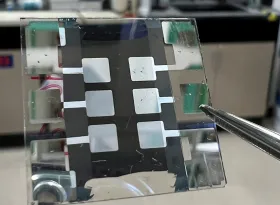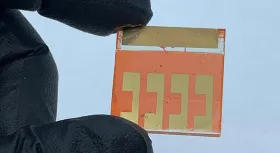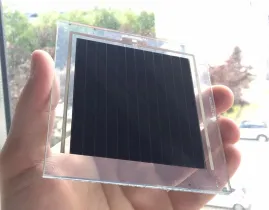
NREL and CubicPV Set 24% Record Benchmark for Perovskite Minimodule
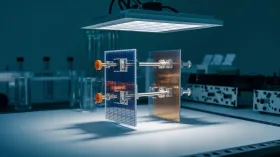
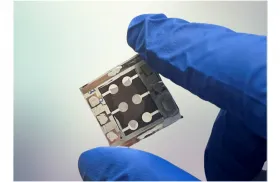
US partnership achieves 24 % certified efficiency in multi-cell perovskite minimodule, advancing tandem solar technology toward scalable, durable commercial production.
Trump’s FY 2026 budget slashes DOE funds, forcing NREL to lay off 114 employees—3 % of staff—in Colorado and beyond, raising alarm in clean-tech circles.
Boosting solar power: New ionic salt triples perovskite cell strength, achieving 26.1% efficiency and enhanced durability for a brighter, sustainable future.
Discover how NREL's innovative cost model for perovskite/silicon tandem solar modules could revolutionize efficiency and affordability, making solar energy more accessible than ever!
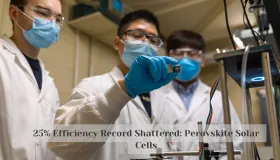
Revolutionizing solar technology: Researchers boost perovskite cell efficiency over 25% using tin oxide, enhancing stability and paving the way for affordable, sustainable energy solutions!
Revolutionizing optoelectronics: Researchers integrate chiral perovskite with III-V semiconductor to control electron spin in LEDs, paving the way for faster, more efficient technology.
Revolutionizing solar cell fabrication with continuous flash sublimation - achieving high efficiency in just minutes. A game-changer in renewable energy technology.
Discover the potential of vacuum processes in accelerating the commercialization of perovskite solar cells, surpassing conventional silicon-based cells with efficiencies over 33%.
Discover the connection between electric vehicle ownership and solar panel adoption in this insightful study. Find out how EV owners are more likely to invest in photovoltaics and the role of social influence in technology adoption.
Discover how NREL and Solar Unsoiled are tackling the issue of pollen and bio-soiling on solar panels in the Southeastern US. A 10-year study finds that frequent rains are not enough to keep the panels clean and prevent financial losses.
Breakthrough research at Northwestern Univ. yields record-breaking efficiency for perovskite solar cells. New dual-molecule solution solves electron losses from surface defects & interfaces, achieving 25.1% efficiency. Research builds on prior Nature paper.
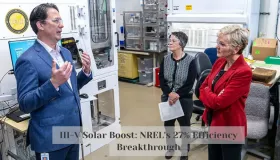
Revolutionary record-breaking efficiency of 27% achieved in GaAs heterojunction solar cell by scientists at NREL. Combining computational and experimental methods to optimize doping and bandgap reduced the effects of defects. This breakthrough is applicable to multiple materials and levels of defect concentrations.
Discover how the Inflation Reduction Act (IRA) influenced the US photovoltaic market in the past year, including significant cost reductions for residential systems and benchmarking of Community Solar. Get the new bottom-up PV and storage cost model from NREL and the Department of Energy.
This article explores a combination of factors that yields the best predictive correlation with outdoor aging tests. Learn how this information can be used to assess device stability in the laboratory.
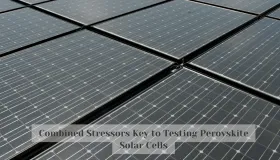
Research from NREL shows combining stress tests accurately predicts performance of perovskite solar cells. Findings demonstrate tests including thermal cycling & stressors can predict 6 month outdoor performance. High temp & illumination most critical for accelerating performance degradation. Research a step towards commercialization of perovskite technology.
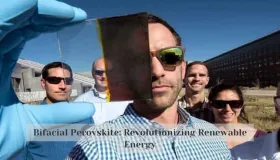
Discover how innovative bifacial perovskite solar cells could revolutionize the renewable energy landscape, delivering higher efficiency at reduced costs with potential for 10-20% more power generation than monofacial modules. Research funded by the US DOE.
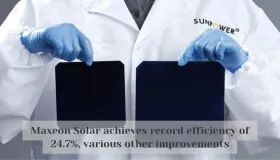
Maxeon Solar Technologies Ltd (NASDAQ: MAXN) on Thursday revealed a world-record module aperture efficiency dimension for its Maxeon 7 panel as well as a number of efficiency improvements to IBC products.
Perovskite solar cells (PSCs) are taken into consideration an appealing candidate for next-generation photovoltaic innovation with high effectiveness and low manufacturing cost, potentially changing the renewable energy industry. However, the existing layer-by-layer production process presents challenges that have actually hindered the commercialization of this technology.
Scientists at the National Renewable Energy Laboratory (NREL), City University of Hong Kong, École Polytechnique Fédérale de Lausanne (EPFL), University of Kentucky, University of Colorado, University of Toledo as well as Brown University have actually created a concept that simplifies the process of manufacturing perovskite solar cells, which can increase their path towards commercialization.
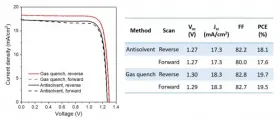
A new technique to manufacturing perovskite solar cells has actually addressed previous problems as well as yielded devices with high effectiveness and superb stability, scientists at the National Renewable Energy Laboratory (NREL) report in the new issue of the journal Science.
In a year when rates have risen as a result of greater demand, disruptions in China, as well as broader inflation, the findings are no surprise
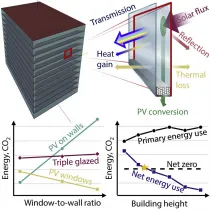
Skyscrapers dominate city sky lines, however these massive glass-walled structures can be made a lot more power efficient via the addition of thermally effective solar (PV) windows, according to an evaluation by scientists at the National Renewable Energy Laboratory (NREL).
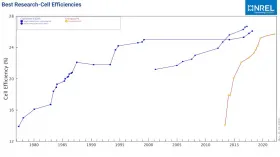
There is a new means to explore the National Renewable Energy Laboratory's (NREL's) famous chart highlighting the efficiency of solar cells.
Scientists at the United State Department of Energy's (DOE's) National Renewable Energy Laboratory (NREL) have actually made a technical breakthrough and also created a perovskite solar cell with the twin advantages of being both highly reliable and highly stable.
Researchers at EPFL's Photovoltaics and also Thin Film Electronics Laboratory as well as CSEM's Sustainable Energy Centre have actually declared two world records by attaining an effectiveness of over 30% for perovskite-on-silicon-tandem solar cells.
Thin-film modern technologies such as cadmium telluride (CdTe) and perovskites can markedly minimize the carbon intensity of PV compared with silicon alternatives, according to scientists at the US National Renewable Energy Laboratory (NREL).
Mexico has protected commitments from 17 US firms that will certainly result in the development of 1,854 MW of solar and also wind, according to the office of President Andrés Manuel López Obrador.
Researchers at the US Department of Energy's (DOE) National Renewable Energy Laboratory (NREL) have found that a tin-lead perovskite cell can get rid of issues with stability and also boost efficiency, with their most current experiment generating a 25.5% conversion performance.
Utility-scale solar in the US remains plagued by underperformance issues as capex expenses have actually increased for the "first time in decades".
Scientists at the U.S. Department of Energy's National Renewable Energy Laboratory (NREL) produced a solar cell with a record 39.5% performance under 1-sun global illumination. This is the highest possible effectiveness solar cell of any type, measured using typical 1-sun conditions.
Perovskite products may hold the potential to play an important duty in a procedure to create hydrogen in a renewable manner, according to an analysis from researchers at the National Renewable Energy Laboratory (NREL).
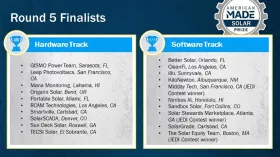
The United States Department of Energy (DOE) has revealed the 20 finalists moving forward in its American-Made Solar Prize Round 5, which will certainly see 10 hardware-focused and also 10 software-focused teams relocate via to the following round and also get cash prizes.
Perovskites, which have revealed enormous potential as a new semiconductor for solar cells, are gaining interest as well as a prospective next-generation technology to likewise power spacefaring objectives.
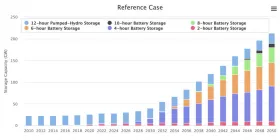
The National Renewable Energy Laboratory's (NREL) last report on the future of storage provides "key learnings" from a series of six extensive research studies.
So far, solar cells based on polycrystalline cadmium selenide telluride (CdSeTe) have actually shown some crucial constraints, despite their low construction costs as well as useful qualities. Most notably, these solar cells display higher voltage losses than other mature photovoltaic or pv innovations (crystalline silicon, for example) as well as this considerably hinders their efficiency and also performance.
Safety as well as certification company UL and the United States Division of Energy's (DOE) National Renewable Energy Laboratory (NREL) have actually released a report into the cybersecurity people interconnected grid side devices and inverter-based resources that requires safety criteria to be developed to counter potential threats.
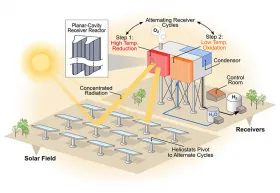
The Department of Energy has granted $2 million to NREL to develop a prototype CSP system that can harness energy potentials of molten salts. This is the very first time that the federal government is leveraging the energy storing power of molten salts; besides proceeding research on particles.
A new partnership in between the United States Department of Energy's (DOE) National Renewable Energy Laboratory (NREL) and the International Code Council (ICC) will certainly aim to enhance the adoption of software that instantly authorizes permits for rooftop solar systems.
Researchers at the National Renewable Energy Laboratory (NREL) and affiliated organizations throughout the country have actually strengthened the performance of perovskite solar cells by as high as 16%.
Prices Continue to Fall for Residential, Commercial, and also Utility-Scale Solar as well as Power Storage Systems
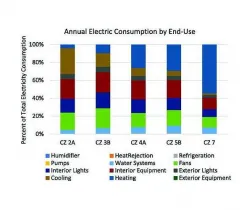
Incorporating energy performance procedures can minimize the amount of storage needed to power the nation's buildings completely with renewable energy, according to evaluation carried out by researchers at the U.S. Department of Energy's (DOE's) National Renewable Energy Laboratory (NREL).
The installed cost of solar PV, solar-plus-storage and standalone battery energy storage in the US was minimized across all market segments in between 2020 and also 2021, with the largest decrease seen in the utility-scale segment.
Scientists at the National Renewable Energy Laboratory (NREL) and North Illinois University (NIU) have successfully avoided lead from running away damaged perovskite solar cells. The research initiative is their most current work in resolving concerns concerning possible lead toxicity.
One of the key obstacles of perovskite photovoltaics (PV) is the long-lasting security. Although efforts have actually been made to enhance the life time of perovskite PV gadgets, their deterioration under applied adverse voltage (reverse-bias) has been barely resolved.
Researchers at the U.S. Department of Energy's National Renewable Energy Laboratory (NREL) as well as Colorado School of Mines are applying a new technique to recognize defects in silicon solar cells that cause a drop in performance.
Solar PV can supply approximately 40% of the US' total power need by 2035, however just if annual installations quadruple by the center of the years.
NREL choices a modular, economical, build-anywhere particle thermal energy storage technology Energy storage space in sand offers affordable path for trusted electrical power and warm supply in renewable energy era
On a clear night, Kaitlyn VanSant will certainly have the ability to watch her work whiz by. Knowing the success of her project, however, will certainly need to wait up until her small, momentary enhancement to the International Space Station returns to Earth.
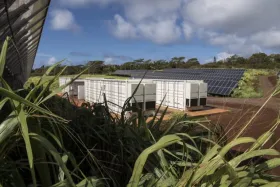
Hawaii's island of Maui is anticipated to come to be the initial power grid of that size to work on 100% wind and solar on a rapid basis, said last week the US National Renewable Energy Laboratory (NREL), which is helping the island get ready for that moment.
Utility-scale solar PV in the United States could be as a low-cost as US$ 16.89/ MWh by the end of the decade, new analysis published by the National Renewable Energy Lab (NREL) has revealed.
Showing the latest 50 of 110 stories.