Oklahoma State University group selected to receive a $750,000 grant from NASA
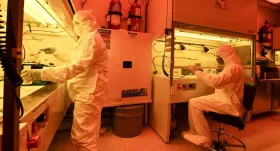
A project from Oklahoma State University was picked to receive a $750,000 grant from NASA.
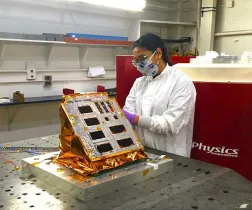
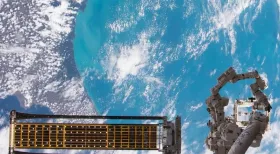
Perovskite solar films developed by a graduate student in the Department of Physics at UC Merced while on an internship at NASA Glenn Research Center (GRC) not just survived 10 months in space with minimal degradation, but the little damage they did incur was greater than 90% relatively easy to fix.
On a clear night, Kaitlyn VanSant will certainly have the ability to watch her work whiz by. Knowing the success of her project, however, will certainly need to wait up until her small, momentary enhancement to the International Space Station returns to Earth.
Compact Telescoping Array (CTA), a technology developed at NASA's Langley Research Center in Hampton, Virginia, is used to give solar energy to satellites precede. A solar array is a collection of numerous photovoltaic panels that create power as a system.
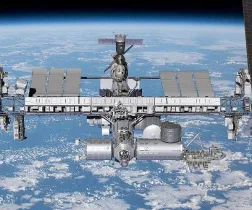
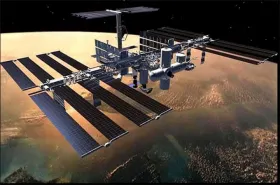
Solar panels are powering the spacewalks of astronauts for the first time at the International Space Station.
Astronauts Thomas Pesquet of France and also Shane Kimbrough of the USA spacewalked outside the International Space Station on Wednesday as they started the painstaking process of installing brand-new solar panels to boost the orbital station's deteriorating power systems.
SolAero Technologies, a leading company of high performance solar cells composite structural products for satellite and also aerospace applications, congratulates the group at NASA's Jet Propulsion Labs (JPL) on the successful first flight of the Mars Helicopter, Ingenuity. SolAero is proud to have supplied the photovoltaic panel that has actually enabled the first powered, controlled trip on one more world.
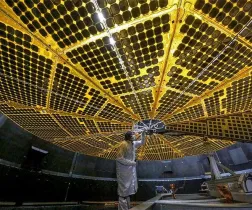
NASA's Lucy spacecraft has successfully completed thermal vacuum testing of both photovoltaic panels, the final action in taking a look at these vital spacecraft components to prepare for launch this fall. Once the Lucy spacecraft's photovoltaic panels are attached and also completely extended, they could cover a five-story building.
NASA is one action better to understanding the solar energy challenges and opportunities on the Moon's surface area after finishing the build as well as readiness evaluation of the Photovoltaic Investigation on the Lunar Surface, or PILS, experiment.
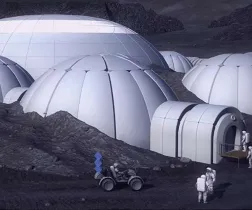
The National Aeronautics as well as Space Administration (NASA) granted Opterus Research and also Development, Inc. a groundbreaking project that will certainly lead the way for very large lunar surface area solar arrays.
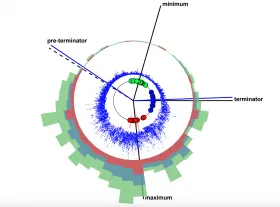
Solar scientists have actually taken a mathematical method used by Earth researchers to assess cyclic phenomena, such as the ups and downs of ocean tides, and used it to the confounding irregularity of cycles on the Sun. The outcome is a stylish "Sun clock" that shows that solar task starts and stops on a far more specific routine than could be recognized when taking a look at monitorings of the Sun in the standard method-- plotted linearly with time.
It takes a great deal greater than simply solar farms and also wind generators. Keeping excess power is important for renewable resource to truly be renewable.
Next year, NASA is planning to forward a Ben-Gurion-created photovoltaic prototype to International Space Station, which is supposed to become a huge move toward nongovernmental individual space operations, as was stated in Tazpit Press Service.
Maxar Technologies awarded a contract to Deployable Space Systems to manufacture flexible solar arrays for the Power and Propulsion Element of the Gateway, a key element of NASA’s Artemis campaign to return humans to the moon.
NASA has issued a $73 million dollar contract to Made In Space to 3D print spacecraft parts in orbit using Archinaut One