Pele, Engie Commission 75-MW Graspan Solar Plant
- Pele Green Energy and Engie kick off the 75MW Graspan solar farm—boosting South Africa’s grid reliability, cutting costly backup power, and highlighting maintenance, monitoring, and future flexibility.
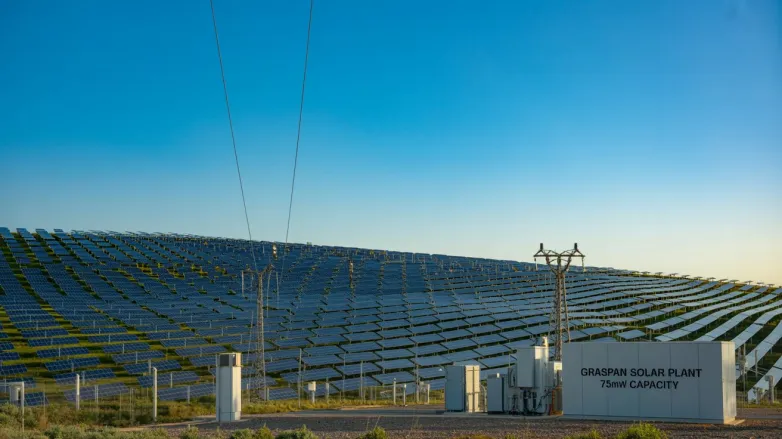
Pele Green Energy and Engie inaugurated the 75-MW Graspan solar farm in South Africa, adding a utility-scale PV project to the grid as the country works to ease supply stress and improve reliability. The commissioning of new capacity is particularly valuable in a market where additional generation can displace costly marginal power, often diesel-based backup.
Operators face demanding conditions, including high heat and dust, making soiling management, preventive maintenance, and close performance monitoring critical. As solar penetration grows, the project’s longer-term value is expected to hinge increasingly on flexibility measures such as storage, demand response, and portfolio balancing, but commissioning remains the essential step in converting investment into real electricity output.
How will Graspan’s 75-MW PV boost reliability amid South Africa’s heat and supply stress?
- Adds firm, midday generation that can reduce reliance on expensive, fast-ramping backup power during periods of high demand—helping stabilize grid supply when other plants are under strain.
- Provides a predictable renewable output profile (with improved weather forecasting and dispatch planning) that supports system operators in scheduling generation more reliably through peak periods.
- Benefits from utility-scale design and operating practices that are well-suited to South Africa’s high-heat conditions, improving the odds that expected energy production translates into delivered megawatt-hours.
- Strengthens plant availability by emphasizing heat- and dust-aware operations—especially routine soiling control and preventive maintenance to limit performance losses from airborne particulates.
- Improves resilience against supply stress by diversifying generation sources and locations within the broader power system, lowering the likelihood that a single failure causes disproportionate imbalance.
- Reduces the frequency and duration of costly “residual” dispatch from marginal units when solar output is available, easing operational pressure on conventional fleets.
- Helps maintain voltage and power quality support at the connection point when modern PV inverters provide grid-support functions, contributing to steadier system performance under stress.
- Creates a scalable platform for future upgrades (e.g., adding storage or enabling flexible operating modes), which can further enhance reliability as solar penetration increases.
- Encourages portfolio-level reliability improvements: as more PV assets come online, coordinated dispatch, balancing strategies, and aggregated forecasting can smooth variability for grid operators.
- Provides practical, on-the-ground evidence to refine best practices for operating PV in hot, dusty climates—improving long-term reliability across future projects in similar environments.
- Converts investment into operational impact through commissioning and early performance validation, ensuring grid supply benefits start as soon as the plant is integrated rather than remaining theoretical.