Search

Recurrent Energy sells 49.9-MWp UK solar project to Centrica
Recurrent Energy, a unit of Canadian Solar Inc, has sold the 49.9-MWp Middle Road solar project in the UK to Centrica Business Solutions. The project, located in the West Midlands, is a zero-subsidy project that is fully permitted and ready for construction in Harbury, Warwickshire. Construction is expected to begin this summer and be completed next year.Ismael Guerrero, CEO of Recurrent Energy, stated that while the company is focusing on asset retention in Europe and North America, the sale of the Middle Road project to Centrica demonstrates their flexibility to partner with leading companies on strategic transactions. Recurrent Energy's current project pipeline in the UK includes over 2.6 GWp of solar PV and 6.7 GWh of battery storage.
What strategic transaction did Recurrent Energy make with Centrica Business Solutions in the UK?
Recurrent Energy sold the 49.9-MWp Middle Road solar project in the UK to Centrica Business Solutions.
The project is located in the West Midlands and is a zero-subsidy project that is fully permitted and ready for construction in Harbury, Warwickshire.
Construction of the project is expected to begin this summer and be completed next year.
Ismael Guerrero, CEO of Recurrent Energy, mentioned that the company is focusing on asset retention in Europe and North America, but the sale of the Middle Road project to Centrica demonstrates their flexibility to partner with leading companies on strategic transactions.
Recurrent Energy's current project pipeline in the UK includes over 2.6 GWp of solar PV and 6.7 GWh of battery storage.
May 31, 2024 // Plants, Large-Scale, Commercial, UK, Europe, recurrent energy, Centrica, Solar Project
Recurrent Energy Secures Financing for 119 MW Solar Project
Recurrent Energy, a subsidiary of Canadian Solar Inc., has secured non-recourse project financing for its 119 MW Horus Solar project in Mexico's Aguascalientes region. The financing, totaling $51 million, was provided by Korea Eximbank and KEB Hana Bank. Recurrent owns 49 percent of the project, with Korea Electric Power Corporation and Sprott owning 15 percent and 36 percent respectively.The Horus project, which reached Commercial Operation Date in March 2023, was awarded a power purchase agreement during Mexico's third renewable energy auction. It will sell 75 percent of electricity generated for 15 years and Clean Energy Certificates for 20 years, with the remaining 25 percent sold on the spot market. In other news, Canadian Solar Inc. and Sol Systems have partnered to scale new solar module production and procurement in the United States, with Canadian Solar supplying modules from its Texas factory to Sol Systems.
What are the details of Recurrent Energy's financing for the Horus Solar project?
Recurrent Energy secured non-recourse project financing for its 119 MW Horus Solar project in Mexico's Aguascalientes region
The financing totaled $51 million and was provided by Korea Eximbank and KEB Hana Bank
Recurrent Energy owns 49 percent of the project, with Korea Electric Power Corporation and Sprott owning 15 percent and 36 percent respectively
The Horus project reached Commercial Operation Date in March 2023 and was awarded a power purchase agreement during Mexico's third renewable energy auction
The project will sell 75 percent of electricity generated for 15 years and Clean Energy Certificates for 20 years, with the remaining 25 percent sold on the spot market
Canadian Solar Inc. and Sol Systems have partnered to scale new solar module production and procurement in the United States, with Canadian Solar supplying modules from its Texas factory to Sol Systems.
Mar 6, 2024 // Plants, Commercial, Mexico, North America, recurrent energy
Recurrent Energy's Spanish Solar Expansion: 420MWp Portfolio Acquisition
Solar subsidiary Recurrent Energy has acquired a 420MWp PV portfolio in the south of Spain, specifically in the municipality of Seville. The portfolio consists of
Mar 21, 2024 // Plants, Large-Scale, Commercial, Spain, Europe, recurrent energy
Recurrent Energy Secures $71M for Italian Solar Portfolio
Recurrent Energy LLC, a subsidiary of Canadian Solar Inc, has secured a EUR 61.5 million (USD 71.2 million) debt financing agreement with Santander to support a 124-MW portfolio of solar and energy storage assets in Italy. This financing will aid in the development and expansion of utility-scale solar projects, enhancing renewable energy infrastructure in the region.The portfolio, managed by Recurrent Energy, underscores the company's commitment to advancing clean energy solutions and expanding its footprint in the European market. The deal with Santander highlights the growing investment interest in sustainable energy projects and the potential for significant growth in Italy's renewable energy sector.
How will Recurrent Energy's financing impact Italy's renewable energy infrastructure?
The financing will accelerate the development of utility-scale solar projects, increasing Italy's solar energy capacity.
It will support the integration of energy storage solutions, enhancing grid stability and reliability.
The investment will create jobs in the renewable energy sector, contributing to local economic growth.
It will help Italy meet its renewable energy targets and reduce reliance on fossil fuels.
The project will attract further investments in Italy's renewable energy market, fostering innovation and competition.
It will enhance Italy's energy independence and security by diversifying energy sources.
The financing will promote technological advancements in solar and storage technologies within the region.
It will contribute to reducing carbon emissions, supporting Italy's climate change mitigation efforts.
Jun 24, 2025 // Plants, Large-Scale, Commercial, Markets & Finance News, recurrent energy, Italia
Recurrent Energy Secures PPA For 100 MW Liberty Solar Project
Solar-owned Recurrent Energy has authorized an aggregated virtual power purchase agreement (VPPA) with Texas-based industries for 100% of the production capacity of
May 16, 2023 // Markets & Finance News, Canadian Solar, recurrent energy, Shawn Qu, Solar Project, miso, Autodesk, Biogen Inc, EMD Electronics, Kai Beckmann, Liberty Solar project, Midcontinent Independent System Operator, solar VPPA in Texas, Wayfair Inc
Recurrent Energy Secures Contracts for 120 MW Solar Projects
Recurrent Energy, a subsidiary of Canadian Solar Inc., has secured Contracts for Difference (CfD) for three solar projects in the UK, totaling 120 MWp. The projects include the 49.9-MWp Gateley Moor in Durham, the 49.9-MWp Hessay in York, and the 20-MW Court Barton in Devon. The CfD contracts guarantee revenue for 15 years, adjusted for inflation, allowing the company to stabilize its income.Once operational, these photovoltaic farms will generate enough electricity to power over 34,000 homes and reduce carbon dioxide emissions by approximately 31,000 tonnes annually. Court Barton is set to commence operations by mid-2025, followed by Hessay and Gateley Moor in mid-2026 and mid-2027, respectively.
How will Recurrent Energy's new solar projects impact UK energy and emissions?
Sure! Here’s an expanded overview of how Recurrent Energy's new solar projects will impact the UK's energy landscape and emissions:
Increased Renewable Energy Capacity: The addition of 120 MWp from Recurrent Energy's projects will significantly contribute to the UK's growing renewable energy capacity, supporting the government's goal of transitioning to cleaner energy sources.
Support for Decarbonization Targets: The projects will play an essential role in helping the UK meet its ambitious carbon reduction targets set by the Climate Change Act and the legally binding commitment to reach net-zero emissions by 2050.
Reliable Energy for Homes and Businesses: The generated electricity will provide power to over 34,000 homes, ensuring households have access to renewable energy and potentially lowering utility bills as more sustainable options are available.
Job Creation and Economic Boost: The construction and operation of these solar farms will create job opportunities in the renewable sector, including in roles related to engineering, construction, maintenance, and operations, thus benefiting local economies.
Energy Price Stabilization: By securing Contracts for Difference, Recurrent Energy can offer stable pricing for its electricity, which may help stabilize energy prices in the region, particularly as fossil fuel prices remain volatile.
Encouragement for Further Investments: Successful implementation of these projects may encourage additional private and public investments in solar energy, spurring growth in the UK’s renewable energy market and further development of infrastructure.
Reduction in Fossil Fuel Dependence: By contributing around 31,000 tonnes of CO2 reductions annually, these projects diminish reliance on fossil fuels and decrease the carbon footprint associated with electricity generation.
Grid Resilience and Flexibility: Integrating more solar energy helps improve the overall resilience of the energy grid, with a more diverse energy mix reducing vulnerability to supply shortages and price spikes typically seen with fossil fuels.
Catalyst for Innovation: The projects can spur advancements in solar technology and energy storage solutions, showcasing innovative approaches that could be replicated across other regions.
Rural Revitalization: The location of the solar farms in Durham, York, and Devon can boost rural development by creating renewable energy hubs and attracting businesses interested in sustainability.
Positive Community Impact: Beyond energy generation and jobs, these projects can foster community support for renewable initiatives, encouraging local engagement and awareness of the benefits of sustainable energy practices.
Overall, Recurrent Energy’s solar projects would not only contribute to a greener energy economy but also stimulate socioeconomic benefits across the UK, enhancing community resilience and supporting national climate goals.
Nov 8, 2024 // Plants, Large-Scale, Commercial, recurrent energy, Solar Project
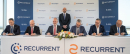
Recurrent Energy Signs US Tech Firm Power Deal in Spain
Recurrent Energy, a subsidiary of Canadian Solar Inc., has secured a 10-year power purchase agreement (PPA) with a major U.S. technology firm for its 300-MWp solar project in Tordesillas, Spain. The project, located in Castilla y León, is slated to commence operations in 2026 and is expected to generate approximately 620 GWh of renewable electricity annually, sufficient to power 188,000 homes.This agreement highlights Recurrent Energy's expanding footprint in Spain, where it has over 2 GW of solar projects and 60 MWh of battery energy storage in its development pipeline. The collaboration represents a significant step in advancing clean energy initiatives while supporting U.S. tech firms' renewable energy commitments.
What impact does Recurrent Energy's PPA have on Spain's solar energy landscape?
Increased Renewable Capacity: The PPA with Recurrent Energy contributes to Spain's ambitious renewable energy goals, further boosting the country's solar capacity by 300 MW when the Tordesillas project becomes operational in 2026.
Job Creation: Projects like the one in Tordesillas can generate local employment opportunities during construction and continuing operations, supporting economic growth in the Castilla y León region.
Transition to Clean Energy: By securing a long-term PPA, Recurrent Energy is playing a vital role in facilitating the shift from fossil fuels to renewable sources, helping Spain reduce its greenhouse gas emissions and meet international climate commitments.
Attracting Foreign Investment: The collaboration with a major U.S. tech firm showcases Spain's attractiveness as a destination for foreign investments in renewable energy, potentially encouraging other companies to consider similar ventures.
Support for Energy Transition Goals: This agreement aligns with Spain’s targets for achieving 74% of its electricity from renewables by 2030, helping to accelerate the country's transition to a more sustainable energy system.
Strengthening Energy Security: By diversifying energy sources through solar power, Spain can reduce its dependence on imported fossil fuels, enhancing energy security and stability.
Promotion of Sustainability: The PPA fosters corporate sustainability initiatives, as tech firms increasingly seek to source their energy from renewable sources, thus promoting a broader cultural shift towards sustainability in the business sector.
Advancing Battery Storage Initiatives: The simultaneous development of battery energy storage solutions alongside solar projects marks a strategic move to enhance grid reliability and the effective integration of renewable energy into the existing energy framework.
Catalyst for Future Projects: Successful execution of the Tordesillas project could act as a blueprint for future solar developments in Spain and encourage other renewable projects to secure similar agreements, further enhancing the solar energy landscape.
Enhanced Grid Integration: By contributing significant renewable capacity, this PPA helps in stabilizing the grid while accommodating an increasing share of variable energy sources, thus playing a critical role in grid management.
Dec 11, 2024 // Plants, Large-Scale, Commercial, USA, Spain, Europe, North America, recurrent energy
Recurrent Energy Indications Contract For 600 MWh Energy Storage Space Project
wholly-owned subsidiary of Canadian Solar Inc., Recurrent Energy today announced authorizing a 15-year Resource Adequacy agreement with Pacific Gas & Electric (PG&E)
Aug 11, 2021 // Storage, Pacific Gas & Electric, recurrent energy, Canadian Solar Inc, Shawn Qu
Recurrent Energy's Storage Footprint Grows in United States, 11 GWh in Pipe
for energy storage innovations. Southern California Edison (SCE) awarded Recurrent Energy a long-term agreement beginning in the summer season of 2022 for the 200 MW/
Jun 23, 2021 // Storage, Canadian Solar, BESS, recurrent energy, LLC
Recurrent Wins Approval for 443MW Solar-Storage Link in NSW
Recurrent Energy, a subsidiary of Canadian Solar, received regulatory approval to connect its Sundown solar-storage project in New South Wales to Australia’s grid. The facility is planned to include up to 360 MWac (443 MWdc) of solar generation and 150 MW of grid-scale batteries paired with 600 MWh of storage.The greenlight allows the project to proceed toward grid integration after meeting connection requirements. The Sundown park’s scale would position it among large renewable-plus-storage developments in Australia, reflecting continued investor focus on expanding firming capacity to support higher renewable penetration.
What does approval enable for Recurrent Energy’s Sundown solar-storage grid connection?
It authorizes Recurrent Energy to proceed with the next phase of Sundown’s grid-integration work, moving beyond development permitting toward practical connection implementation.
It allows the project to complete required technical and administrative steps with the local network operator and system stakeholders so the solar and battery assets can be synchronised to the grid.
It enables installation and commissioning activities needed for the grid connection infrastructure (such as interconnection equipment and associated works), subject to subsequent compliance milestones.
It supports testing, validation, and operational readiness activities that verify the plant can deliver generation and battery “firming” performance in line with grid requirements.
It places the project on track to begin exporting electricity and battery services, providing dispatchable capacity that can help reduce intermittency and support reliability as renewables penetration rises.
It strengthens the pathway toward eventual commercial operations by giving confidence that the interconnection process is formally progressing, rather than remaining in a purely planning stage.
Apr 21, 2026 // Plants, Large-Scale, Commercial, Storage, Australia, Oceania, PV Power Plant, Recurrent
Recurrent, GKN Automotive partner on Spanish solar plant
Recurrent Energy, a unit of Canadian Solar Inc, has announced plans to build a large-scale solar farm in Spain under a virtual power purchase agreement (VPPA) with GKN Automotive. The Rey I project is expected to generate 200,000 MWh of clean electricity annually, covering over 65% of GKN Automotive's power consumption in Europe.Through the 10-year VPPA, GKN Automotive will receive Energy Attribute Certificates (EACs) to help reduce its direct greenhouse gas emissions by 45% by 2030 and achieve net zero emissions across its entire value chain by 2045. The partnership was facilitated by Schneider Electric, which advised GKN Automotive in project selection and VPPA negotiations.
How will GKN Automotive benefit from the solar farm in Spain?
GKN Automotive will benefit from the solar farm in Spain by receiving 200,000 MWh of clean electricity annually, covering over 65% of its power consumption in Europe.
The virtual power purchase agreement (VPPA) will help GKN Automotive reduce its direct greenhouse gas emissions by 45% by 2030.
GKN Automotive aims to achieve net zero emissions across its entire value chain by 2045, with the help of Energy Attribute Certificates (EACs) received through the VPPA.
The partnership with Recurrent Energy and Schneider Electric will enable GKN Automotive to make significant progress towards its sustainability goals and contribute to the transition to renewable energy.
Jul 11, 2024 // Plants, Large-Scale, Commercial, recurrent energy, PV Power Plant, GKN Automotive
Microsoft Partners with Recurrent Energy for Louisiana Solar Project
Recurrent Energy, a subsidiary of Canadian Solar, has secured $160 million in project financing for its Bayou Galion Solar project in Northeast Louisiana. The project, which is currently under construction, is expected to be operational by fall 2024. Microsoft Corporation has agreed to purchase 100% of the energy and renewable energy credits produced by the project to support its goal of being carbon negative by 2030. The financing was coordinated by Mitsubishi UFJ Financial Group.Louisiana currently has 145 MW of operating wind, solar, and energy storage capacity. However, projections indicate that the state will add over 3,000 MW of solar energy within the next five years, significantly increasing its solar capacity and ranking it 19th in the sector.
What is the projected increase in solar capacity for Louisiana in the next five years?
Louisiana is projected to add over 3,000 MW of solar energy capacity in the next five years.
This increase in solar capacity will significantly boost the state's ranking in the sector, placing it at 19th.
The Bayou Galion Solar project, currently under construction, is expected to contribute to this increase in solar capacity.
Microsoft Corporation has committed to purchasing 100% of the energy and renewable energy credits produced by the Bayou Galion Solar project.
The financing for the Bayou Galion Solar project, amounting to $160 million, was coordinated by Mitsubishi UFJ Financial Group.
Louisiana's goal of expanding its solar capacity aligns with Microsoft's aim of becoming carbon negative by 2030.
Feb 7, 2024 // Plants, Commercial, Markets & Finance News, USA, Microsoft, North America, Louisiana
Recurrent, PVH Partner on 426MW Spanish Solar Deal
Recurrent Energy has contracted PV Hardware (PVH) to provide solar trackers for its 426MW Rey solar project in Carmona, Seville, set to become operational by December 2025. PVH's AxoneDuo Infinity solar trackers will support a facility featuring over 610,000 solar panels, reinforcing PVH's status as a leading supplier in the region.This partnership aligns with Recurrent Energy's commitment to sustainable energy, a step towards global decarbonization. In June 2024, Recurrent also entered a 10-year power purchase agreement with GKN Automotive for 115MW of output from the Rey project, further solidifying its role in advancing cleaner energy solutions.
How does the Rey solar project contribute to sustainable energy and decarbonization efforts?
Significant Renewable Energy Capacity: The Rey solar project, with an output capacity of 426 MW, will significantly contribute to the local energy grid, providing a large-scale source of renewable energy that can displace fossil fuel energy generation.
Reduction of Carbon Footprint: By generating electricity from solar power, the project is expected to significantly reduce greenhouse gas emissions, helping to achieve regional and national climate targets aimed at decarbonization.
Job Creation and Economic Development: The construction and operation of the Rey solar project is expected to create numerous jobs in the local economy, from construction and maintenance roles to long-term employment opportunities, fostering economic growth alongside environmental sustainability.
Power Purchase Agreement (PPA) Contributions: The 10-year power purchase agreement with GKN Automotive ensures a fixed and predictable income for the project, further encouraging investments in renewable energy infrastructure while reinforcing commitments to sustainability in the automotive sector.
Advanced Technology Utilization: Utilizing PVH's AxoneDuo Infinity solar trackers allows for increased energy capture by optimizing the angle of solar panels throughout the day, improving the overall efficiency of the solar plant and maximizing the amount of clean energy produced.
Support for Energy Transition: The Rey solar project plays a crucial role in the transition towards a more sustainable energy landscape, assisting utilities and businesses in moving away from reliance on fossil fuels and towards cleaner, renewable sources of energy.
Community Engagement and Support: Engaging local communities in project planning and development encourages support for renewable initiatives and demonstrates the positive impacts of solar energy, promoting awareness and acceptance.
Long-Term Climate Goals: By contributing to the decarbonization efforts, the Rey solar project aligns with international climate agreements and goals, such as the Paris Agreement, striving for a sustainable future through renewable energy deployment.
Potential for Replication: The success of the Rey solar project may serve as a model for other regions looking to implement large-scale solar solutions, paving the way for future renewable energy projects both domestically and internationally.
Grid Stability and Reliability: The integration of large-scale solar power projects like Rey enhances grid stability and supports a more resilient energy system, reducing the risks associated with dependence on traditional energy sources.
The Rey solar project exemplifies a holistic approach to sustainable energy and decarbonization, underscoring the importance of collaborative efforts between the public and private sectors to create a cleaner and more sustainable energy future.
Dec 2, 2024 // Plants, Large-Scale, Commercial, Spain, Europe, PVH, Recurrent
Recurrent secures $825m for Arizona batteries and solar projects financing
Recurrent Energy, the development arm of Canadian Solar, has closed $825 million in construction financing and tax equity to advance two Arizona assets—headlined by a 600-MWh standalone battery installation alongside a utility-scale solar project. The package underscores how capital stacks are evolving in U.S. renewables: larger batteries, multiple revenue streams, and tax incentives that reward domestic content and long-duration flexibility.
On the storage side, the 600-MWh system will charge during low-price midday hours—often when solar is abundant—and discharge into evening peaks, while providing sub-second frequency response and voltage support. Expect containerized lithium-ion units with sectionalized fire safety, gas detection, and robust thermal management for desert conditions, tied to grid-forming inverters that supply synthetic inertia and ride-through capability. A supervisory controls layer will co-optimize energy arbitrage with ancillary services and manage state of charge so the battery is primed for high-value events.
For the solar asset, Recurrent’s blueprint is familiar and bankable: high-efficiency modules on single-axis trackers, DC/AC ratios tuned for annual yield, and plant-level controls aligned with Western grid codes. Co-location potential with storage—if not now, then later—keeps round-trip losses and interconnection costs down versus standalone builds, and simplifies dispatch through a unified controller.
The financing mix—construction debt plus tax equity—accelerates procurement of long-lead electrical gear (transformers, switchgear) and locks EPC capacity in a still-constrained supply chain. Tax equity, in particular, monetizes federal incentives and can incorporate transferability or bonus credits where projects meet domestic-content or energy-community criteria. For lenders and investors, diversified revenue (energy, capacity, fast reserves) improves resilience to price volatility in the desert Southwest.
Community and environmental safeguards are standard: traffic and dust control during build, landscaping to soften views, drainage sized for monsoon events, and end-of-life plans for responsible recycling. Once online, the battery becomes a local shock absorber—reducing curtailment of nearby solar and dampening evening price spikes—while the PV plant delivers steady daytime megawatt-hours.
With capital in place, Recurrent can move from paperwork to procurement and staged energization—adding dispatchable clean capacity in a state where electrification and data-center growth are lifting evening demand faster than traditional resources can keep up.
Oct 22, 2025 // Plants, Large-Scale, Commercial, Markets & Finance News, Storage, USA, Arizona, Battery Storage, North America, recurrent energy, tax equity, project finance
Recurrent Offloads 275-MW NSW Solar-Storage Project
Recurrent Energy, a unit of Canadian Solar (NASDAQ: CSIQ), has completed the sale of a 275-MWdc solar project paired with a 120-MW battery energy storage system in New South Wales, Australia. Terms and the buyer weren’t disclosed. The hybrid asset underscores rising demand for integrated PV-plus-storage projects as Australia expands renewable capacity.The project is designed to shift power into high-price evening hours and bolster grid stability, addressing reliability needs as coal plants retire. The sale advances Recurrent’s develop-and-divest strategy targeting long-term infrastructure investors and highlights accelerating utility-scale investment in Australia’s transition away from coal toward renewables and flexible storage-backed supply.
How will the 275‑MWdc PV and 120‑MW BESS operate and monetize in NSW?
Operate as a semi-scheduled solar generator and scheduled bi‑directional battery with 5‑minute bidding into the NEM via AEMO, charging primarily from daytime PV and discharging to meet evening peaks and price spikes.
Stack revenues through spot energy arbitrage: buy (charge) in low‑price hours and sell (discharge) in high‑price intervals, optimizing round‑trip efficiency and degradation costs.
Earn FCAS income by offering raise/lower regulation and contingency services, including very fast contingency FCAS, with rapid response prioritised when energy spreads are thin.
Firm offtake under financial PPAs or swaps with retailers or C&I buyers, using the battery to shape PV output to contract profiles and reduce imbalance exposure.
Generate and sell LGCs from the solar component through 2030, adding a green premium; pair with corporate buyers seeking certificate-backed decarbonisation.
Hedge market risk by selling cap products (e.g., $300/MWh caps) supported by battery discharge during extreme prices, contributing to Retailer Reliability Obligation compliance for counterparties.
Pursue NSW/Federal support instruments (subject to awards), such as NSW Long‑Term Energy Service Agreements or the Capacity Investment Scheme, to secure floor/ceiling style revenue stabilisation.
Provide network/system strength or inertia-like services under contract with the TNSP where grid‑forming capability or voltage support is valuable, creating additional contracted revenue.
Reduce curtailment and constraint impacts by absorbing excess PV into the battery during constraint periods and timing exports to periods with headroom, improving effective MLF outcomes.
Implement dynamic bidding and state‑of‑charge strategies aligned to AEMO forecasts (demand, VRE output, FCAS enablement, outage notices) to capture volatility while managing cycling limits.
Participate in local flexibility or outage support during transmission works, charging when export limits bind and discharging to support local demand, potentially under short‑term agreements.
Align operations with compliance and causer‑pays incentives, using precise AGC/telemetry to minimise regulation FCAS costs and maximise enablement revenue.
Nov 18, 2025 // Plants, Large-Scale, Commercial, Storage, Australia, Oceania, recurrent energy