Why High-Quality BIM Content Is Critical for Project Accuracy
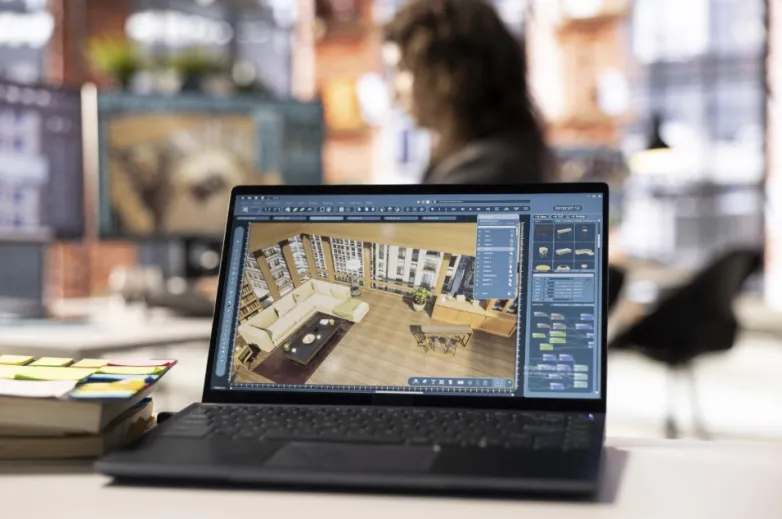
It is not a secret that BIM content can be a huge help in many parts of projects: design, installation, and eventually facility management. But there’s one important detail that plays a pivotal role in whether it will help or bring problems – the quality of the said BIM content.
So while it may seem like a great idea to cut costs on some parts of the project, eventually the price can rise even more. Revit families of poor quality can slow down the workflow and add unnecessary mistakes.
But how exactly and why should we pay attention to the quality of BIM content?
What defines high-quality BIM content?
Let’s start with this: what is even a good BIM model? How can we understand the quality of what we receive when ordering services? Here’s how BIMPROVE assures the quality of the products:
-
Clear access to the information about the model: performance characteristics, design options, integration requirements, etc.
-
Compliance with industry standards: It is critical to have a clear understanding of industry standards and how to apply them.
-
Families are designed to be easy to use, with optimized operation that allows you to focus on your project without technical roadblocks.
-
A high degree of flexibility in our services to provide customized solutions that meet your specific needs.
How using low-quality BIM content affects projects
To see the full picture, we need to understand the consequences of using poorly made BIM models and families in projects. When the models are inaccurate and do not contain the necessary information, errors will surely appear.
And so, we can divide them into two categories: immediate and long-term problems.
Talking about immediate problems, they can include:
-
Rework
-
Increased downtime
-
Design errors
-
Installation problems
-
Increased project cost
And in the long run, bad BIM content leads to:
-
Possible problems with facility management
-
Bad relationships between stakeholders
-
Damaged reputation
How well-made BIM content improves accuracy
Now that we understand how poorly made BIM models can bring problems, it is essential to know why and how their high quality improves accuracy. This influence can be understood across several key dimensions.
Design Accuracy
The usage of high-quality models that include precise geometry and standardized classifications paves the way for:
-
Reduced dimensional errors and design inconsistencies
-
Improved coordination between disciplines (architectural, structural, MEP)
-
Minimized assumptions and manual overrides
So, the point is to have enough information to reduce guesswork and provide more clarity for the stakeholders, and additionally show more design options. All of this helps the teams with the visualization, decision-making, and understanding of how the building will function. By having clear access to this information, communication with clients also improves: the process becomes less stressful for them, and the precision wins their trust.
Clash Detection and Coordination
One of the most notable aspects of using BIM is clash detection. Well-made models with all necessary information can help to avoid and detect these problems. If we put the benefits into a short list, we get:
-
Effective clash detection: BIM detects clashes during the design stage on different levels: architectural, MEP, and structural. This significantly helps with reducing mistakes before they pile up.
-
Better coordination of services in constrained spaces: with traditional methods, coordinating different systems in hardly-accessible areas isn’t easy. It applies to BIM models that lack accuracy and information, too.
-
Avoiding clashes during construction: even if we run clash-detection at every step of the way, it won’t help if the BIM models don’t have enough information. So, instead of seeing and resolving these problems during the design stage, the team will have to do it the hard way – during the construction.
Schedule Accuracy (4D BIM)
A BIM company can implement 4D BIM to receive more precise information about timelines and schedules, and visualize different stages of construction. When BIM content includes correct construction logic and sequencing attributes, companies get the following benefits:
-
Reliable 4D simulations for visualizing different stages of the project
-
Better planning of trades and site logistics
-
Improved identification of schedule conflicts
With this, a BIM company can achieve more accurate timelines and reduce the risk of delays.
Construction Accuracy
High-quality BIM supports fabrication-level detail. Accuracy is crucial for minimizing rework and mistakes, and ensuring that the final result matches the designer’s and the client’s vision.
-
Reduces rework caused by inaccurate or outdated drawings
-
Improves installation accuracy on site
-
Makes the communication between workers clearer: a detailed model, available on site when needed, reduces misunderstandings and the need to ask others for explanations or details.
Fixing mistakes during the construction phase can be time-consuming and costly. Well-made BIM content greatly reduces the possibility of it happening, leading to a smoother process. And to implement it into your project, contact our BIM content creation team – we will save your time and give you the gift of accuracy and precision in models.
Data Consistency and Interoperability
Well-structured BIM content follows naming conventions, shared parameters, and open standards. Interoperability – the ability to work with other systems, products, and software – makes the information about the model accessible, simple, and structured. Many examples of interoperability rely on open standards as a middle ground.
What good BIM content means for data consistency and interoperability:
-
Seamless data exchange across platforms and stakeholders
-
Reduced data loss during model handovers
-
Improved collaboration accuracy
A BIM model here can act as a single, trustworthy source of truth throughout the project lifecycle.
Operations and Facility Management Accuracy
BIM content stays useful even beyond design and construction. With the rising trend of smart buildings, consideration of facility management should start early. When BIM models and documentation are kept close to the as-built condition and include the key operational details, it becomes much easier to maintain the building.
-
Accurate asset registers at handover
-
Reliable maintenance planning and lifecycle costing
-
Reduced information gaps between as-built and operational data
Clients receive improved long-term asset performance and access to better decision-making.
Conclusion
High-quality BIM content transforms models from visual representations into accurate, decision-ready digital assets. The better the content quality, the higher the project accuracy—across cost, time, constructability, and lifecycle performance.
Investing in well-made BIM content isn’t just about current trends and investigating new technologies – it is about consistency, accuracy, and clarity.
BIMPROVE is committed to creating high-quality Revit families for our clients. Contact us (bim-prove.com) to learn more.
Also read
- How Do You Choose Durable Wiring for Rooftop Solar Systems in Harsh Climates?
- Innovative Advanced Energy Storage Solutions for Modern Power Systems
- Home EV Charging Stations in Ireland: How Much Can You Really Save?
- Automated File Conversion Services: Transform Documents Without Manual Work
- The Rapid Evolution of Direct Current Fast Charging for Electric Vehicle Fleets