TotalEnergies, NextNorth Push 400-MWp Philippine Solar
- TotalEnergies and NextNorth push a 400-MWp Philippines solar project, tackling land, permits, and grid links with “grid-friendly” tech—highlighting rising Southeast Asia demand and smarter battery-ready planning.
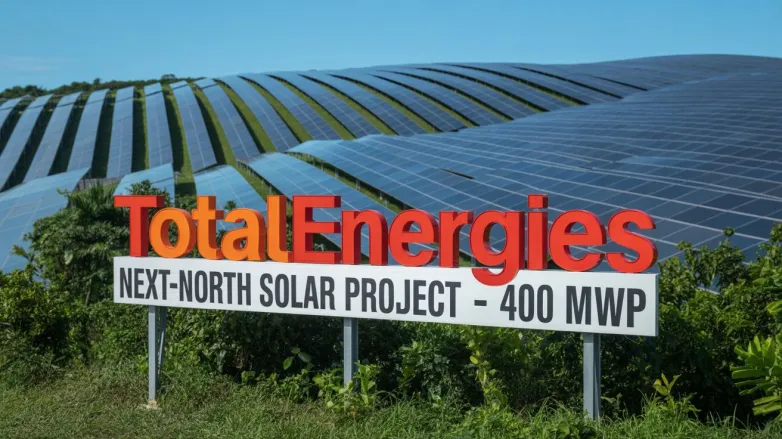
TotalEnergies and NextNorth are advancing a 400-MWp utility-scale solar PV project in the Philippines, underscoring accelerating demand and stronger corporate procurement for grid-connected power in Southeast Asia.
The development highlights the key hurdles for large projects in the country, including land and permitting, grid interconnection readiness, and securing a credible offtake plan amid constraints and weather-driven variability. Developers are also emphasizing “grid-friendly” design such as robust controls and reactive power capability, with some large projects structured to add batteries later to improve evening supply and stability on constrained grid nodes. For TotalEnergies, the move fits a broader Asia-Pacific solar expansion strategy.
What will TotalEnergies’ 400-MWp PH solar project reveal about grid and offtake hurdles?
- What the project will likely reveal about grid readiness: whether distribution and transmission substations in its target area can absorb an additional 400 MW of variable generation without triggering curtailment, voltage excursions, or capacity bottlenecks.
- How much “interconnection queue” friction exists in practice: the timeline between technical studies, studies-to-contract milestones, and actual commissioning—especially if grid upgrades are required to deliver full output.
- The true cost and timing impact of grid upgrades: whether strengthening lines, adding transformers/switchgear, or expanding substation capacity shifts the commercial schedule more than land or permitting does.
- Offtake hurdles tied to bankability: whether corporate buyers (or aggregators) can secure long-enough, firm-enough purchase commitments to satisfy lenders despite intermittency and potential curtailment risk.
- Contract terms that may need to evolve: whether the power purchase agreement will require curtailment provisions, performance guarantees, or take-or-pay / pay-as-produced structures that better allocate risk between developer and offtaker.
- Exposure to weather-driven variability: whether the offtake model can accommodate lower output during monsoon periods and how that is priced (or mitigated) in settlement mechanisms.
- Availability of flexible demand and wheeling pathways: whether the offtake depends on transporting power to industrial load centers and whether wheeling access is timely, affordable, and operationally reliable.
- Grid-friendly design effectiveness: whether the project’s controls (voltage/reactive power support, frequency response capabilities, grid code compliance) prove sufficient to get through commissioning tests rather than becoming a late-stage blocker.
- Whether storage is necessary for “creditworthy” delivery: whether the business case for adding batteries later is driven by technical requirements (stability on constrained nodes) or by offtaker expectations (meeting demand profiles closer to evening peaks).
- How permitting and land constraints translate into offtake risk: whether delays in land conversion, environmental clearances, or right-of-way impact COD timing enough to trigger liquidated damages or contract renegotiations.
- The strength of regulatory and procedural momentum: whether the Philippines’ procurement and interconnection processes are now predictable for 400-MW scale projects, or whether developers still face non-linear delays at key approvals.
- Signals to the market on procurement maturity: whether corporate procurement at this scale can consistently deliver “credible” offtake coverage (volume, duration, credit quality) without forcing developers into overly restrictive terms.
- The broader lesson for Southeast Asia development pipelines: whether the project’s eventual interconnection and offtake structure becomes a template that reduces future transaction costs—or exposes recurring systemic gaps that will slow other large solar builds.