Statkraft Seals Subsidy-Light German Solar Deal With WSW
Mar 5, 2026 10:49 AM ET
- Statkraft inks 2026–28 PPA: 18.2 GWh/year Bavarian solar to WSW for Wuppertal industry—Bayer included—market-based, subsidy-free, de-risked assets signal Germany’s maturing merchant solar and utility-led aggregation.
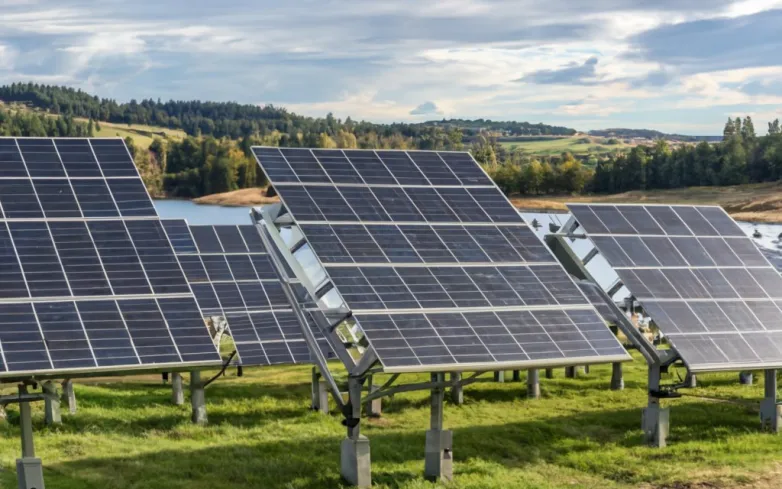
Norway’s Statkraft signed a 2026–2028 power purchase agreement to deliver 18.2 GWh of solar electricity per year to Germany’s WSW Energie & Wasser AG for industrial users around Wuppertal. Supply comes from Statkraft’s Hoeflas 1 and 2 solar parks in Bavaria, totaling 17.4 MW and commissioned in 2024, reducing construction risk.
WSW will route the green power to large customers, including Bayer, underscoring a model in which regional utilities aggregate PPAs, manage balancing, and package bankable products for industry. Statkraft says pricing is market-based and subsidy-free under Germany’s EEG, providing planning security and highlighting solar’s merchant maturity and performance-driven operations.
How does Statkraft’s market-based PPA with WSW signal Germany’s merchant solar maturity?
- Latest global trend: renewables surpassed 30% of world electricity in 2023, with solar the largest annual capacity addition; 2024–2026 expected to accelerate on policy and manufacturing scale-up
- Cost dynamics: utility-scale solar PPA prices stabilizing after 2022–23 spikes from polysilicon, freight, and interest rates; modest declines expected as supply chains normalize
- Grid bottlenecks: interconnection queues exceed 2 TW in North America; reforms (cluster studies, tighter readiness screens, financial commitments) are shortening timelines in several ISOs
- Storage surge: lithium-iron-phosphate dominates new deployments; hybrid solar-plus-storage increasingly bids as firm, four-hour blocks; long-duration pilots (iron-air, flow, thermal) moving to first-of-a-kind scale
- Transmission: HVDC backbone proposals advancing to move remote wind/solar to load centers; undergrounded DC in highway/rail corridors gaining traction to ease siting risk
- Offshore wind: supply chain localization (monopiles, nacelles, cables) reduces currency and logistics exposure; floating platforms targeting deepwater West Coast, Mediterranean, and Japan
- Onshore wind: taller towers and longer blades unlock low-wind sites; repowering of 10–15-year-old fleets boosts capacity factors and extends life with minimal new land use
- Permitting reforms: “shot clocks,” concurrent reviews, and digital environmental assessments cutting timelines; community benefit agreements standardizing local value sharing
- Domestic manufacturing: rapid expansions in modules, cells, inverters, and trackers; nacelle, blade, and tower factories reopening near ports and rail hubs to cut lead times
- Supply chain resilience: diversified polysilicon, wafer, and cell sourcing; traceability tools (blockchain, mass-balance audits) to meet import compliance rules
- Corporate procurement: 24/7 carbon-free energy contracts growing; granular certificates tied to hourly emissions delivering higher climate impact than annual RECs
- Financial structures: tax credit transferability and direct pay broadening investor base; merchant exposure hedged via basis-insured PPAs and storage arbitrage
- Land use: agrivoltaics scaling for specialty crops and pasture; dual-use designs (elevated arrays, wider row spacing) maintain yields and biodiversity
- Environmental safeguards: avian-safe siting, bat deterrents, and curtailment algorithms; solar panel recycling and wind blade repurposing hubs expanding
- Emerging tech: perovskite-silicon tandems nearing pilot manufacturing; high-efficiency n-type TOPCon and heterojunction gaining share in utility builds
- Hydrogen: co-located electrolyzers soaking midday solar, providing grid services; e-fuel offtake from shipping and aviation anchoring project finance
- Demand-side orchestration: virtual power plants aggregating HVAC, EVs, and batteries; dynamic tariffs and real-time APIs enabling flexible load
- Buildings: heat pumps outselling gas furnaces in several markets; thermal storage (ice, phase-change) paired with rooftop PV to shave peaks
- Transportation: EV managed charging aligns with wind and solar profiles; bidirectional charging pilots provide distribution-level backup
- Data centers: hyperscalers signing firmed clean power with storage and geothermal; waste-heat reuse and on-site microgrids reduce grid stress
Also read