National Bank of Egypt Invests in Scatec’s Obelisk
- National Bank of Egypt joins Scatec’s Obelisk solar-plus-storage, boosting local financing and bankability. Hybrid power with storage cuts peak reliance, stabilizes the grid, and strengthens long-term execution.
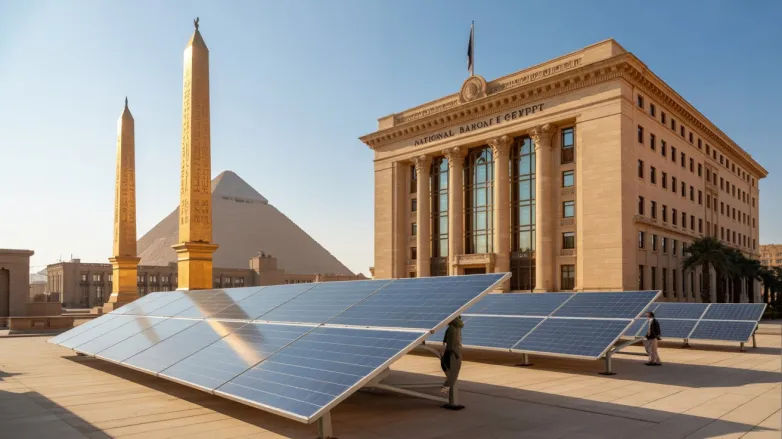
National Bank of Egypt has taken a stake in Scatec’s Obelisk solar-plus-storage project, injecting local institutional capital into the flagship hybrid development. The investment broadens the project’s local funding base and adds support from a major domestic lender, strengthening the case for financing and long-term execution.
The hybrid design combines solar generation with storage to expand usable power beyond daylight. Scatec says the system can reduce reliance on thermal generation during evening peaks, improve grid stability, and better manage complex grid integration needs. The added involvement from a national bank is also expected to enhance alignment with local financial institutions and improve overall bankability, particularly for projects requiring long-term offtake arrangements.
How Will National Bank of Egypt’s Stake Strengthen Scatec’s Obelisk Solar-Plus-Storage?
- National Bank of Egypt’s stake adds high-quality, local institutional capital to the Obelisk project, widening the pool of funding beyond international sources and reducing concentration risk for sponsors and lenders.
- A domestic national bank’s involvement typically improves access to Egypt-linked financing tools, documentation channels, and local due-diligence expectations—supporting smoother execution through project milestones.
- The investment strengthens “bankability” by signaling confidence from a regulatorily familiar, system-relevant financial institution, which can lower perceived risk and improve the terms under which other financiers participate.
- Greater funding certainty helps contractors plan procurement and construction schedules for the solar-plus-storage scope, where equipment lead times and grid-study requirements can be schedule-sensitive.
- Storage-backed solar can reduce curtailment and improve dispatchability; lender confidence often increases when projects demonstrate clearer pathways to deliver revenue during more hours (not just daylight).
- Hybrid plants can help the grid during evening demand peaks and periods of variable renewable output, supporting more stable power delivery—an important consideration in credit assessments tied to offtake performance.
- Strong local financing participation can strengthen alignment with Egypt’s grid and offtake contracting ecosystem, including requirements for tariffs, performance guarantees, and metering/settlement arrangements.
- The bank’s stake may enhance coordination with other local stakeholders—such as utility counterparties, regulators, and development agencies—improving the project’s path toward approvals, grid connection, and operational readiness.
- With bank-backed credibility, Scatec may be better positioned to structure long-term debt with more diversified lenders, potentially improving the overall cost of capital and extending maturities.
- Storage components can support grid services (like frequency/voltage support depending on design), which can strengthen the business case and reduce reliance on any single operating scenario.
- The added institutional backing can improve risk allocation and coverage—such as terms around performance testing, ramp-rate behavior, and availability—making it easier to satisfy lender technical requirements.
- Overall, the stake functions as a confidence catalyst: it combines local financial strength with the hybrid project’s dispatch and stability benefits, making the Obelisk development more attractive for long-term financing and execution.