Metlen Expands in Europe With EPC, Storage Deals
- Metlen accelerates Europe’s energy buildout: EPC wins in UK/Ireland and an Italian battery deal deliver fast, standardized solar-plus-storage with grid‑tight compliance, bifacial tech, and performance‑backed O&M.
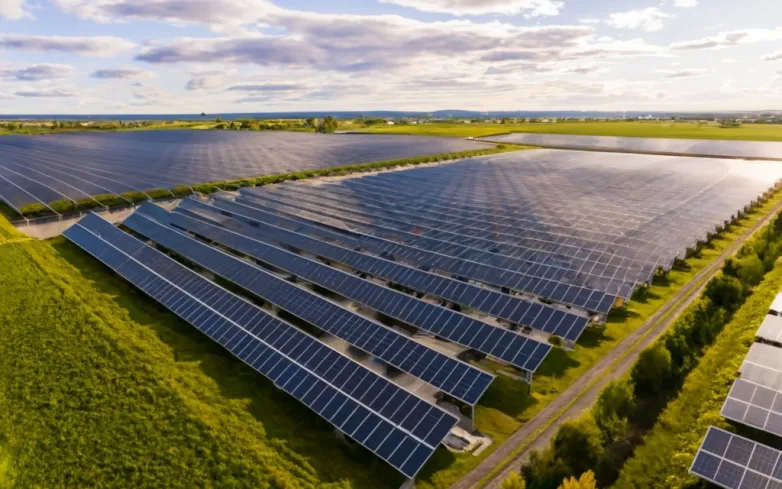
Greek developer Metlen won EPC mandates for solar projects in the U.K. and Ireland and signed a battery‑storage agreement in Italy, extending its build‑and‑operate platform across Europe. The strategy targets markets with faster permitting, clearing interconnection queues and improving storage economics. Its EPC pitch: speed, standardization and tight grid‑code compliance.
Expect bifacial modules on single‑axis trackers or fixed‑tilt, string inverters for modularity, and SCADA feeding fleet analytics. In Italy, a multi‑hour, containerized, liquid‑cooled battery enables time‑shifting and ancillary services such as fast frequency response and reserve. Co‑location trims losses and permits; offerings include turnkey EPC, O&M, hybridization and performance‑backed contracts.
What technologies and strategies underpin Metlen’s Europe-wide EPC and storage expansion?
- Standardized plant templates tuned to EU Network Code RfG/GB G99-G100/EN 50549, with pre-approved single‑line diagrams and MV skid packages to compress design reviews
- Grid-forming and grid-support functions (synthetic inertia, fast reactive power, fault ride‑through) via advanced string/central inverter controls plus on-site STATCOM where weak grids require it
- Medium‑voltage collection systems using modular skids, prefabricated harnessing, and helical/screw foundations to accelerate civils and reduce carbon
- Substation EPC with IEC 61850 digital protection, PMUs, and harmonic/oscillation studies to pass grid compliance testing the first time
- Digital twins and edge analytics for performance tuning, curtailment management, and condition‑based maintenance; API integrations to TSOs/DSOs for dynamic setpoints and redispatch
- Cybersecurity by design (IEC 62443/NIS2), segmented OT networks, and secure remote access with certificate-based control for multi-country fleets
- Flexible and non-firm connections leveraging Active Network Management in the U.K./Ireland and dynamic line rating pilots to unlock earlier energization
- Route-to-market stack: utility and corporate PPAs, merchant exposure with hedging, and participation in capacity and balancing markets to de-risk revenues
- Storage EMS with algorithmic trading and multi-market stacking (day‑ahead/intraday, FRR/FFR, capacity, congestion relief), co-optimized with PV output and grid constraints
- Degradation-aware dispatch, warranty-compliant cycling, and augmentation pathways aligned to 10–15 year performance guarantees
- Safety architecture: compartmentalized containers, off-gas detection, cascading isolation, and code-compliant fire suppression; thermal propagation testing to EU standards
- Balance-of-system procurement via framework agreements with tier‑one suppliers, with spares pooling and vendor‑agnostic interfaces for faster replacements
- Hybrid controls for clipping and curtailment capture, black-start support where enabled, and export/import optimization at grid nodes with cap-and-floor constraints
- Biodiversity and land-use strategies (agrivoltaics, biodiversity net gain plans, low‑disturbance mounting) to streamline planning and community acceptance
- Сable pooling and co-location with existing substations or wind assets to share interconnection capacity and reduce losses
- Construction playbook: parallel workfronts, preassembled tracker rows, trenchless crossings, and weather-resilient scheduling for northern Europe sites
- Bankability levers: EPC wrap with availability/PR guarantees, liquidated damages, and performance insurance; currency and commodity hedges for multicountry delivery
- End-of-life and circularity plans (module take‑back, battery recycling partnerships, critical‑minerals recovery) to meet EU sustainability requirements
Also read