Jinko, XtalPi Forge AI-Powered Perovskite Tandem JV
Jan 12, 2026 10:14 AM ET
- Jinko Solar and XtalPi unite AI and robotics to accelerate perovskite–silicon tandem cells, targeting mass production in three years with a closed-loop, high-throughput R&D revolution.
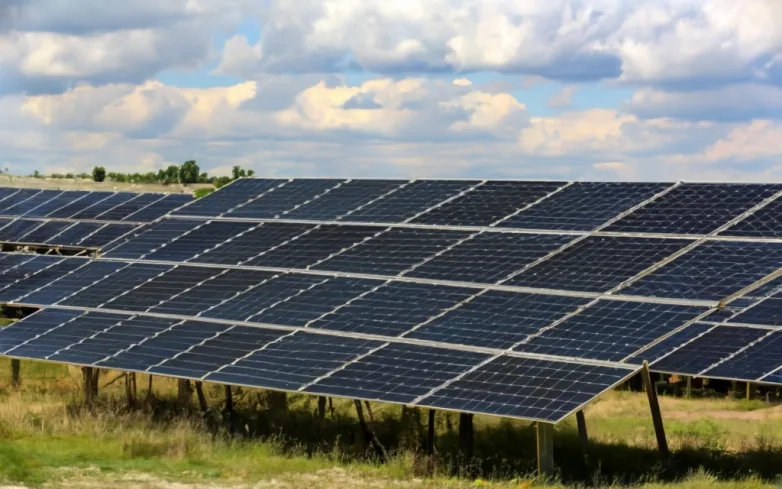
Jinko Solar will form a joint venture with XtalPi to develop high‑throughput perovskite–crystalline silicon tandem solar cells using AI and robotics. The partners plan a fully closed‑loop “AI decision‑making–robot execution–data feedback” experimental line, combining Jinko’s PV R&D with XtalPi’s quantum‑driven algorithms, AI models, and large‑scale robotic automation to boost efficiency and stability.
The alliance seeks to reshape solar R&D with “AI + robotics,” speed next‑gen perovskite tandems from lab to factory, and hasten commercialization of disruptive PV technologies. Based on their roadmap, Jinko expects perovskite tandem cells could enter mass production in three years, promising gains in performance and manufacturability.
How will Jinko and XtalPi’s AI-robotics closed-loop accelerate perovskite tandem commercialization?
- Global renewables hit record installations in 2025 projections, but grid connection delays are now a top bottleneck, often exceeding project build times
- Capital costs eased as polysilicon and freight prices fell, yet high interest rates keep the levelized cost of energy elevated versus 2020–2021 lows
- Corporate power purchase agreements shifted toward shorter tenors and hybrid structures (solar-plus-storage) to manage price cannibalization and shape delivery
- Interconnection queues grew to multi-gigawatt backlogs; reforms prioritize ready-to-build projects and cluster studies to accelerate approvals
- Transmission buildouts lag demand centers; high-voltage DC corridors and advanced conductors gain traction as near-term grid relief
- Curtailment spikes in high-penetration markets are pushing co-location of storage and flexible demand (data centers, electrolysis) behind the meter
- Long-duration storage pilots (iron-air, flow batteries, thermal) moved from demo to early procurement for 8–100 hour needs
- Grid-forming inverters are transitioning from trials to specifications in weak-grid and islanded operations to support stability
- Offshore wind supply chains are recalibrating after turbine upscaling challenges; standardization and risk-sharing contracts are re-entering bids
- Floating offshore wind secured larger leasing rounds with cost-down roadmaps focused on modular hulls and serial fabrication
- Onshore wind repowering is accelerating to boost capacity factors and extend subsidies where policy allows
- Solar module technology pivoted toward TOPCon and HJT; tandem/perovskite roadmaps target mid-decade bankability with improved stability data
- Sodium-ion batteries entered early utility deployments for cost-sensitive, moderate-climate sites and stationary storage
- Heat pumps outpaced gas boilers in several European markets; demand-side flexibility programs reward smart controls and thermal storage
- Green hydrogen offtake shifted to refining, fertilizers, and e-fuels; contracts increasingly include indexed pricing and availability guarantees
- Renewable fuels for aviation (SAF) secured policy support via tax credits and blending mandates, but feedstock constraints keep prices high
- Mining and refining of critical minerals face new sustainability and traceability requirements; recycled content targets are rising
- Environmental permitting integrates biodiversity net gain, bird/bat-friendly turbine operations, and agrivoltaics to reduce land-use conflicts
- Community benefit agreements and local ownership stakes improve social license, particularly for onshore wind and transmission corridors
- Emerging markets leverage auction designs with currency hedges and partial risk guarantees to lower financing costs
- Hybrid plants (solar-wind-storage) optimize shared interconnection and flatten profiles to reduce merchant risk
- Microgrids and resilience hubs expand for critical infrastructure, with islanding features and standardized O&M contracts
- Cybersecurity requirements for inverter-based resources tighten, with mandatory firmware updates and secure-by-design standards
- End-of-life policies advance: PV and blade recycling scale up with new mechanical-chemical processes and take-back schemes
- Weather volatility and El Niño/La Niña cycles are now modeled into revenue forecasts and insurance underwriting
- Data centers co-locate with renewables plus storage and procure 24/7 carbon-free energy portfolios using granular certificates
- Market design reforms explore locational marginal emissions and capacity accreditation for storage and hybrid resources
- Vehicle-to-grid pilots mature in school bus and fleet depots, providing peak shaving and ancillary services
- Rural electrification blends minigrids, PAYGo solar, and productive-use appliances to boost economic outcomes
- AI-enhanced forecasting improves dispatch and reduces imbalance penalties; synthetic inertia services expand ancillary revenue streams
Also read