Iberdrola Lifts Renewables 5.9%, Sharpens Grid-Ready Mix
- Iberdrola’s 2025 renewables rose 5.9% on a diversified mix, standardized PV, data-driven O&M, savvy PPAs/CfDs, and battery-ready sites—boosting capture prices, resilience, and cleaner, firmer power.
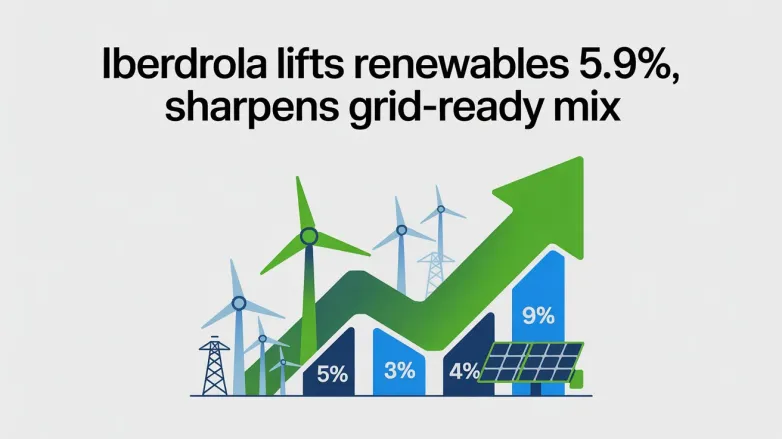
Iberdrola lifted renewable generation 5.9% year over year in 2025, crediting a diversified mix—utility-scale solar and onshore wind in core markets, buffered by hydro flexibility and interconnections. Standardized PV designs (bifacial modules, single‑axis trackers, string inverters, robust plant controllers) and strict grid‑code compliance lifted capture prices and smoothed weather volatility.
Data‑driven O&M (string‑level telemetry, IV‑curve scans, condition‑based maintenance) trimmed losses, while a commercial blend of long‑dated PPAs and CfDs with hedges and a measured merchant slice balanced risk. Sites are engineered battery‑ready to add storage, aiding peak shifting and ancillary revenues, lowering prices and emissions, and firming supply for industry.
Which PV standards, O&M tactics, and contracts drove Iberdrola’s 2025 yield gains?
- Global installations are shifting from subsidy-led to merchant/PPA-backed projects, increasing exposure to power price volatility and the need for sophisticated hedging.
- Solar module prices have rebounded slightly from 2023 lows due to polysilicon capacity rationalization and trade actions, narrowing EPC margins and delaying some utility-scale FIDs.
- Onshore wind faces turbine reliability retrofits and cost inflation; developers are favoring fewer, larger turbines to cut BOS costs, but grid code compliance is tightening.
- Offshore wind is rebaselining contracts with inflation-linked CfDs and local-content carve-outs; floating wind is moving from demos to 100+ MW arrays, with steel scarcity a watchpoint.
- Battery storage procurement is pivoting from 2–4 hour systems to 6–8 hours in markets with steep evening ramps; co-location with PV is accelerating to capture ITC adders and reduce interconnection costs.
- Interconnection queues remain the critical bottleneck; cluster study reforms and grid-enhancing technologies (DLR, topology optimization) are shaving years off timelines in early-adopter regions.
- Transmission buildout is lagging load growth from data centers and electrification; advanced conductors and HVDC backbones are gaining policy momentum as near-term relief.
- Corporate PPAs are evolving toward shorter tenors and baseload-shaped products; embodied carbon disclosures are starting to influence procurement of “low-carbon” PV and steel.
- Permitting risk is being mitigated with early biodiversity assessments and community benefit agreements; standardized templates are cutting legal costs and appeals.
- Supply chains are diversifying beyond a single-country dependency, with emerging manufacturing in the U.S., India, and EU; watch inverter and transformer lead times as persistent pain points.
- Green hydrogen project pipelines are consolidating around offtakers with creditworthy anchors; hybridizing electrolysis with curtailed renewables and storage improves economics.
- Recycling and circularity are moving from pilots to contracts: wind blade co-processing, PV glass recovery, and battery black-mass offtake are becoming bankability factors.
- Insurance markets are repricing climate risk; developers are adopting enhanced O&M, hail mitigation for PV, and turbine lightning protection to contain premiums.
- Financing is tightening around proven technologies; mezzanine debt and tax credit transferability are filling gaps for mid-market developers in the U.S.
- Workforce shortages are driving wage inflation; accelerated training and recognition of foreign certifications are emerging policy levers.
- Environmental justice requirements are shaping site selection; early engagement and local hiring commitments are now standard term sheet clauses for public land projects.
- Market design is rewarding flexibility: ancillary services, capacity markets, and DER aggregation rules are unlocking new revenue for storage and VPPs.
- Forecasting advances (nowcasting with satellite/ML) are reducing imbalance penalties, but operators are demanding higher accuracy caps in interconnection requirements.
- Microgrids and community solar are scaling with standardized interconnection and tariff frameworks; portability of subscriptions is improving customer retention.
- 2030 outlook: renewables plus storage remain the lowest-cost new build in most regions; execution risk centers on grids, permitting, and manufacturing scale-up rather than core technology.
Also read