China’s Solar Rebounds as Year-End Rush Accelerates
Dec 26, 2025 10:06 AM ET
- China’s solar rebounds: 22 GW in November, fastest in six months, as developers race pre-plan; BNEF trims 2025 outlook; wind adds 12.5 GW.
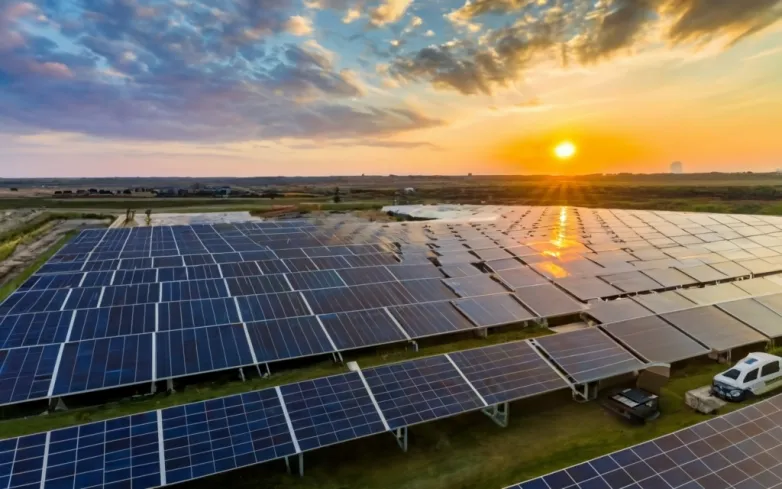
China added 22 gigawatts of solar power in November, the highest in six months, National Energy Administration data show. The tally trailed the 25 gigawatts a year earlier and follows a record 93 gigawatts in May, when developers pulled forward projects ahead of policy changes, fueling a summer slump.
Activity has recovered since September as developers rush to finish work before the 14th five-year plan ends; Beijing is expected to unveil a new plan in March. BloombergNEF cut its 2025 China solar forecast 9% to 372 gigawatts and projects a 14% contraction in 2026. Wind additions were 12.5 gigawatts.
How do policy deadlines drive November’s 22 GW and BNEF’s 2025-26 downgrade?
- - Year-end FYP cutoff: Projects connected before the 14th Five-Year Plan closes qualify for existing grid-priority, settlement, and performance assessment regimes, prompting developers to rush November connections to secure current benefits.
- Green certificate and RPS timing: Provinces finalize renewable portfolio standard compliance and green power certificate issuance on a calendar-year basis, pulling grid connections into Nov–Dec to count toward 2024 targets.
- Provincial rooftop deadlines: County-level distributed PV programs set year-end connection milestones to lock in contract terms and financing; installers accelerated completions ahead of audits and funding windows.
- Pre-empting tighter 2025 rules: Developers moved fast to avoid expected 2025 requirements—higher storage ratios/durations, stricter curtailment caps, and revised interconnection standards—that would lift capex and lengthen timelines.
- Land-use transitions: Forthcoming changes to agrivoltaic and land conversion rules incentivized bringing projects online under current classifications and permitting.
- Grid queue management: Grid companies prioritize year-end energizations to meet provincial KPIs, concentrating grid slots in November and creating a temporary spike.
- Policy handover pause: With the 15th FYP due in March, many utility-scale tenders and rooftop program expansions are on hold; uncertainty about new quotas and tariffs defers part of the 2025 pipeline, underpinning BNEF’s downgrade.
- Curtailment-linked approvals: New capacity is increasingly tied to demonstrable local consumption and storage; provinces facing high curtailment are throttling 2025 allocations, lowering expected additions.
- Transmission timing: Slippage in some UHV line energizations and congested load pockets constrain near-term absorption, forcing schedule deferrals from 2025 into later years.
- Financing scrutiny: Banks tightened lending to rural/distributed projects after performance and settlement reviews, elongating development cycles and trimming 2025 volumes.
- Safety and quality reviews: Expanded rooftop safety/fire-code inspections slowed new approvals, pushing a portion of distributed PV beyond 2024 and softening 2025 growth.
- Tariff exposure: A shift toward more market-based power pricing in 2025 reduces revenue certainty versus legacy fixed settlements, lowering IRRs and delaying final investment decisions.
- Storage mandates bite: Provinces raising storage requirements in 2025–26 add cost and integration complexity, dampening additions and contributing to the 2026 contraction.
- Quota saturation: Several provinces met 2024 non-fossil targets early, easing short-term compliance pressure and reducing the need for aggressive 2025 build.
- Inter-technology crowding: Year-end wind connections share substation and transmission capacity, pulling forward solar that could be connected and pushing the remainder into a thinner 2025–26 window.
Also read