BNDES: Investing in Brazil's 902MW Solar Complex
- BNDES invests USD-447.8M to build 902 MW solar complex in Janauba, powering 3 million people while offsetting 2.4 million tonnes of CO2. Albras offtakes power with 21-year PPA, part of Brazil's new PAC.
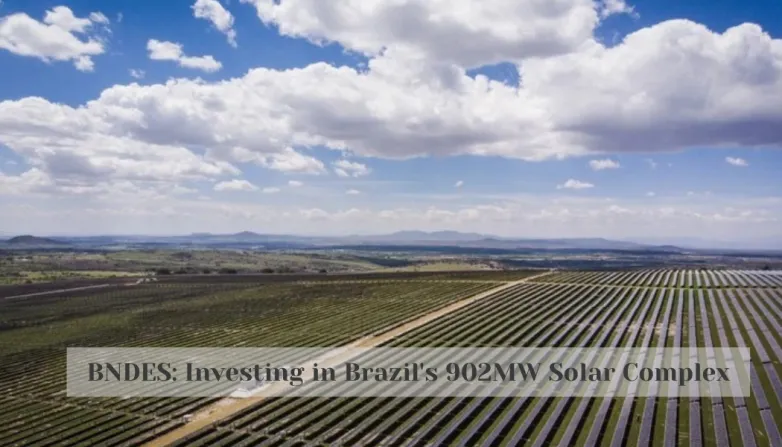
The Brazilian Development Bank, or BNDES, has granted a USD-447.8-million (EUR 407.6m) loan for the construction of a 902-MWp/768-MW solar complex in Janauba, Minas Gerais. The complex, conducted by renewable energy developer Atlas Renewable Energy, will generate 2 TWh of electricity per year, enough to power over 3 million people and offset 2.4 million tonnes of equivalent carbon dioxide (CO2). Albras, the largest producer of primary aluminum in Brazil, will offtake power from the solar complex with a 21-year power purchase agreement (PPA) scheduled to begin in 2025. BNDES' finance accounts for 68% of the total BRL 3.2 billion required for the project. The Vista Alegre complex is part of the country’s new growth acceleration programme (PAC).
What Financing Has BNDES Provided for the Vista Alegre Solar Complex?
- BNDES has granted a USD-447.8-million (EUR 407.6m) loan for the construction of the Vista Alegre Solar Complex
- This loan accounts for 68% of the total BRL 3.2 billion required for the project
- The complex, which will generate 2 TWh of electricity per year, is part of Brazil's new growth acceleration programme (PAC)
- When complete, the Vista Alegre Solar Complex will power over 3 million people and offset 2.4 million tonnes of equivalent carbon dioxide (CO2)
- Albras, the largest producer of primary aluminum in Brazil, will offtake power from the solar complex with a 21-year power purchase agreement (PPA) scheduled to begin in 2025
Also read
- BW ESS Secures Debt for 1,424-MWh Hams Hall Battery in England
- Tesla Deploys 13.7 GWh of Storage in Q3 as Energy Revenue Falls 16%
- Berkeley Lab Finds US Utility Solar Cost Rose 7% to $61/MWh in 2025
- EBRD Arranges $265 Million for Egypt's 1.2-GW Nefer Minya Solar Plant
- BloombergNEF Sees $332 Billion Copper Gap as Metal Shortages Ease