Australia Clears Tonic’s Solar Park With 440-MWh Battery
- Tonic Group secures approval for an Australian solar park with 440‑MWh battery, turning sun into dispatchable power—cutting curtailment, boosting capture prices, and bolstering evening peaks and grid reliability.
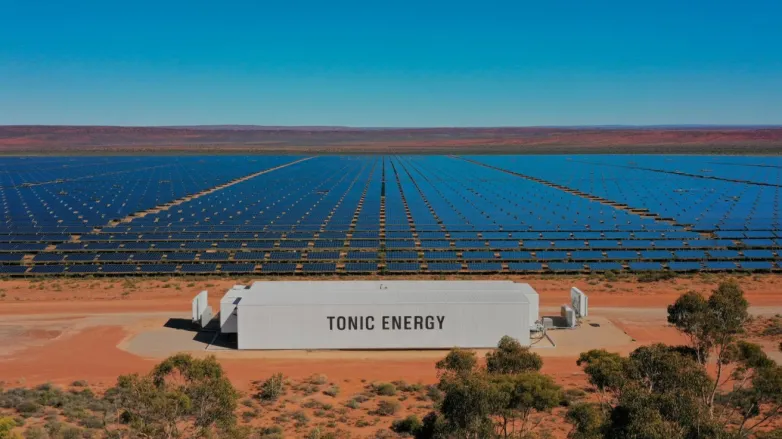
Tonic Group won planning approval for an Australian solar park with a 440-MWh battery, aligning with operators’ push for renewables that behave like dispatchable capacity. The multi-hour system will absorb low-price daytime generation, discharge into evening peaks, and deliver fast-response services, reducing curtailment, lifting capture prices, and supporting shaped offtake deals.
Approval clears hurdles in Australia—environmental, community and grid-connection—allowing the project to advance into detailed design, EPC procurement and financing. Integration will focus on fire safety, thermal management, cyber-secure controls, and commissioning tests to validate performance, creating a controllable asset that can respond to market signals and strengthen grid reliability.
How will Tonic’s solar-plus-440-MWh BESS advance and deliver dispatchable, reliable capacity?
- Provides multi-hour firming: 440 MWh enables sustained discharge through the evening peak, turning variable solar into scheduled, controllable output
- Converts surplus midday PV into peak-capacity value via arbitrage, enhancing effective load-carrying capability compared with standalone solar
- Offers fast, precise frequency control (sub-second response) and primary frequency response, reducing reliance on gas peakers and improving system stability
- Grid-forming inverter capability (if specified) can supply synthetic inertia, fault ride-through, voltage control, and islanded operation support for higher renewable penetration
- Enables ramp-rate control and shaped dispatch profiles, matching retailer offtake obligations and supporting cap/firming contracts and renewable firming PPAs
- Participates across multiple NEM services—energy, FCAS, and potentially System Restart—creating a revenue stack that sustains reliable availability
- Mitigates curtailment and congestion by soaking during minimum-demand periods, then discharging when network headroom and prices are higher
- Improves capture prices for the co-located solar, stabilizing project cashflows and underpinning investment in dependable capacity
- Supports AEMO resource adequacy by contributing capacity during net peak and low-renewable intervals, lifting the project’s ELCC relative to PV alone
- Enhances local grid strength with reactive power and voltage regulation at the connection point, reducing voltage swings and helping maintain quality of supply
- Offers contingency reserves and fast-start replacement capacity, with millisecond response to contingencies and rapid reload between events
- Black-start capability (if equipped) can assist in system restoration, adding resilience after widespread outages
- Cyber-secure, SCADA-integrated controls allow automated, real-time re-dispatch, AGC following, and constraint-aware bidding under 5‑minute settlement
- Modular, redundant architecture with thermal management, fire safety systems, and predictive maintenance maximizes uptime and dependable delivery
- Lifecycle augmentation planning maintains usable MWh over time, preserving the project’s dispatchable contribution across its operating life
Also read