Search

Italy's Beltrame to invest 200 mln euro in Romania's COS Targoviste, construct PV park
imports every one of this product from countries such as Bulgaria as well as Turkey.
Beltrame Group also stated it plans to spend 100 million euro to develop a
Jun 23, 2022 // Plants, Large-Scale, Commercial, Markets & Finance News, Italy, Europe, Romania, PV Power Plant, Beltrame, COS Targoviste
THIN FILM PHOTOVOLTAIC CELLS MARKET SIZE 2020-2027, BEST PLAYERS-- TRONY SOLAR HOLDINGS, MASDAR PV GMBH, TSMC SOLAR LIMITED, NEXPOWER TECHNOLOGY CORP., EGUANA TECHNOLOGIES, ETC. As Well As COVID-19 IMPACT ANALYSIS
States, Canada, Germany, UK, France, Italy, Spain, Russia, Netherlands, Turkey, Switzerland, Sweden, Poland, Belgium, China, Japan, South Korea, Australia,
Jun 15, 2020 // Market Research, Japan, Canada, Saudi Arabia, Malaysia, Spain, Sweden, France, Germany, UK, Italy, Poland, India, South Korea, China, Australia, First Solar, Chile, Thailand, Argentina, South america, Europe, Brazil, Asia, Switzerland, Oceania, Netherlands, Belgium, Africa, Philippines, Mexico, Egypt, Indonesia, North America, Turkey, Nigeria, Taiwan, Russia, UAE, Astronergy, United States, Trony Solar Holdings, Masdar PV GmbH, TSMC Solar Limited, NexPower Technology Corp., Eguana Technologies, Sharp Solar Energy Solutions Group, AVANCIS GmbH & Co. KG, MiaSole, Kaneka Corporation, Hanergy Holding Group Ltd, Solar Frontier K.K, Columbia, South Africa and Rest of the World
Sabanci Taps Empact for IRA Solar Compliance
Turkey’s Sabanci hired Empact Technologies to manage tax-credit compliance for its U.S. solar portfolio, underscoring how the Inflation Reduction Act has made documentation central to financing. Meeting domestic-content, prevailing-wage, apprenticeship, energy-community and transferability rules now demands platforms that track evidence, standardize workflows, and produce audit-ready files for lenders, tax-equity investors and credit-transfer buyers.For international investors, outsourcing compliance cuts execution risk and preserves flexibility: projects with clean files move faster through transfers or refinancing and may win better pricing as confidence rises. Governance becomes a competitive edge in U.S. solar, shaping cost of capital and returns alongside hardware choices.
How do rigorous IRA compliance platforms influence cost of capital and credit-transfer pricing?
Latest global trend: renewables surpassed 30% of world electricity in 2023, with solar the largest annual capacity addition; 2024–2026 expected to accelerate on policy and manufacturing scale-up
Cost dynamics: utility-scale solar PPA prices stabilizing after 2022–23 spikes from polysilicon, freight, and interest rates; modest declines expected as supply chains normalize
Grid bottlenecks: interconnection queues exceed 2 TW in North America; reforms (cluster studies, tighter readiness screens, financial commitments) are shortening timelines in several ISOs
Storage surge: lithium-iron-phosphate dominates new deployments; hybrid solar-plus-storage increasingly bids as firm, four-hour blocks; long-duration pilots (iron-air, flow, thermal) moving to first-of-a-kind scale
Transmission: HVDC backbone proposals advancing to move remote wind/solar to load centers; undergrounded DC in highway/rail corridors gaining traction to ease siting risk
Offshore wind: supply chain localization (monopiles, nacelles, cables) reduces currency and logistics exposure; floating platforms targeting deepwater West Coast, Mediterranean, and Japan
Onshore wind: taller towers and longer blades unlock low-wind sites; repowering of 10–15-year-old fleets boosts capacity factors and extends life with minimal new land use
Permitting reforms: “shot clocks,” concurrent reviews, and digital environmental assessments cutting timelines; community benefit agreements standardizing local value sharing
Domestic manufacturing: rapid expansions in modules, cells, inverters, and trackers; nacelle, blade, and tower factories reopening near ports and rail hubs to cut lead times
Supply chain resilience: diversified polysilicon, wafer, and cell sourcing; traceability tools (blockchain, mass-balance audits) to meet import compliance rules
Corporate procurement: 24/7 carbon-free energy contracts growing; granular certificates tied to hourly emissions delivering higher climate impact than annual RECs
Financial structures: tax credit transferability and direct pay broadening investor base; merchant exposure hedged via basis-insured PPAs and storage arbitrage
Land use: agrivoltaics scaling for specialty crops and pasture; dual-use designs (elevated arrays, wider row spacing) maintain yields and biodiversity
Environmental safeguards: avian-safe siting, bat deterrents, and curtailment algorithms; solar panel recycling and wind blade repurposing hubs expanding
Emerging tech: perovskite-silicon tandems nearing pilot manufacturing; high-efficiency n-type TOPCon and heterojunction gaining share in utility builds
Hydrogen: co-located electrolyzers soaking midday solar, providing grid services; e-fuel offtake from shipping and aviation anchoring project finance
Demand-side orchestration: virtual power plants aggregating HVAC, EVs, and batteries; dynamic tariffs and real-time APIs enabling flexible load
Buildings: heat pumps outselling gas furnaces in several markets; thermal storage (ice, phase-change) paired with rooftop PV to shave peaks
Transportation: EV managed charging aligns with wind and solar profiles; bidirectional charging pilots provide distribution-level backup
Data centers: hyperscalers signing firmed clean power with storage and geothermal; waste-heat reuse and on-site microgrids reduce grid stress
Mar 3, 2026 // Markets & Finance News, USA, North America, tax credits, IRA, Sabanci, compliance

How much money can you make with PV-assisted EV charging stations?
situation situation, in which present genuine rates and also need in Turkey are taken into consideration, the worth of electrical power purchased from the
Apr 6, 2020 // Technology, Storage, Asia, Turkey, ev charging

Globe currently has 583.5 GW of functional PV
Eurasian area-- consisting of Armenia, Azerbaijan, Russia, Georgia and also Turkey-- cumulatively gotten to 7.14 GW. Oceania's collected total amount got to
Apr 6, 2020 // Markets & Finance News, IRENA, WORLD
Borosil Renewables to Spend Rs 500 Cr to Double Solar Glass Production
to Europe, with main emphasis being Germany, Spain, Portugal Russia and also Turkey, as well as likewise the US.
Earlier this month, we had reported that the
Apr 5, 2021 // BIPV, Manufacturing News, manufacturing, India, Asia, solar glass, Borosil Renewables, Borosil Solar Glass Manufacturing
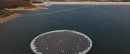
Statkraft, Ocean Sun total Albania's very first floating solar power plant
an estimated 3 GWh annually. With the exception of a few pilot projects in Turkey, it is the very first implementation of the modern technology in Southeastern
Feb 17, 2023 // Plants, Floating PV, Statkraft, Solar Power, Ocean Sun, hydropower plants, renewable energy sources, hybrid power plants, floating solar power plants
Countries
tag | search (Trinidad and Tobago)
Tunisia tag | search (Tunisia)
Turkey tag | search (Turkey)
Turkmenistan tag | search
Jul 19, 2026
Abdul Latif Jameel unit launches solar plants in Jordan
said: “With power demand in the Middle East and North Africa (Mena) and Turkey region increasing by around 7 per cent annually, there is a pressing need to
Nov 4, 2019 // Plants, Large-Scale, Commercial, Jordan, Asia, Abdul Latif Jameel, Fotowatio Renewable Ventures, Omar Al Razzaz, Tristn Higuero, Raad Al Saady
ABB to Exit Solar Inverter Business, at a Cost of $470M
broader geographic reach, compared to its current markets in Latin America and Turkey, she said. “I think the ABB acquisition will definitely help them.”
Jul 9, 2019 // Markets & Finance News, ABB, Lindsay Cherry, Wood Mackenzie Power & Renewables, Tarak Mehta, EcoStruxure, IOT platforms, Kaco’s
RESIDENTIAL SOLAR MARKET: PRESERVING A STRONG OVERVIEW-- RIGHT HERE'S WHY?
Korea, Thailand, India, Indonesia, as well as Australia).
Europe (Turkey, Germany, Russia UK, Italy, France, and so on).
The United States And Canada
Jun 11, 2020 // Market Research, residential solar, covid-19

Solar Powers To Leading Position In New Electricity Installations
Amongst a group of non-OECD nations plus Chile, Colombia, Mexico as well as Turkey, wind and also solar have actually represented most new capacity annually
Sep 2, 2020 // Market Research, USA, India, Australia, Asia, Oceania, BloombergNEF, North America, Luiza Demôro, Ethan Zindler

Canada extends trade measures against Chinese metal silicon
South Korea, Taipei, Indonesia, Thailand, Malaysia, the Middle East, Africa, Turkey, Mexico and Argentina would still not be enough to address predicted
Aug 27, 2019 // Manufacturing News, Canada, China, polysilicon, Asia, North America, metal silicon, Quebec Silicon Limited Partnership, Canadian International Trade Tribunal, QSIP Canada ULC, Wacker Chemie AG, Pedro Larrea
Solar Photovoltaic (PV) Setup Market Dimension Analysis, Fads, Leading Makers, Share, Growth, Statistics, Opportunities and Projection to 2025
Arabia.
U.A.E.
etc
The report consists of country-wise and
Dec 18, 2020 // Market Research, solar pv
Green electrical power tariffs, 1 GW solar tender 'light at the end of the tunnel' for Turkish PV
Turkey's Ministry of Energy and Natural Resources has actually officially released the details of its 1 GW solar public auction. The smallest task permitted under the tender is 10 MW in dimension, while the biggest is 20 MW.
According to the news released in today's problem (03/07/2020) of the Official Gazette, the public auction will be held over a four-day period in between October 19-23, 2020, for jobs situated in 36 cities, and also across 74 grid connection points.
The starting ceiling price in the auctions will be 0.3 TL/kWh (US$ 0.044/ kWh), and the winners will certainly get a 15-year power purchase assurance. All projects should utilize in your area generated components.
The complying with cities have been designated jobs under the tender: Adıyaman, Ağrı, Aksaray, Ankara, Antalya, Batman, Bayburt, Bilecik, Bingöl, Bitlis, Burdur, Bursa, Çankırı, Çorum, Diyarbakır, Elazığ, Erzurum, Eskişehir, Gaziantep, Hakkari, Iğdır, Kahramanmaraş, Kars, Kırşehir, Kilis, Malatya, Mardin, Mersin, Muş, Nevşehir, Osmaniye, Siirt, Şırnak, Uşak, Van and also Yozgat.
This 1 GW auction is like the light at the end of the passage for the Turkish solar industry, which had been in decline even before the impacts of Covid-19 were felt.
In the first 5 months of 2020, total set up PV capability for the year stood at simply 157 MW contrasted to in 2014's virtually 1 GW for the full year. This was a decline from 1.6 GW in 2018. Turkey's solar market has been frantically seeking preparing security during Covid-19. Such public auctions are more than welcome, since roof covering top self-consumption versions are evidently not moving ahead quickly enough.
While the auctions are a favorable step, financing tasks will certainly still stay tough. As stated, the public auction will certainly be held in Turkish Lira as well as ceiling price is already as low at US$ 0.044/ kWh. Considering that locally-manufactured modules need to be made use of, which they are around 30% extra expensive than those created elsewhere, project programmers and taking part parties will have troubles in defining the best prices. On the other hand, since the auction is in Turkish Lira, fundraising will certainly be in Turkish Lira. As a result of the high rising cost of living rate-- presently going for 10-12%/ a-- financing prices will be higher than if the public auction was in euros or U.S. dollars.
Added plan measures to introduce "eco-friendly tariffs" for power consumers might provide another boost to solar programmers-- possibly driving demand.
Within the framework of reforms to Turkey's electrical power market, there has actually been a need to amend the Regulation on the Renewable Energy Resource Guarantee Certificate in the Electricity Market and also the Regulation on the Documentation and Support of Renewable Energy Resources. For this purpose, a draft was released on July 1, 2020, modifying the regulations concerned. The Draft Regulation will certainly be open to public opinion and also analyses till July 28.
The tariff regulative reform looks for to introduce an electrical energy tariff for Turkish consumers based upon renewable resource resources. It introduces a legal structure for a "eco-friendly tariff", permitting electrical power consumers the opportunity to purchase certified clean power. It makes use of similar relocate various other countries.
To present such tariffs, new laws are called for. Accordingly, the "Draft of Renewable Energy Resource Guarantee Certificate Regulation in Electricity Market" (REC Regulation) has been prepared. In terms of conformity with this new law, some amendments were made in the Regulation on Certification and also Support of Renewable Energy Resources.
At the same time, Turkey's Ministry of Energy is preparing a "Green Tariff"-- expected to be announced following month-- which will be a brand-new end-user tariff for those seeking to resource their electrical energy from 100% renewable resources. Providers of this tariff will be needed to issue as well as retire RECs for each and every MWh to be offered in accordance with the REC Regulation.
As is known, Turkey's existing feed-in-tariff program (YEKDEM) finishes at the end of 2020. It is not specific what form YEKDEM's replacement will take-- although the 1 GW public auction provides some certainty. The Green Tariff as well as RECs appear to be the major instruments to be made use of by the ministry for fostering eco-friendly development.
It is clear that the Turkish federal government does not intend to proceed with the state supported YEKDEM plan, rather aiming to divert demand-side measures in the market. Participation to both Green Tariff and RECs are voluntary as for now, hence passion of the general public to these brand-new instruments is in concern. However, the Energy Ministry might enforce some REC allocations on electrical power suppliers or provide some motivations for the REC individuals in future-- which may after that be a reliable boost for renewable resource financial investments in Turkey.
Jul 3, 2020 // Markets & Finance News, Tariffs, Policy, Opinions, tender, Asia, Turkey, Hakki Karacaoglan