Search

GRS begins deal with 122MW Spanish PV project
construction of the 122MW Carmonita Norte solar project in Badajoz, for Fotowatio Renewable Ventures (FRV).
This is the 4th significant project checked in Spain by the Gransolar
Mar 6, 2023 // Plants, Large-Scale, Commercial, Spain, Europe, GRS
FRV Completes 300-MW Walla Walla Solar Farm In NSW Project
Fotowatio Renewable Ventures (FRV) Australia has brought its 300-MWac (353-MWp) Walla Walla solar farm to full commercial operation, cementing one of New South Wales’ largest utility-scale PV projects as a new anchor of daytime generation. The milestone caps a multi-year cycle of land assembly, approvals, interconnection studies and construction that unfolded through a period of tight global supply chains for grid equipment.
Walla Walla follows the modern utility-PV blueprint. Bifacial modules on single-axis trackers maximise yield across seasons; a deliberately robust DC/AC ratio lifts annual energy rather than chasing headline peaks; and plant-level controls deliver reactive power, fault ride-through and swift curtailment response as required by Australian grid codes. That control stack matters in NSW, where rising shares of solar deepen midday troughs and increase the value of assets that can behave predictably under operator commands.
While the project enters service as solar-only, FRV has preserved optionality to add a co-located battery in future stages. Co-location would share the interconnection, cut round-trip losses relative to standalone storage and unlock revenues from evening peaks and fast frequency response—capabilities that make PV more dispatchable and bankable as market rules evolve.
Construction brought visible local benefits: hundreds of jobs at peak, procurement from regional suppliers and upgrades to access roads and drainage that remain after crews depart. Ongoing operations will support permanent technical roles and steady municipal revenues, with biodiversity measures—managed groundcover, habitat buffers and targeted weed control—embedded in the site’s environmental management plan.
Operationally, the first year is about stabilising performance. O&M teams will tune tracker angles, cleaning cycles and vegetation regimes to protect the net capacity factor through hot, dusty months and winter shoulder seasons. A unified SCADA platform and analytics will flag underperforming strings early, reduce corrective maintenance and keep availability on target.
For the NSW grid, Walla Walla’s steady block of daytime megawatt-hours arrives as electrification and data-center growth lift demand. More importantly, it demonstrates the maturity of large-scale PV delivery in the state: standardised designs, early transformer reservations and staged commissioning that gets electrons flowing sooner. With the project now “fully alive,” FRV has added not just capacity, but a replicable template for bankable build-out at scale.
Oct 2, 2025 // Plants, UTILITY-SCALE SOLAR, Australia, Oceania, new south wales, frv, commissioning
TotalEnergies Finalizes Three Global Renewable Acquisitions
TotalEnergies boosts its global renewable footprint with strategic acquisitions, advancing its commitment to sustainable energy across Europe, Africa, and North America.
Apr 3, 2025 // Markets & Finance News, TotalEnergies
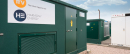
Harmony Energy and also TagEnergy to create 100MW of battery storage projects
of Yorkshire.
The business has actually likewise worked with the likes of Fotowatio Renewable Ventures, with which it is currently constructing a 99MW/ 198MWh project in southern
Nov 18, 2021 // Storage, UK, Europe, Harmony Energy, Peter Kavanagh, tagenergy
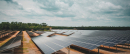
FRV Launches NSW Solar Farm, Powers Microsoft Partnership
Fotowatio Renewable Ventures (FRV) has officially launched its 353MW Walla Walla solar farm in New South Wales, Australia. This project, developed in partnership with Jameel Energy and Canadian fund OMERS, is pivotal for meeting NSW's renewable energy goals and has significantly contributed to the local economy by creating approximately 350 jobs during its construction. Notably, FRV has secured a 15-year power purchase agreement with Microsoft to provide renewable energy for its Australian data centers.Walla Walla is FRV Australia's eighth operational project, contributing to a total portfolio capacity nearing 1GW. The company recently completed a A$1.2 billion refinancing for its projects in Australia and is advancing on the 100MW/200MWh Terang large-scale battery project currently under construction. FRV Australia CEO Carlo Frigerio emphasized the project’s importance in supporting Australia’s renewable targets and solidifying the company’s role in the renewable energy sector.
How does the Walla Walla solar farm support NSW's renewable energy goals?
The Walla Walla solar farm plays a crucial role in supporting New South Wales (NSW) renewable energy goals in several impactful ways:
Increased Renewable Capacity: The addition of the 353MW solar farm significantly boosts NSW's renewable energy generation capacity, moving the state closer to its target of 50% renewable energy by 2030.
Facilitating Transition to Green Energy: By generating clean energy, the solar farm supports the transition from fossil fuels to renewables, helping to reduce greenhouse gas emissions and combat climate change.
Job Creation: The development of Walla Walla has created approximately 350 construction jobs, providing a significant economic boost to the local community and contributing to workforce development in renewable energy sectors.
Long-term Energy Stability: The 15-year power purchase agreement with Microsoft ensures a stable and reliable source of renewable energy, promoting a shift toward sustainable practices in the corporate sector and encouraging other businesses to invest in green energy.
Enhancing Energy Security: By diversifying the energy mix in NSW, the Walla Walla solar farm contributes to a more resilient energy system, reducing dependence on non-renewable sources and enhancing overall energy security.
Encouraging Further Investment: The project’s successful launch and operation may attract additional investments in renewable energy infrastructure within the region, setting a precedent for future projects.
Supporting Local Economy: Beyond construction jobs, the solar farm contributes to the local economy through ongoing operational jobs and potential local business opportunities related to maintenance and supply services.
Infrastructure Development: The project's implementation often includes upgrades to local infrastructure, such as roads and energy distribution networks, which can benefit surrounding communities even beyond the direct economic effects of the farm itself.
Community Engagement: Engaging local communities in renewable projects fosters a culture of sustainability and can lead to increased public support for further renewable initiatives.
Reducing Energy Costs: Large-scale solar farms help to lower electricity prices by increasing supply and reducing reliance on more expensive and volatile energy sources.
Сontribution to National Energy Goals: In alignment with Australia's broader commitment to cutting emissions and transitioning to 100% renewable energy by 2050, the Walla Walla solar farm helps NSW lead the way in national renewable targets.
Nov 26, 2024 // Plants, Large-Scale, Commercial, frv, solar farm
Renewable Resource for Agri-food Systems
Towards the Sustainable Development Goals and also the Paris Agreement
Nov 18, 2021 // Market Research
Masdar inks MoU to develop 300 MW of solar in Armenia
and Natural Resources announced that Spanish solar project developer, Fotowatio Renewable Ventures, B.V. (FRV), part of UAE-based Abdul Latif Jameel Energy, was awarded the
Jul 15, 2019 // Large-Scale, Mohamed Jameel Al Ramahi, Chief Executive Officer of Masdar, David Papazian, ANIF, Abu Dhabi Future Energy Company, Masdar

Armenia to tender five more large-scale solar projects
The projects will be tendered under single-round competitive bidding processes, supervised by the European Bank for Development and Reconstruction.
Aug 6, 2019 // Plants, Large-Scale, Commercial, Markets & Finance News, tender, Europe, Armenia, EBDR, Masrik 2 PV plant, the Gagarin PV plant
GAIL, RVUNL Launch 1 GW Renewable Push in Rajasthan
GAIL and RVUNL join forces for 1 GW renewable push in Rajasthan, driving India's green energy future and diversifying energy portfolios.
Aug 5, 2025 // Plants, Large-Scale, Commercial, India, Asia, GAIL, RVUNL
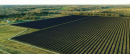
IFC, EBRD, and also EU to Support First Solar Project in Armenia
minimize its dependence on imported gas.
The plant is being created by Fotowatio Renewable Ventures (FRV), part of Abdul Latif Jameel Energy, a global leader in utility-scale
Jul 16, 2020 // Plants, EBRD, Europe, Armenia, ifc, EU, International, solar projects, Mikel de Irala, IFC EBRD EU Armenia Solar, Cheryl Edleson Hanway
FRV Secures Permits for 183.6 MW Solar Spain
Fotowatio Renewable Ventures (FRV) said it has secured permitting for a 183.6-MW portfolio of solar projects in Spain, advancing late-stage sites toward construction. The approvals mark a key de-risking step that positions the projects for the next phases, including financing and EPC contracting.In Spain’s mature PV market, permitting is often the biggest hurdle, but developers still must resolve grid deliverability and execution issues, including interconnection arrangements and equipment lock-in to meet commissioning timelines. FRV noted new projects are increasingly “battery-ready,” enabling storage additions later to capture stronger evening returns and provide system flexibility as market conditions evolve.
How does FRV’s Spain permitting de-risk 183.6-MW solar projects for financing and EPC?
Securing approvals in Spain reduces “headline” regulatory risk for lenders and sponsors by converting late-stage projects from development-only status to construction-ready status.
Permitting de-risking improves bankability by clarifying land, planning, and environmental compliance requirements, which helps satisfy due-diligence conditions embedded in project finance documentation.
A permitted portfolio (rather than one-off sites) can support financing structures at portfolio level, making it easier to standardize technical assumptions, schedules, and costs across multiple projects.
Approvals typically strengthen the credibility of the commissioning timeline, which is critical for milestone-based financing and for aligning EPC procurement lead times with grid-connection realities.
With permitting in place, FRV can move to finalize the remaining development dependencies that lenders scrutinize most—such as grid deliverability, interconnection contracting, and any compliance conditions attached to approvals.
Clear approval status improves negotiating leverage for equipment and construction contracts, helping the developer lock in EPC terms that reflect a defined project scope and permission envelope.
For EPC contracting, permitting confirmation supports a more robust scope definition (site layout, permitted footprint, and grid/interface assumptions), reducing change-order exposure during execution.
Bankability for EPC procurement is enhanced when permitting milestones are behind schedule, enabling more reliable risk allocation between developer and EPC contractor in fixed-price or guaranteed completion frameworks.
In Spain’s mature PV landscape, lenders still require assurance that grid terms and deliverability are manageable; permitting de-risking supports this by allowing grid and contract work to proceed without the project being at regulatory limbo.
Battery-ready design intent can further improve financing attractiveness because it provides a pathway for later storage add-ons, potentially improving revenue optionality and resilience to evolving market rules and power-price shapes.
“Battery-ready” architecture can also simplify subsequent permitting/engineering steps for storage upgrades, which can lower future execution risk and shorten the timeline to capture additional value.
Overall, FRV’s permitting success functions as a key prerequisite step—de-risking regulatory exposure first—so that project finance and EPC selection can proceed on more bankable schedules and clearer contractual scopes.
Apr 6, 2026 // Plants, Large-Scale, Commercial, Spain, Europe, frv, permitting, development, solar portfolio
Largest solar power stations in Australia
ha
2018
Photovoltaic, single-axis tracking
Fotowatio Renewable Ventures (FRV)
Tailem Bend Solar Power
May 13, 2026

Australia added 1.2 GW of large-scale solar in 2021 however renewables financial investment slows, report finds
bp
174
Glenrowan West
Wirtgen Invest
130
Winton
Fotowatio Renewable Ventures
85
Source: The Clean Energy Council's 2022 Clean Energy Australia
Apr 7, 2022 // Markets & Finance News, ENERGY STORAGE, Australia, rooftop, South Australia, Oceania, new south wales, investment, Clean Energy Council, covid-19, deployment statistics, Darlington Point
Finance ROUND-UP: CleanCapital’s US$300m, Fotowatio’s loan, Soltage’s 200MW push
67.8MW Aussie project
18 July: A 67.8MW, PPA-backed project by Fotowatio Renewable Ventures (FRV) in Australia has secured financial backing from top banks.
The
Jul 22, 2019 // Markets & Finance News, CleanCapital, KDC Solar, C&I, Credit Suisse, BlackRock
Giga Battery Ventures Into Belgian Market
Giga Storage is bringing 1,200-MWh of energy storage to Belgium, connecting the grid to the high-voltage network and aiming to reach 3 GW of capacity by the end of the decade. Take advantage of the regulatory exemptions and join the revolution.
Oct 2, 2023 // Storage, Europe, Belgium, Giga Storage