Nofar Starts Power From 169-MW Romanian Solar Park
- Nofar Energy kicks off power export from its 169‑MW Giurgiu solar park to Romania’s grid, marking major expansion in Eastern Europe’s booming renewables market.
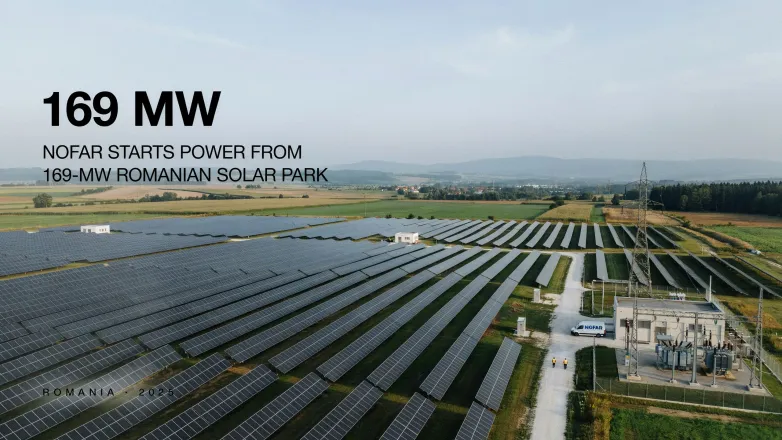
Israeli renewable developer Nofar Energy has started feeding electricity into Romania’s grid from its 169-MW Giurgiu County solar park, a milestone in the company’s fast expansion in the market. The project adds to Nofar’s broader pipeline of utility-scale solar investments in Romania.
Romania has become a key destination for clean energy in Eastern Europe, driven by rising power demand, favorable solar resources and government-backed initiatives. Nofar says the new facility will supply clean electricity to help support the country’s long-term renewable targets and further cements its position among the most active international investors in the sector.
Nofar’s Giurgiu 169-MW solar start: what means for Romania’s renewable push and grid?
What Nofar’s Giurgiu 169-MW start signals for Romania’s renewables push
- A meaningful step up in utility-scale solar deployment, helping Romania add firm “new build” capacity rather than relying only on smaller distributed-generation projects.
- Reinforces investor confidence in Romania as an execution market for large solar, not just a development pipeline.
Why it matters for Eastern Europe’s clean-energy timeline
- Adds to the broader regional trend of accelerating solar in countries with strong irradiation and rising electricity demand.
- Helps diversify generation mixes across neighboring markets, which can reduce reliance on imports and support cross-border power trading.
Grid impacts: balancing generation growth with system needs
- Large solar output is variable, so the plant’s start increases the need for operational flexibility—more ramping capability from dispatchable generation, storage, or demand response.
- Grid operators may need to closely monitor voltage management, local congestion, and power-flow patterns, especially during peak irradiance hours.
- Seasonal and weather-driven fluctuations can require more accurate forecasting and closer coordination between renewable producers and grid control centers.
Connection and infrastructure implications
- Projects of this scale typically put additional load on planning for substations, transformers, and transmission/distribution upgrades near the connection point.
- If upgrades are already completed, the start-up indicates readiness of the grid interface; if not, it highlights where additional reinforcement may be required as more solar farms come online.
Market and investment signal
- Demonstrates progress toward Romania’s capacity build-out goals by converting contracted/constructed projects into operating supply.
- Can accelerate follow-on investment by showing that permitting, procurement, and construction can translate into grid-ready generation.
Contracting and offtake relevance
- Operational plants strengthen the reliability of revenue streams for project finance, supporting continued capital inflows into the sector.
- More clean generation can influence wholesale price dynamics during sunny periods and increase the value of flexibility products (e.g., balancing services, flexibility contracts).
System-wide decarbonization effects
- Displaces electricity that would otherwise come from higher-emission sources, contributing to emissions reductions over the life of the asset.
- Supports renewable targets by adding verified generation rather than just planned capacity.
What comes next after this milestone
- Romania will likely need continued expansion of grid capacity, flexibility resources, and forecasting tools to integrate additional solar at similar scales.
- The project’s performance in real-time operations may set practical benchmarks for future utility solar projects in the country.