Search
What is Range of application of photovoltaic?
Photovoltaic cells convert sunlight into DC electricity, which can be used for battery charging and equipment powering. Initially, PV was practically applied
Sep 13, 2023
Consumers Energy Lights Up Michigan’s 250-MW Muskegon Solar
Consumers Energy powers up 250‑MW Muskegon Solar—550,000 panels fueling 40,000 homes and 200+ jobs—battery-ready, grid-smart, and a keystone toward 8,000 MW of Michigan solar by 2040.
Jan 7, 2026 // Plants, Large-Scale, Commercial, USA, Michigan, North America, PV Power Plant, Consumers Energy

Boost Solar Cell Lifetime with Metal Halide Perovskite
Researchers at imec and the University of Hasselt have developed a metal halide perovskite process to boost the lifetime of solar cells, achieving a conversion efficiency of 24.3% and a short-circuit density of 24.5 mA/cm2. After 1,000 and 1,850 hours, the cells retain 97% and 88% of performance, respectively. This process offers commercialization potential for perovskite solar cell technology.
Aug 4, 2023 // Technology, solar cell, efficiency, University of Hasselt

Repsol powers up first US solar site
Jicarilla 2, in the state of New Mexico, has an overall mounted capacity of 62.5 MW.
Apr 27, 2022 // Plants, Large-Scale, Commercial, USA, North America, repsol, PV Power Plant, Victoria Zingoni

17.48% Efficiency: Printable Mesoscopic PV Cells
Researchers from East China University of Science and Technology have developed a new manufacturing process for printable mesoscopic carbon perovskite solar cells (p-MPSCs): replacing metals & vapor deposition with carbon & screen printing for cost-effective production & high efficiency.
Sep 18, 2023 // Technology, China, Asia, efficiency, East China University of Science and Technology, perovskite solar cell
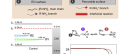
Researchers unveil multi-mode reactions in perovskite solar cells
As an appealing photovoltaic or pv material, metal halide perovskite yields high efficiency in solar cells. Nonetheless, the deep-level traps of minority service providers at the surface of the p-i-n perovskite solar cells can reduce nonradiative recombination. The accurate passivation of deep-level traps has actually been a major emphasis in increasing the power conversion efficiency (PCE) to the theoretical Shockley-Queisser restriction.
Nov 28, 2022 // Technology, solar cells, perovskite, Chinese Academy of Sciences, Xu Jixian, Wu Xiaojun

Aluminum energy storage involving Abu Dhabi
Swedish start-up Azelio says it will have a pilot project up and running in Masdar City by the end of following month. The modern technology sees electricity utilized to very warm aluminum with energy launched on demand through a warmth transfer liquid to drive a Stirling engine.
Aug 19, 2020 // Storage, Asia, United Arab Emirates, azelio, Start-up, ALEC Energy, Yousef Baselaib

New antenna for a better photon harvest
An Italian research team has developed a device that it says can easily be integrated into a PV cell, and can boost its efficiency by converting more light particles into a high energy state before they are absorbed by the cell. The scientists claim that their innovation could offer a green‐to‐blue photon upconversion yield as high as 15%.
Oct 7, 2019 // Technology, Italy, Europe, PV cell, Angiolina Comotti

CIGS cells for micro-concentrator PV gadgets
Scientists have created a brand-new mini CIGS cell by using an area-selective electro-deposition procedure as a material-saving method. It has a conversion performance rate of 5.2% and a high open-circuit voltage.
Sep 9, 2020 // Technology, Portugal, Europe, CIGS cell

Solving seasonal storage with aluminum cycling
Scientists at Switzerland’s University of Applied Sciences Rapperswil have demonstrated an aluminum conversion process which could be valuable for long-term renewable energy storage. Simulations suggest that by employing the process, a new multi-family building in Switzerland could meet all its energy demand from a 7-11 kWp solar system.
Jan 23, 2020 // Technology, Storage, Europe, hydrogen, Switzerland, Aluminum, University of Applied Sciences Rapperswil

Efficient 4T Perovskite-CdTe Tandem Solar Cells Breakthrough
University of Toledo researchers develop innovative 4T tandem solar cell with perovskite and CdTe absorbers, aiming for 30% efficiency with TBC technology.
May 20, 2024 // Technology, solar cell, university of toledo, efficiency, 4T Perovskite-CdTe

Scientists Make Bifacial Solar Cell with Record Power Outcome at 29%.
A team of scientists at the Australian National University have produced a bifacial solar cell with a front conversion effectiveness of 24.3% and a rear conversion efficiency of 23.4%, standing for a bifacial aspect of 96.3%.
This performance represents a reliable power outcome of around 29%, well exceeding the performance of the most effective single-sided silicon solar cell.
The outcomes have been individually verified by the CSIRO.
Aug 19, 2021 // Technology, ARENA, efficiency, ANU, CSIRO, Australian Renewable Energy Agency, Australian Centre for Advanced Photovoltaics, ACAP, Bifacial Solar Cell, Kean Chern Fong, Marco Ernst Ernst, The Australian National University

Power from the East: China funds largest solar park in Latin America
China is the world’s largest producer of solar panel technology – tech that is now being exported and that is transforming energy sectors in countries such as Argentina, where the largest solar park in Latin America has recently been inaugurated.
Oct 9, 2019 // Plants, Large-Scale, Commercial, China, Latin america, Asia, Tu Shuiping, Pablo Ferrara, University del Salvador, Juan Prioletta

Researchers in China give flexible perovskites a backbone
A group of scientists led by Nanchang University in China trialed a polymer based opening transportation layer to flexible perovskite solar cells, making use of a glue to connect it to the active perovskite. The group had the ability to construct the 19.87%- reliable cells right into a little flexible component appropriate for wearable solar applications, and claims its style was influenced by the structure as well as activities of human vertebrae.
Jun 18, 2020 // Technology, Manufacturing News, China, Asia, solar cell, flexible, perovskites, Nanchang University

A close look at nature could lead to cheaper hydrogen
Scientists at the Australia National University have observed a key stage in the process of photosynthesis which could be copied to greatly increase the efficiency of sunlight-powered water splitting processes used to produce hydrogen.
Aug 12, 2019 // Technology, Solar to Fuel, USA, Germany, Australia, Europe, hydrogen, Switzerland, Oceania, Australia National University, sunlight-powered water, Max Planck Institute, Ecole Polytechnique Federale de Lausanne, Proceedings of the National Academy of Sciences, Maria Chrysina, North America, Solar to Fuel, Solar to Hydrogen, Producing Hydrogen, Hydrogen from renewable, Renewable fuels