EBRD Eyes $170m Loan for Egypt Solar-BESS
Jun 22, 2026 05:07 PM ET
- EBRD eyes a $170M senior debt facility for Infinity Power’s Nefer Menya—1GW solar plus 600MWh storage in Egypt—slashing CO2 up to 1.3M tonnes yearly. Final approval: July 22, 2026.
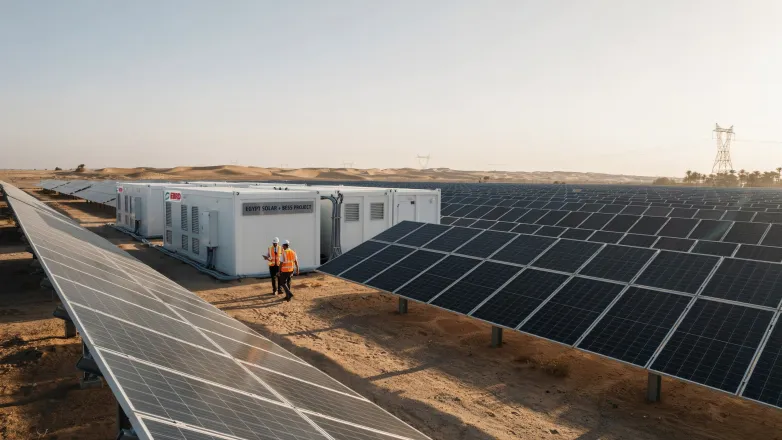
EBRD is considering a senior debt facility of up to $170 million (EUR 148.3m) for Nefer Menya, a 1-gigawatt hybrid solar and 600-megawatt-hour battery storage project in Egypt. The project is being developed by an Infinity Power Holding-led consortium, with EBRD co-financed alongside other parties, after passing a concept review.
EBRD has scheduled final approval for July 22, 2026. The estimated total cost is $764 million. Once operational, Nefer Menya is expected to cut CO2 emissions by up to 1.3 million tonnes annually. The venture is 51% owned by Infinity Power Holding and 49% by HAU Energy, located in Egypt’s Minya desert and among the country’s first large-scale BESS projects.
How will EBRD’s $170m loan accelerate Nefer Menya’s 1GW solar and BESS in Egypt?
- Unlocks faster financing for a utility-scale 1GW solar–battery portfolio by providing up to $170m of senior debt, reducing the funding gap during key development and build phases.
- Supports construction of the hybrid plant in Egypt’s Minya desert by enabling procurement of major equipment (solar PV modules, inverters, transformers, grid-interface systems, and battery power blocks) with fewer funding delays.
- Helps accelerate grid-connection and commissioning works for both solar generation and battery storage, improving the likelihood of meeting the project’s planned timeline toward first power.
- Strengthens bankability by bringing a major development-finance institution into the capital structure, which can improve lender confidence and help secure the remaining project financing and guarantees.
- Enables earlier delivery of battery energy storage capacity (600 MWh) so the system can provide reliability services sooner, not just long after solar is online.
- Improves operational flexibility by allowing more effective shifting of solar energy into peak-demand windows and evening hours—directly increasing usable clean power once the BESS is commissioned.
- Enhances grid stability by financing equipment and integration needed for fast-response capabilities (power quality support and frequency/voltage assistance), which can reduce strain from variable renewable output.
- Reduces overall project risk for other stakeholders through EBRD’s role and co-financing structure, helping the consortium progress from concept stage to final approval and execution.
- Facilitates capacity growth across the broader market by demonstrating a replicable financing and delivery model for large-scale hybrid solar plus storage projects in Egypt.
- Contributes to emissions reductions by accelerating timelines to operation, which shortens the period between construction start and clean generation, supporting faster achievement of decarbonization targets.
- Improves cost and schedule discipline across a $764m total-cost program by providing structured, senior-debt funding that typically supports more predictable project cash flows.
- Supports development of early-stage enabling works (site preparation, EPC contracting readiness, and permitting-aligned milestone payments), helping reduce common “schedule slips” in large infrastructure builds.
Also read
- EBRD Arranges $265 Million for Egypt's 1.2-GW Nefer Minya Solar Plant
- Israel Proposes 5% Yearly Cuts to Rooftop Solar Tariffs From 2027
- Rondo and Rio Tinto Start Engineering on 360-MWh Yarwun Heat Battery
- Sichuan's First 100-MW Tower CSP Plant Wins Environmental Approval
- EU Innovation Fund Selects Holosolis 5-GW Solar Factory in €3.4B Round