Search
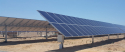
Coles signs PPA for three solar farms in Australia
Australian supermarket behemoth Coles has agreed to procure power from three utility-scale solar projects that Terrain Solar plans to build in the Australian state of New South Wales. The installations will be operated by Greek EPC Metka EGN.
Under a 10-year power purchase agreement, Coles will buy more than 70% of the 220 GWh of clean power that will be annually generated by the plants. The deal will cover 10% of the retailer’s national electricity usage.
Earlier this year, Metka EGN – a London-based EPC contractor that operates as a subsidiary of Greek industrial conglomerate Mytilineos Holdings S.A. – announced plans to enter the Australian solar market with the acquisition of a 260 MW solar portfolio. The portfolio includes six projects in New South Wales and Queensland, with each likely to be between 30 MW and 50 MW in size, once they are constructed. Without naming the developer, Metka EGN said that project development was at an advanced stage, with construction of 169 MW expected to begin by the end of 2019.
According to Coles, construction on the projects located outside the regional centers of Wagga Wagga, Corowa and Junee is scheduled to begin as soon as next month. The plants are expected to start supplying power to the grid by July 2020. “Terrain Solar is incredibly proud of this landmark agreement that will underpin the construction of three new renewable energy plants in regional New South Wales” said Terrain Solar Chairman David Griffin.
Renewable energy is a major part of the supermarket chain’s commitment to becoming the most sustainable groceries group in Australia.“With this agreement, Coles can make a significant contribution to the growth of the renewable energy supply in Australia, as well as to the communities we serve,” Coles Group CEO Steven Cain said.
Touted as the first major Australian retailer to commit to buying renewable energy through a PPA, Coles is also working with property partners to increase on-site renewable generation at its stores and distribution centres. “We plan to install solar panels on another 38 stores this financial year and we will be working with our landlords and property developers to identify further locations suitable for on-site solar power generation,” Coles Chief Property and Export Officer Thinus Keeve said.
Corporate PPAs
The Coles PPA announcement comes hot off the heels of Molycop Australia’s long-term offtake deal with electricity retailer Flow Power for 100,000 MWh of solar and wind power. This week’s deals join a growing pool of corporate PPAs in Australia, including the largest solar PPA to date, between steel giant Bluescope Steel and ESCO Pacific, for 88 MW. Other notable corporate PPAs have been recently signed by Simec Zen Energy, Australian brewer CUB, and the University of New South Wales, which is trying to become 100% powered by solar.
Innovative PPAs and services for C&I customers have emerged at pace with a number of flexible new solar PV contract models and services. One of the new corporate PPA vehicles is Australia’s first-ever marketplace to connect buyers and developers, the Business Renewables Centre of Australia, which launched an online members’ portal in March, with 7 GW of solar and wind on offer.
Saving on electricity bills is a key priority for Australian commercial and industrial energy customers. As shown by figures that Flow Power revealed in May, its high-use energy customers collectively saved AUD 15.4 million ($10.4 million) by sourcing electricity from 254 MW of committed projects in its 440 MW renewables portfolio.
Globally, corporate PPAs are tipped to smash last year’s record. Up to July of this year, PPAs were signed for 8.6 GW of clean energy, with the United States accounting for 69% of the deals, according to BloombergNEF’s H2 corporate energy market outlook report.
Aug 21, 2019 // Plants, Large-Scale, Commercial, Markets & Finance News, Australia, Oceania, Molycop, Metka EGN, Coles, Terrain Solar, Mytilineos Holdings, Chairman David, Steven Cain, Thinus Keeve, Simec Zen Energy

Naturgy purchases 125-MW solar-BESS hybrid project in W Australia
operation in the initial months of 2024. The centers will be hooked to Western Australia's South West Interconnected System, the utility claimed.
Naturgy will build
Sep 1, 2022 // Plants, Large-Scale, Commercial, Markets & Finance News, Australia, Oceania, Naturgy, hybrid project
Gentari Advances 243-MWp Solar Project in Australia
commencement of its 243-MWp Maryvale solar-storage project in New South Wales, Australia. The company has issued a notice to proceed, with construction slated to begin
Mar 11, 2025 // Plants, Large-Scale, Commercial, Storage, Australia, Oceania, PV Power Plant, Gentari
Fortescue Proposes 644-MW Solar Park in Australia
Ltd, has submitted plans for a 644-MW solar park near Port Hedland, Western Australia, for environmental review. This project is part of FFI's strategy to expand
Mar 28, 2025 // Plants, Large-Scale, Commercial, Australia, Oceania, PV Power Plant, Fortescue Future Industries
Australia commits to greater 2030 emissions reduction target
grid so it can take care of more eco-friendly power, while Labor's Powering Australia plan targets 26GW of mounted renewables capacity by 2030, raising general
Jun 16, 2022 // Plants, Markets & Finance News, Grids, Policy, Australia, AEMO, Oceania, policy, Emissions, climate targets, Anthony Albanese
Australia's Largest Hybrid Solar-Storage Project Secures Grid Connection
Green has secured grid connection approval for its first hybrid project in Australia, the Eurimbula Hybrid Facility. This project will feature a 696-MWp solar farm
May 19, 2025 // Plants, Large-Scale, Commercial, Storage, Australia, Oceania, PV Power Plant, Elements Green
Australia's Landmark 6.4 GW Renewables Tender Results Announced
Australia has selected 19 renewable energy projects in its largest tender to date, aiming to accelerate the transition from coal-fired power. The chosen projects, which encompass wind, solar, and battery technologies, are set to deliver a total capacity of 6.4 gigawatts—enough to supply over 3 million households. Notable participants include Neoen SA, BP Plc, and Squadron Energy, led by billionaire Andrew Forrest.The tender received 84 bids and marks a significant step within the government's Capacity Investment Scheme, which is designed to foster the development of 32 gigawatts of renewable capacity by 2030 through revenue guarantees. Energy Minister Chris Bowen announced the results on Wednesday, highlighting Australia's commitment to renewable energy expansion.
What impact will Australia's largest renewable energy tender have on its energy transition goals?
Scaling Up Renewable Capacity: The selection of 19 renewable energy projects, totaling 6.4 gigawatts, significantly contributes to the Australian government's goal of achieving 32 gigawatts of renewable energy capacity by 2030. This move highlights a serious commitment to diversify the energy portfolio and increase the share of renewables in the national grid.
Reduction of Coal Dependency: By accelerating the transition from coal-fired power to renewable sources, Australia aims to reduce greenhouse gas emissions significantly. With coal regarded as a major contributor to climate change, this tender will help in moving towards cleaner energy sources and mitigates the impact of coal on air quality and public health.
Economic Development: The projects included in the tender are likely to create thousands of jobs in construction, operation, and maintenance of renewable energy infrastructure. This growth in the renewable sector can stimulate local economies and provide long-term employment opportunities.
Increase in Energy Security: Expanding the renewable energy sector enhances energy security by reducing reliance on fossil fuels, especially in light of global energy price fluctuations. A diversified energy mix can provide greater stability and resilience to the energy grid.
Investment in Technology Innovation: The participation of major players like Neoen SA, BP Plc, and Squadron Energy suggests substantial investment in technological advancements. This competition can drive innovation in renewable technologies, such as more efficient solar panels and advanced battery storage solutions, further accelerating the energy transition.
Grid Stability and Integration: The integration of large-scale renewable projects requires advancements in grid management and energy storage solutions. These projects can help develop a more responsive grid, capable of handling intermittent energy sources and ensuring a consistent power supply.
Environmental Benefits: The shift to renewable energy sources is essential in addressing climate change and promoting sustainability. These projects can play a crucial role in reducing carbon emissions and protecting Australia’s unique ecosystems.
Support for Renewable Policy Framework: This tender aligns with and strengthens Australia's regulatory and policy frameworks aimed at climate commitments, such as the Paris Agreement. It showcases the government's proactive approach in meeting its international obligations while fostering local renewable energy industries.
Community Engagement: As these projects progress, engaging with local communities can foster greater acceptance of renewable energy initiatives. Community involvement and transparency can lead to better project outcomes and address any concerns related to land use or environmental impacts.
Future Projects and Transition Strategy: The success of this tender may pave the way for future renewable energy tenders and projects. It can serve as a model for other states and territories in Australia, reinforcing a collaborative national approach to the energy transition.
Potential Challenges: While the tender marks a significant advancement, challenges such as regulatory hurdles, land acquisition, and community opposition must be navigated to ensure timely project deployment and integration into the grid for effective power generation.
Dec 11, 2024 // Plants, Large-Scale, Commercial, Australia, Oceania
Naturgy's GPG Launches Western Australia's First Hybrid Solar Park
Spain's Naturgy Energy Group, has inaugurated the Cunderdin complex in Western Australia. This facility is the state's first large-scale hybrid solar-plus-storage
Apr 8, 2025 // Plants, Large-Scale, Commercial, Western Australia, Naturgy, PV Power Plant

ReneSola, ProSun Solar Ink 150 MW Distribution Pact in Australia
CEO of ReneSola Yixing Co. Ltd, a business in Jiangsu Province, claimed that "Australian solar market is in fact expanding remarkably. We have actually currently
May 6, 2020 // Markets & Finance News, Australia, Oceania, renesola, Sky Wang, Prosun Solar, Krishan Sharma
Iberdrola Partners with ABEL Energy for EUR 1.1 Bn Green Hydrogen Project in Australia
Australia and hydrogen designer ABEL Energy have integrated to develop a green hydrogen as well as green methanol manufacturing plant at Bell Bay, Tasmania.
Dec 20, 2022 // Solar to Fuel, Iberdrola, green hydrogen, Ross Rolfe, ABEL Energy, Bell Bay Powerfuels, green methanol, Michael van Baarle
Octopus Australia Launches 80-MW Solar Project in Victoria
Australia, a division of the UK's Octopus Group, has commenced construction on an 80-MW solar park with integrated storage in Victoria, Australia. The
Apr 10, 2025 // Plants, Large-Scale, Commercial, Markets & Finance News, Storage, Victoria, PV Power Plant, Octopus Australia
Lightsource BP closes financing on first utility-scale Australia project, boasts bifacial prominence
financing agreements to develop its maiden utility-scale solar project in Australia.
The BP-backed developer has agreed a senior debt facility with Dutch
Oct 23, 2019 // Plants, Large-Scale, Commercial, Markets & Finance News, Canadian Solar, Australia, pv power plants, solar pv, bifacial, Lightsource BP, Adam Pegg, Oceania, finance
Western Australia financing feasibility research study for state's largest battery project
for Regional Development Alannah MacTiernan claimed would assist Western Australia's shift far from coal.
The BESS, planned for construction in the town of
Apr 6, 2022 // Markets & Finance News, Storage, Western Australia

Amp Energy indicators land deal for 388-MW solar project in S Australia
Power Australia Pty Limited and EPS Energy, from which Amp acquired the portfolio of projects in May, have become part of a contract for lease with the Barngarla
Aug 31, 2021 // Plants, Large-Scale, Commercial, Australia, Oceania, PV Power Plant, AMP Energy, Solar Project
Australia's H2 Trade May be Worth US$ 90 billion in 2050: WoodMac
Australia prices continually in the leading tiers for solar irradiance as well as has vast capacity for largescale carbon capture as well as storage space (CCS). It has actually showed the world the course forward with its stationary battery storage space flexibility at the much-vaunted Hornsdale power reserve facility as well as has actually moved quickly to capitalise on low-carbon hydrogen production.
With an expanding project pipe, gauged at 2.94 gigawatts (GW) of named eco-friendly hydrogen electrolyser ability as of 2020, Australia is currently the globe's second largest proprietor of hydrogen projects after the Netherlands. Simply this year alone, Australia's pipeline of advanced and also early stage project advancements has actually expanded a more 45% to 4.25 GW.
Talking at the APPEA seminar today, Wood Mackenzie Head of Markets and Transitions, Prakash Sharma claimed: "Australia's key export markets-- Japan, South Korea, China, India as well as Europe-- are large carbon emitters and web importers of natural deposits. Their import demands have progressively raised in the past twenty years and currently typical at more than 70% of their overall power need. As these countries increase environment ambitions, they will require to source clean energy to decarbonise steel, chemicals, concrete, sturdy movement, shipping as well as power generation.
" In a net-zero emissions globe, a steady and also reliable source of low-carbon hydrogen supply comes to be crucial since it is difficult to inform how a given molecule of hydrogen has actually been generated. An assurance of beginning is for that reason critical to allow for very little environmental influence, i.e., carbon leakage. Specification also help with danger analysis and also clear market pricing. Australia stands to profit as regulations of hydrogen delivery, transport, storage as well as item quality are set as well as approved globally.
" Australia's share in the around the world traded market for low-carbon hydrogen or its by-products can reach 25-45 million tonnes (Mt) by 2050, equivalent to US$ 50 to US$ 90 billion in potential export profits."
Price competition continues to be an irritating factor; nevertheless, Wood Mackenzie believes there are pathways to competition for end-user sectors. Price reductions will be mostly driven by large-scale, automatic production of electrolysers, an increase in system size and also a decrease in eco-friendly power expenses.
The difficulty is figuring out the very best transportation approach for Australia's export supply chains. All three types of seaborne transport under consideration, liquid hydrogen (LH2), liquid organic hydrogen providers (LOHC) and also ammonia (NH3) have advantages and also challenges. The effective service provider selection depends on the end-use, purity and storage needs. As an example, LH2 is chosen if the end-use needs liquid or high-purity hydrogen such as flexibility applications. On the other hand, ammonia gains where it can be used straight as a feedstock preventing the cost of breaking NH3 back into hydrogen.
Sharma said: "Our exclusive hydrogen setting you back as well as energy change circumstance modelling show Australia's hydrogen supplied prices can drop below US$ 2/kg longer-term, making it competitive in all end-use cases in crucial markets of northeast Asia.
" We estimate ammonia would be the very first hydrogen-carrier in the export market helped with by Australia from mid-2020s. Low-carbon hydrogen demand in Japan as well as Korea gets to 30 Mt in 2050 with ammonia taking one-third market share on this path."
Although there is no expedition danger to eco-friendly hydrogen manufacturing, the export supply chain-- storage space, compression, transportation, decompression-- is currently made complex and incipient. The size of the reward for Australia depends on the rate as well as range at which global hydrogen market creates; the variety is large 73-- 145 Mt in 2050 and the opportunities are aplenty.
Sharma stated: "Our team believe Australia can get over hydrogen's logistical challenge like it successfully carried out in coal seam gas to LNG projects, automated trucks and remote-control mining procedures as well as large-scale CCS releases. Leveraging experience from hydrogen pilot programmes and greater investment in r & d, regular government support, collaborations and offtake arrangements from Japanese as well as Korean firms would be vital.
" This is a lifetime possibility for Australia to harness its renewable resource resources as well as end up being a leading player in the zero-carbon energy trade. It would certainly be difficult for huge Oriental economies to reach climate goals without clean power products from Australia."
Jun 17, 2021 // Markets & Finance News, Storage, Solar to Fuel, Wood Mackenzie, Australia, Oceania, Low Carbon Hydrogen Trade, Net-Zero Emissions, Prakash Sharma