Search

Encavis locks debt for 105-MWp Dutch solar duo
German solar and wind farm operator Encavis AG (ETR: ECV) has sealed a debt funding manage Dutch Rabobank to money a portfolio of solar parks in the Netherlands totalling 105 MWp.
Oct 20, 2022 // Markets & Finance News, encavis, Christoph Husmann
Meridian, Nova Seal Deal for Massive NZ Solar Farm
a 50/50 joint venture to develop the 400-MW Te Rahui solar farm near Taupō, New Zealand's largest planned solar project. The agreement includes a
Sep 1, 2025 // Plants, Large-Scale, Commercial, New Zealand, Oceania, PV Power Plant, Nova, Meridian
AGL exits most of Tilt Renewables stake in $490m selldown
offers scaled renewables growth with operational depth across Australia and New Zealand. Infrastructure investors prize platforms with repeatable
Nov 10, 2025 // Markets & Finance News, AGL, qic, Tilt Renewables, Future Fund, asset rotation

JA Solar to Power YES Group with 100-MW Module Deal
year.
The pact, announced on Monday, tasks JA Solar’s Australian and New Zealand arm with delivering its DeepBlue 4.0 Pro panels in 2025. The flagship n-type
May 6, 2025 // Manufacturing News, Australia, JA Solar, Oceania, solar modules, Renewable Energy, YES Group
Seraphim Signs 50 MW Module Supply Agreement in Australia
and also importer of the solar and electrical industry in Australia and also New Zealand.
Pursuant to the contract, Seraphim will deliver to the Australian market the
Jun 11, 2020 // Manufacturing News, Markets & Finance News, Australia, Oceania, solar modules, seraphim, Polaris Li, Wei Han, Raystech
Lodestone Fires Up Coromandel Solar, First Power
Energy has generated first power from a 33-MWp solar farm on New Zealand’s North Island, its fourth plant on the Coromandel Peninsula, easing summer
Dec 10, 2025 // Plants, Large-Scale, Commercial, New Zealand, Oceania, utility solar, commissioning, Lodestone, Coromandel
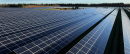
Encavis acquires 105 MWp solar duo in Denmark
German solar and wind farm operator Encavis AG (ETR: ECV) has agreed to get 2 solar parks with a total capacity of 105 MWp in Denmark from wind and solar designer European Energy A/S in an offer that bolsters its position in the Nordic area.
Dec 28, 2021 // Plants, Large-Scale, Commercial, Markets & Finance News, Europe, Denmark, encavis, PV Power Plant, Dierk Paskert
SunScout Eyes Texas Growth After US IPO
New Zealand clean-technology firm SunScout plans to expand in the United States after completing its initial public offering. The company makes solar-powered robotic mowers and deployable solar-array technology, which it says supports cleaner, more efficient land management.SunScout raised $15.5 million in gross proceeds by selling 3.1 million Class A ordinary shares. It plans to set up manufacturing in Texas to bring production closer to its biggest market, lowering costs and cutting delivery times. The company also expects Central Texas to provide access to specialists in robotics and autonomous navigation, along with expertise in artificial intelligence and computer vision, enabling faster product development and continued US growth.
How will SunScout’s U.S. expansion and Texas manufacturing accelerate solar robotic mower growth?
Local U.S. manufacturing in Texas can reduce logistics time and shipping-related costs, helping SunScout deliver solar robotic mowers faster and at more predictable pricing—both of which can speed adoption in a fast-moving residential, commercial, and municipal landscaping market.
Building production closer to the largest customer base improves supply-chain resilience (fewer cross-border bottlenecks), which helps scale deployments as demand grows for autonomous, low-maintenance land management.
Shorter lead times make it easier for customers to order, expand, and replace equipment—accelerating repeat purchases and fleet scaling for property managers, utilities, and large sites.
Texas’s manufacturing ecosystem can support faster iteration on components and assembly processes, enabling SunScout to improve mower reliability, warranty performance, and maintainability as new batches roll out.
Concentrating engineering talent in Central Texas can shorten the research-to-product timeline for robotics and autonomy improvements (e.g., navigation accuracy, obstacle handling, mapping, and route optimization).
Stronger access to AI and computer-vision expertise can improve real-time perception for mowing efficiency and safety, which can reduce operational errors and make the mowers more attractive to buyers managing larger areas.
Faster product development can translate into more frequent hardware/software updates, strengthening competitive positioning and driving earlier customer pilots that can convert into larger multi-site contracts.
SunScout’s deployable solar-array offering can pair well with U.S. demand for off-grid or low-infrastructure solutions, supporting the broader shift toward self-powered outdoor systems and more controllable operating costs.
Reduced total cost of ownership—through closer manufacturing, dependable delivery schedules, and ongoing autonomy improvements—can lower barriers to entry for commercial and government buyers, accelerating mower fleet growth.
A more prominent U.S. presence after expansion can also improve partnerships with U.S. integrators and land-management operators, enabling faster channel growth and more rapid scaling of deployments.
Aug 13, 2026 // Technology, Manufacturing News, Markets & Finance News, USA, North America, SunScout

Major solar project in Victoria panned by state arbitrator
Pacific Pacific develops solar and wind energy projects in Australia and New Zealand. It is a subsidiary of UK-based Infinergy
Aug 20, 2019 // Plants, Victoria, Australia, pv power plants, VCAT, Bookaar Solar Farm
ARENA Fuels 500 MW Hunter Valley Solar Factory
import disruptions
Strengthens regional export prospects to the Pacific and New Zealand with cyclone-rated, standards-aligned modules and responsive after-sales
Dec 3, 2025 // Manufacturing News, Australia, pv modules, Oceania, ARENA,, renewable supply chain

Lightsource BP to Hire Hundreds for Global Solar Expansion
of France. It's additionally moving right into Taiwan, South Korea as well as New Zealand.
" We're putting in preliminary groups to begin that very early development
May 10, 2022 // Markets & Finance News, Lightsource BP, Nick Boyle
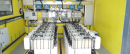
Swansea University to set up Redflow battery at its solar class
remote town in north Thailand as well as offgrid telecommunication websites in New Zealand.
Marketed as ZCell as well as ZBM2, Redflow 10 kWh zinc-bromine circulation
Mar 27, 2020 // Technology, Storage, UK, Europe, Redflow, Tim Harris

New England Solar Ranch, New South Wales
New England Solar Farm is a suggested 720MW photovoltaic (PV) solar energy project to be created in the state of New South Wales (NSW), Australia.
Apr 23, 2020 // Plants, Large-Scale, Commercial, Australia, pv power plants, Oceania
Genesis Starts 136-MW Solar, Bolstering NZ Grid
New Zealand utility Genesis has broken ground on a 136‑MWp solar farm, shifting another large PV project from planning to construction as the country seeks to balance hydropower variability. The plant is expected to deliver midday energy, hedge drought risk, cut reliance on gas peakers, and meet rising electrification demand.Genesis plans a modern layout using high‑efficiency, often bifacial, modules; string inverters for modular fault isolation; and grid‑code‑compliant controls for voltage support and ride‑through, with provision for future storage. The key risk is schedule: civil works, piling, electrical balance‑of‑plant, and commissioning must align with grid‑connection windows to bolster supply security.
What design choices and schedule risks define Genesis’ 136‑MWp NZ solar project?
Module prices: Global solar module oversupply pushed ex-factory prices to historic lows in 2023–2024, reshaping project economics and reviving delayed utility-scale pipelines.
Wind headwinds: Inflation, turbine component failures, and financing costs pressured onshore/offshore margins; manufacturers are tightening product portfolios and emphasizing reliability over sheer rotor growth.
Offshore wind reset: US projects re-bid contracts and refinance after 2023 cancellations; newer awards reflect updated capex, local-content plans, and expanded offtake structures (CfDs, indexed PPAs).
Battery boom: Standalone storage surged on the back of investment tax credits and falling lithium prices; multi-hour systems now routinely co-located with solar to capture evening peaks.
Long-duration pilots: Iron-air, flow batteries, thermal storage, and underground hydrogen are advancing with multi-hundred-MWh demonstrations to address multi-day resilience.
Grid queues: Interconnection backlogs remain a critical bottleneck; reforms prioritize ready-to-build projects, cluster studies, and standardized timelines to cut multi-year delays.
Transmission buildout: High-voltage lines targeting wind/solar corridors are moving through streamlined permitting, with federal designations and cost allocation clarity unlocking regional projects.
Curtailment management: Markets with high solar share face midday oversupply; storage, flexible demand, and export capacity are reducing curtailment and stabilizing prices.
Corporate procurement: Enterprises continue to sign record clean PPAs and incorporate 24/7 carbon-free energy strategies, shifting from annual RECs to hourly-matched supply.
Financing trend: Merchant exposure is rising; hybrid revenue stacks (energy + capacity + ancillary + tax credits) are now standard in term sheets for solar+storage.
Domestic manufacturing: Incentives are catalyzing cell, module, inverter, and component factories; supply chains are localizing for blades, towers, and nacelles to meet content rules.
Critical minerals: Diversification beyond single-country refining continues, with recycling and alternative chemistries (LFP, sodium-ion) reducing cobalt/nickel risk.
Hydrogen policy: Support schemes increasingly require additional, hourly-matched, and geographically correlated renewables, shaping electrolyzer siting and PPA design.
Heat pumps: Rapid adoption in buildings electrification is tempering gas demand growth; policy stability and installer capacity are key to sustaining momentum.
Agri-voltaics: Dual-use designs improve land productivity, crop resilience, and community acceptance, especially in water-stressed regions.
Community benefits: Standardized benefit agreements, local hiring, and revenue-sharing are becoming baseline expectations for utility-scale projects.
Recycling and circularity: PV module take-back expands; blade recycling via cement co-processing and thermoplastic designs is scaling from pilots to commercial.
Resilience focus: Microgrids and virtual power plants aggregate DERs to ride through extreme weather, with utilities integrating them into capacity planning.
Market design: Scarcity pricing, flexible ramping products, and day-ahead markets for storage are evolving to reward fast response and duration.
Emerging niches: Floating PV on reservoirs, floating offshore wind in deep waters, and co-location with data centers and electrolysis are opening new demand centers.
Mar 16, 2026 // Plants, Large-Scale, Commercial, New Zealand, Oceania, grid, utility solar, construction, Genesis

New york city launches new framework for distributed solar
New York's State Public Service Commission has actually accepted a new framework for dispersed solar in the state that will certainly broaden its NY-Sun effort, which aims to support 10GW of distributed solar by 2030.
Apr 20, 2022 // Markets & Finance News, USA, New York, North America, distributed solar, Kathy Hochul, NY-Sun