SunAsia, VinEnergo Bank $406m for 422MW Floating Solar
- SunAsia and VinEnergo will invest $406M to build 422MWp of floating solar across Philippine reservoirs—one of Southeast Asia’s largest FPV portfolios—boosting clean power despite land limits.
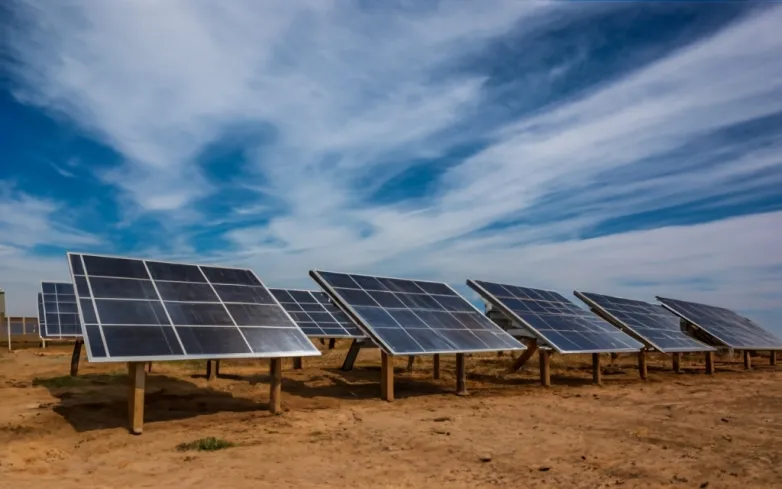
SunAsia Energy Inc and Vietnam’s VinEnergo will jointly invest $406 million (about €357.3 million) to develop a portfolio of floating photovoltaic (FPV) plants across Philippine water reservoirs. The projects will total 422 MWp, positioning the venture as among the largest floating solar efforts in Southeast Asia.
The floating PV installations will be deployed on reservoirs, irrigation ponds and lakes, a technology gaining momentum in the Asia-Pacific due to limited land availability and the potential to curb water evaporation. SunAsia brings local market know-how and experience with regulatory processes, while VinEnergo contributes regional capabilities. The deal also reflects expanding cross-border interest as the Philippines opens more to foreign participation in renewable energy.
What does SunAsia and VinEnergo’s $406M floating solar plan mean for Philippines’ 422MWp FPV?
- It signals a major scaling step for floating PV in the Philippines: committing $406M toward 422 MWp would make the project portfolio one of the country’s largest FPV developments by capacity.
- It increases the Philippines’ “space-efficient” solar pathway: by using existing reservoirs, irrigation ponds, and lakes, the plan reduces pressure on scarce land for conventional utility-scale PV.
- It ties solar generation to water infrastructure: floating arrays can be paired with reservoir operators’ needs (power supply planning, operational coordination, and long-term waterbody access arrangements).
- It highlights a climate-adaptation value proposition: FPV is often promoted for helping limit surface water evaporation and improving water management efficiency—relevant for regions facing drought variability.
- It improves the bankability of FPV in the local market: large, cross-border-capital-backed deployments can attract more lenders, EPC contractors, and insurance capacity for this technology.
- It strengthens cross-border investment confidence: a Philippines-focused FPV portfolio led by regional players can encourage additional foreign participation and co-development partnerships.
- It sets expectations for grid integration: adding ~422 MWp of intermittent generation will require transmission planning, dispatch coordination, and potentially storage or complementary grid services to manage variability.
- It accelerates technology and supply-chain learning in the archipelago: building multiple FPV sites can expand local experience in mooring systems, corrosion-resistant balance-of-system components, and long-term O&M in aquatic environments.
- It creates potential ecosystem benefits beyond power: well-managed FPV can influence shoreline/reservoir planning practices, environmental monitoring standards, and stakeholder engagement models for future renewables projects.
- It raises the bar for permitting and environmental safeguards: FPV projects typically depend on robust assessments for biodiversity, water quality, navigation/usage rights, and construction impacts—so the plan can shape how fast (or slow) the next wave of FPV advances.
- It strengthens the Philippines’ renewable-energy competitiveness: a large FPV pipeline can diversify the generation mix and potentially support efforts to meet growing electricity demand while targeting lower emissions.
Also read
- BW ESS Secures Debt for 1,424-MWh Hams Hall Battery in England
- Enel Colombia Completes 985-MWdc Solar Complex as Atlántico Starts Up
- Google Expands Voltus Deal to 1-GW Virtual Power Plant in PJM
- Cosin Solar Tops Out Two 199-Meter Towers at 350-MW Golmud CSP Plant
- Tesla Deploys 13.7 GWh of Storage in Q3 as Energy Revenue Falls 16%