Search

MPower Group sells Queensland PV-storage site for growth funds
renewables developer MPower Group Limited is looking to sell its Lakeland solar-storage park in Queensland to raise capital for future expansion. The
Jun 4, 2024 // Storage, queensland, MPower Group

MPower breaks ground on two solar farms in South Australia
MPower, a subsidiary of Australian power sector investor Tag Pacific, has kicked off the new calendar year with the commencement of early works on two 5 MW solar projects in South Australia. The new projects align with the company’s strategy of targeting this specific project size due in part to their relative ease in connection to the grid.
MPower has secured Limited Notices to Proceed in respect of the two projects being developed by Astronergy Solar Australia. This follows the successful commissioning of another two 5 MW solar farms in 2019 also in South Australia. The first project is a chunk of the 30 MW Mannum Solar Farm owned by Chinese-Canadian solar heavyweight Canadian Solar, while the second one was developed by Renew Power Group in Port Pirie and officially opened in August.
“MPower has developed an enviable capability in the successful delivery of 5 MW solar farms and continues to strengthen its order book in the growing renewable energy sector,” MPower’s Chief Executive Officer Nathan Wise said.
While there are other developers that have also recognized smaller utility-scale projects as a lucrative investment, even when operated on a merchant basis, South Australia has showed it is keen on welcoming more big PV as it moves towards 2030 target of “net” 100% renewables.
While it has very few developed big utility-scale projects, with just the 220 MW Bungala and 95 MW Tailem Bend projects operating at present, the state saw a rush of development approvals last year, dominated by big PV and megabatteries.
Despite the uncertainty around the South Australia-New South Wales interconnector that is critical to the development of several projects and the strong competition from around 1 GW of rooftop PV, some of the reasons why the state is seen as a fertile soil for big PV are its geographical location, meaning solar farms still generate during the peak periods on the east coast, and better marginal loss factors relative to other states.
Jan 17, 2020 // Plants, Large-Scale, Commercial, Canadian Solar, Australia, utility-scale, Oceania, MPower, Nathan Wise

mPower Increases Addl $1.85 Mn in Collection A Financing
Technology Fund, NMA Ventures, and also numerous angel capitalists.
On buying MPower, Dorian Rader, Managing Partner at NMA Ventures, commented "we have actually
Mar 25, 2020 // Technology, Markets & Finance News, USA, North America, New Mexico, Cottonwood Technology Funds, David Blivin, Dorian Rader, Kevin Hell, mPower Technology, NMA Ventures

MPower gets 5-MW shovel-ready solar project in Victoria
(PV) modules approximately 100 kilometres (62 miles) northwest of Melbourne. MPower has actually paid AUD 462,000 (USD 324,700/ EUR 299,400) to become its
Jan 31, 2023 // Plants, Large-Scale, Commercial, Victoria, MPower, Solar Project
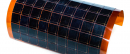
Next-generation solar cell technology gets to space
MPower Technology's DragonSCALES, consist of small, extremely interconnected photovoltaic cells formerly called solar shine at Sandia. They are orbiting Earth for the very first time on a Lynk Global Inc. satellite that supports direct link to unmodified cellphones. The satellite was released this summer.
The technology is being examined as a potential solar energy solution for the Lynk Global constellation fleet. Data collected will give valuable responses to confirm the item's efficiency precede.
" It's been amazing to see this technology arise from the laboratories and also end up being a product demanded by satellite companies as well as federal agencies," said Mary Monson, Sandia's elderly manager of technology partnerships as well as business development.
The solar cell technology was created at the labs to reduce the price of developing solar technology and boost its efficiencies. MPower Technology, a small, New Mexico company, accredited the technology from Sandia and also marketed it as DragonSCALES. The interconnected cells are constructed from highly efficient silicon that can be harmonized into any form, size or form.
MPower execs say advantages of the technology consist of ease of installment and system combination. Development expenses are less than various other solar technologies due to the fact that microcells need little product to develop well-controlled and extremely efficient devices.
" This was the initial launch of our innovative DragonSCALES product with Lynk Global, as well as we anticipate a successful on-orbit demonstration for their constellation," claimed Kevin Hell, MPower Technology president as well as CEO. "With the swiftly increasing passion in our technology for a wide variety of brand-new space power goals, we expect a lot more launches in the future."
Aiming for the celebrities and a future lunar landing
Future projects may take the technology regarding the moon.
MPower and spacecraft systems company Honeybee Robotics Inc. were just recently chosen by NASA as one of 5 commercial groups to establish designs for deployable solar array systems to be used externally of the moon as well as eventually as billing stations to reenergize rovers, battery packs and other electrical equipment used by spacecraft and astronauts.
The groups' designs should be maneuverable, fold into a volume of less than half a cubic meter and also, if picked by NASA, the industrialized terminal would be left by lunar vagabonds to supply power. The group is concentrated on a Honeybee principle called Lunar Array Mast and also Power System, LAMPS, that incorporates DragonSCALES. The style will certainly use a few of the most cost-efficient, lightest, huge location extendable solar panels ever before made, according to MPower.
Murat Okandan, MPower chief technology police officer, said, "Some of one of the most interesting as well as difficult systems turning up have characteristics that are very comparable to LAMPS, where cost-efficient, large-scale release of power systems is mosting likely to be important in having the ability to fulfill the mission needs as well as support the imagined expansion of activity in orbit and also for landed systems."
Labs programs made it possible for technology to reach private sector
Sandia introduced the development of solar glitter in 2009 after the solar cells were made by scientists making use of technologies to fabricate microelectromechanical systems in Sandia's Microsystems Engineering, Science and also Applications facility, providing it the nickname MEPV for microsystem-enabled photovoltaics.
The initial Sandia group remained to advance the technology through different projects funded by Sandia's Laboratory Directed R & d program, the army as well as NASA. Today, several of the fabrication approaches originated by MEPV, such as oxide bonding, remain to be made use of for study entailing semiconductors.
" DragonSCALES started as a Laboratory Directed Research and Development project in our laboratory over 12 years back," stated Keith Ortiz, manager of the microelectromechanical systems technologies department. "Currently, the technology remains in space, and I'm eagerly anticipating the following 12 years of development past Sandia."
Okandan, among the scientists who established the technology, left Sandia with the Entrepreneurial Separation to Technology Transfer program as well as founded MPower. The program allows Sandia to transfer technology to the economic sector by allowing employees to leave the labs to start up or broaden technology companies. Entrepreneurs are assured reinstatement for as much as two years if they select to go back to Sandia.
In 2017, solar radiance was accredited to MPower. While the technology could be applied to a variety of devices of any kind of shape, the business is concentrated on the space market as well as rapidly deployable, portable solar energy systems.
" We could not be prouder of the scientists who developed solar radiance as well as established a technology bound for space," Monson said. "This is specifically the kind of influence we are committed to at Sandia with our technology transfer programs. When technology results in brand-new business, jobs and commercialization, it's a win-win around."
Mini solar cells amass years of recognition
Solar shine as well as DragonSCALES have actually gotten acknowledgment with awards and also newspaper article. In 2012 when the technology was brand-new, Sandia got a prominent R&D 100 Award.
Complying with successful initiatives to move the technology to MPower, Sandia and the firm have been identified numerous times by the Federal Laboratory Consortium. Previously this year, the collaboration obtained a national Excellence in Technology Transfer Award from the consortium for transforming space power and other industrial markets.
Sep 30, 2021 // Technology, USA, solar cell, Sandia National Laboratories, North America, Kevin Hell, mPower Technology, DragonSCALES, Mary Monson, Murat Okandan
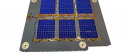
DragonSCALES solar cells to introduce on Sparkwing in-orbit demonstrator
solar array versions, similar to the auto sector. The team has an interest in MPower's solar cell modern technology because of its prospective to use an
Oct 19, 2020 // Technology, solar cells, solar panel, Kevin Hell, mPower Technology, DragonSCALES, Marloes van Put