Fuse Energy Adds 25MW Solar Project in West Midlands
- Fuse Energy snaps up Pelagic’s 25-MW Sherbourne Solar in Warwickshire, targeting February 2027 commissioning as it scales its 1-GW pipeline across UK and beyond.
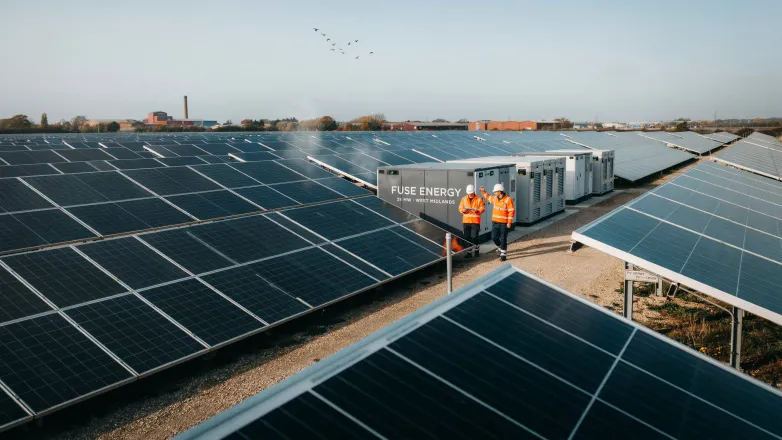
Fuse Energy, the London-based energy tech company, said it has bought a 25-MW solar project in England’s West Midlands from Pelagic Energy Development. The ready-to-build scheme, Sherbourne Solar, will develop a photovoltaic farm in Warwickshire with a connection to the local distribution network. The project is expected to start commercial operations in February 2027, and Fuse said it will push the project through construction toward that commissioning timeline.
Fuse Energy, founded in 2022 and backed by Balderton Capital, LowerCarbon Capital and QuantumLight, operates across power generation, energy trading, supply and installation. The company has about a 1-GW pipeline and is scaling with plans to expand into Europe and North America. Last month, it added a 20-MW solar park in Wales acquired from Caerphilly County Borough Council.
How will Fuse Energy’s 25-MW Sherbourne Solar project timeline impact UK solar capacity?
- Scheduling the Sherbourne Solar scheme to enter commercial service in February 2027 means Fuse’s 25 MW is likely to count toward UK solar deployment primarily in the 2027 commissioning year, rather than in 2026 or earlier—affecting the near-term pace of annual capacity growth.
- If completed on time, the project would add a material single-site increment to the UK’s distributed solar total for 2027: 25 MW is enough to be noticeable in regional generation figures (West Midlands/Warwickshire) and in the year’s headline capacity additions.
- A “ready-to-build” starting point and an internal push toward the stated commissioning month suggests the project is likely to contribute to forecasted pipeline-to-capacity conversion in 2027, helping narrow the common gap between planning announcements and operational capacity.
- Commissioning in early 2027 supports smoother ramp-up for the sector’s operational baseline: rather than delivering at the end of the year, February timing improves the likelihood of a fuller year of output in 2027 once grid connection is commissioned.
- The project’s local distribution network connection means its benefit to UK solar capacity is delivered as grid-imported renewable generation capacity, reinforcing the national total of solar capacity in the year it becomes operational.
- Adding another 25 MW unit ahead of the 2027 deadline contributes to cumulative capacity growth alongside other projects Fuse has acquired or is developing, which can help maintain momentum toward national solar expansion goals.
- For the UK market, a predictable 2027 start date can support planning across developers and supply chains (modules, inverters, civil works), indirectly enabling more projects to line up for similar commissioning windows—supporting overall capacity additions during that period.
Also read
- Enel Colombia Completes 985-MWdc Solar Complex as Atlántico Starts Up
- Google Expands Voltus Deal to 1-GW Virtual Power Plant in PJM
- Cosin Solar Tops Out Two 199-Meter Towers at 350-MW Golmud CSP Plant
- Berkeley Lab Finds US Utility Solar Cost Rose 7% to $61/MWh in 2025
- EBRD Arranges $265 Million for Egypt's 1.2-GW Nefer Minya Solar Plant