Nordic Solar Launches 11-MW Battery for German PV
May 28, 2026 08:53 AM ET
- Nordic Solar’s first co-located 11-MW BESS in Lower Saxony pairs batteries with solar to boost grid flexibility, maximize renewables, and deliver balancing services—part of rapid Europe-wide solar+storage growth.
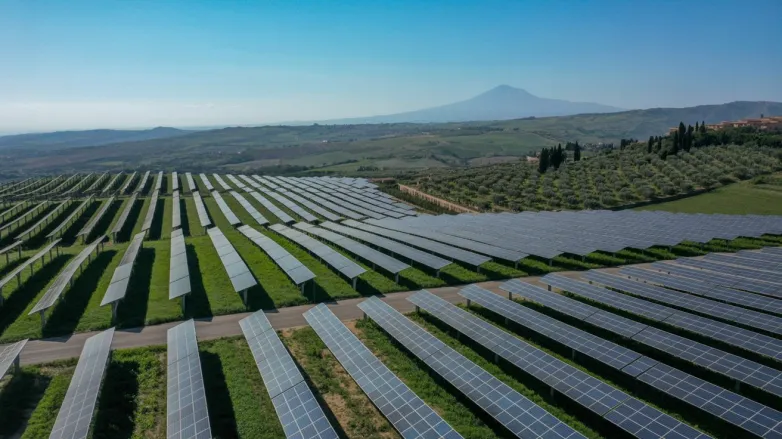
Nordic Solar has commissioned its first co-located battery energy storage system (BESS) at a solar park in Germany’s Lower Saxony. The 11-MW project is Nordic Solar’s first battery integrated alongside photovoltaic generation, marking a step in its strategy to pair storage with renewables.
The BESS is intended to boost use of solar power, improve electricity delivery to the grid, and provide balancing services as Germany’s power mix becomes more renewable. Co-located solar-plus-storage deployments are accelerating across Europe to meet rising grid flexibility needs, while Germany continues expanding battery infrastructure in response to growing demand for reliable clean energy.
How will Nordic Solar’s first co-located BESS at a Lower Saxony PV park help grid balancing?
- Shifts solar output from “when the sun shines” to “when demand is highest,” reducing the risk of sudden PV overgeneration during peak irradiance while supporting steadier power flows to the grid.
- Provides fast-responding electricity that can be dispatched on short notice, helping operators counter real-time fluctuations in frequency and voltage caused by variable renewable generation.
- Enables grid balancing by absorbing excess PV generation and then releasing stored energy when PV output drops due to cloud cover or evening ramp-down.
- Improves controllability of the combined plant, making it easier for grid operators to forecast and manage net injections from the Lower Saxony site compared with standalone PV.
- Reduces curtailment pressure by storing energy that might otherwise be constrained by local grid limits, thereby increasing the usable share of renewable electricity.
- Supports smoother ramping and reduced variability at the connection point, which can lower the need for conventional peaking generation or costly grid interventions.
- Helps relieve congestion on distribution and transmission assets by localizing storage near where generation occurs, making it easier to keep power flows within network limits.
- Strengthens system resilience as Germany’s generation mix becomes more renewable by adding flexible capacity that can respond to balancing needs throughout the day.
- Contributes to wider market development for storage-as-part-of-generation, demonstrating how co-located PV-BESS setups can deliver ancillary services and improve overall grid flexibility.
- Creates operational experience for scaling storage integration across Nordic Solar’s portfolio, informing future dispatch strategies that align with grid balancing requirements.