Korea's EAV-4 Solar Drone Flies 170 Hours Nonstop in Stratosphere
- South Korea's solar-powered EAV-4 drone flew 170 hours and 5 minutes without landing during tests on Aug. 18-25, KASA said on Nov. 11.
- That is more than triple the 53-hour Korean record set by the EAV-3 in 2020; KASA ranks it second only to Airbus's Zephyr.
- Private companies are to lead disaster-monitoring, telecom-relay and solar-cell tests on the platform by 2030.
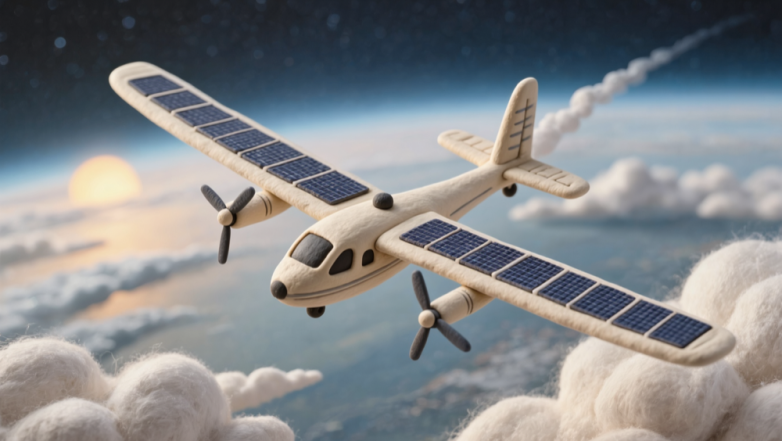
South Korea's EAV-4, a solar-powered drone designed for the stratosphere, stayed aloft for 170 hours and 5 minutes without landing, the Korea AeroSpace Administration (KASA) said in a statement on Nov. 11. The flight took place during tests from Aug. 18 to Aug. 25. The agency made the result public almost three months later.
KASA ran the tests with the Korea Aerospace Research Institute (KARI), which develops the aircraft. During the flight the drone also ran a wildfire-detection demonstration. Its electro-optical and infrared cameras found the ignition point within seconds and tracked where the smoke and embers were heading, according to the government.
The flight is more than three times Korea's previous record of 53 hours, which KARI's earlier EAV-3 set in 2020. KASA ranks the EAV-4 second worldwide among aircraft of its kind, behind Airbus's Zephyr. The gap to the leader is wide. AALTO, the Airbus subsidiary that operates Zephyr, reported a flight of 67 days, 6 hours and 52 minutes that ended on April 28, 2025.
The flight in numbers
- 170 hours 5 minutes of continuous flight by the EAV-4, from Aug. 18 to Aug. 25, 2026.
- 7.1 days aloft, or 7 days, 2 hours and 5 minutes (list.solar calculation).
- 53 hours, the previous Korean record, flown by the EAV-3 in 2020.
- 3.2 times the EAV-3 record (list.solar calculation).
- 67 days, 6 hours and 52 minutes, Zephyr's record stratospheric flight, which ended on April 28, 2025, according to AALTO.
- About 9.5 times longer: Zephyr's record compared with the EAV-4 flight (list.solar calculation).
- 20 km, the altitude at which stratospheric drones can hold position for long periods, according to KASA.
KASA pitches such aircraft as a low-cost platform for constant surveillance. They could also serve as airborne base stations for islands and mountain areas with weak telecom coverage. Commercial use of stratospheric drones is still at an early stage worldwide, the agency said, and it sees an opening for Korean solar technology in the market.
Under KASA's plan, private companies will lead the next phase through 2030, covering disaster monitoring, telecom relay and tests of Korean-made solar cells. The agency is also preparing a five-year program for 2028-2032 to develop a hybrid vertical takeoff and landing aircraft that pairs an engine with batteries, adding to Korea's work on electric transport.
Also read
- Ember Finds Wind Cuts Cost of Near-Firm Solar and Batteries by 18%
- Lunar Energy Unveils 13.4-kW Home Battery and 25-kW EV Charger
- EPFL Builds First Organic Photocatalyst Sheet That Splits Water
- Eight Lenders Sign Support Letter for Acwa's 2-GW Türkiye Solar
- METLEN, Tsakos Start Building 251.9-MW Solar-Storage Plant in Greece