Invenergy and Grant PUD Break Ground on 120-MW Solar
Aug 26, 2026 10:18 AM ET
- Invenergy and Grant County PUD break ground on a 120MW solar project near Moses Lake, kicking off Washington’s utility-scale development phase—bringing clean energy closer, though timing and terms remain unannounced.
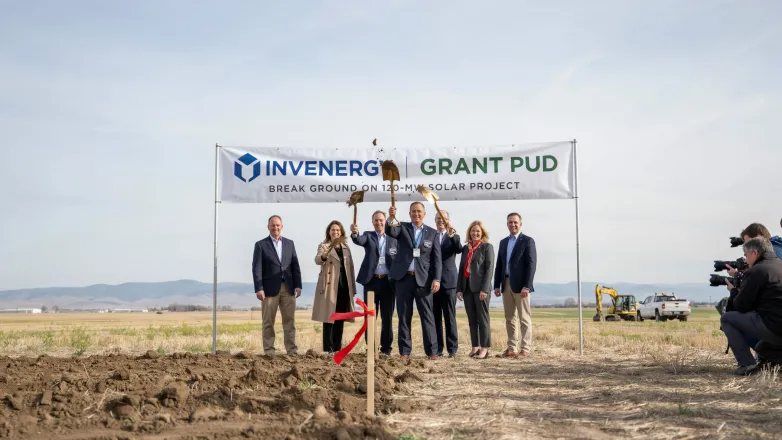
Invenergy, the U.S. power producer, and its partner, Grant County Public Utility District (Grant PUD), have started construction on a 120-megawatt solar project near Moses Lake in Washington. The announcement marks the beginning of the development phase for the utility-scale facility.
The project is being built in partnership between Invenergy and Grant PUD, which will support the rollout through its role as the local public utility district. Details on timing, cost, and offtake arrangements were not provided in the announcement.
What does Invenergy and Grant PUD’s 120 MW Moses Lake solar project mean?
- Adds another large utility-scale solar resource to Washington’s growing clean-energy portfolio, helping diversify the region’s electricity supply.
- Increases expected local generation near Moses Lake, which can reduce reliance on more carbon-intensive or higher-cost power sources during peak demand periods.
- Demonstrates how a private developer (Invenergy) and a public utility entity (Grant PUD) can work together to deliver major grid-connected infrastructure.
- Supports Grant PUD’s broader mandate as a public power provider by expanding long-term supply options for its customers and planning portfolio.
- Creates potential opportunities for workforce development and local procurement during construction and later operations, supporting regional economic activity.
- Strengthens grid planning in the Moses Lake area by requiring coordinated interconnection, transmission studies, and utility upgrades to handle additional solar capacity.
- Signals investor and industry confidence in Washington solar development, which can influence future projects by reinforcing established permitting and development pathways.
- Helps advance state clean-energy and renewable energy targets by expanding the amount of eligible renewable generation available for utility planning and compliance.
- May improve system resilience through diversified generation resources, particularly if paired with grid management strategies such as curtailment controls and battery or other flexibility resources (if pursued later).
- Sets the stage for future specifics—such as power offtake terms, interconnection agreements, and commissioning timelines—that determine how and when electricity will be delivered.
Also read
- BW ESS Secures Debt for 1,424-MWh Hams Hall Battery in England
- Enel Colombia Completes 985-MWdc Solar Complex as Atlántico Starts Up
- Google Expands Voltus Deal to 1-GW Virtual Power Plant in PJM
- Cosin Solar Tops Out Two 199-Meter Towers at 350-MW Golmud CSP Plant
- Berkeley Lab Finds US Utility Solar Cost Rose 7% to $61/MWh in 2025