Solar Technology & PV R&D News
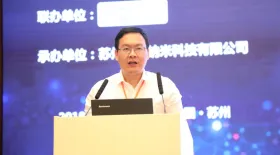
GCL wants a 1 GW perovskite cell production line in place by 2022
With the Chinese manufacturer claiming it has already hit 16% conversion efficiency on a large panel, a recent perovskite conference heard predictions the technology will make up the next generation of PV cells – provided it avoids the pitfalls experienced by thin-film devices.
Oct 3, 2019 // Technology, Manufacturing News, China, Asia, GCL, monocrystalline silicon, Fan Bin

Danish researchers bring some color to rooftop PV
Scientists led by the Technical University of Denmark have begun a project to design solar cells that can be produced in different colors with minimal effect on performance, making them suitable for building-integrated and other applications with aesthetic considerations.
Oct 1, 2019 // Technology, Rooftop PV, bipv, Germany, Europe, Fraunhofer ISE, rooftop PV, Denmark, Building-integrated photovoltaics, DTU, colored PV modules, Peter Poulsen, Danish Solar Energy Ltd
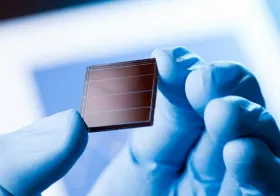
Solar Cell Efficiency Increased With Innovative Two-Dimensional Materials
Scientists from NUST MISIS (Russia) and University of Rome Tor Vergata found out that a microscopic quantity of two-dimensional titanium carbide called MXene significantly improves collection of electrical charges in a perovskite solar cell, increasing the final efficiency above 20%. The results of the research were published in Nature Materials on September 9, 2019.
Sep 30, 2019 // Technology, Europe, Asia, Russia, Aldo di Carlo, Danila Saranin, NUST MISIS, University of Rome Tor Vergata, MXene, L.A.S.E., Anna Pazniak
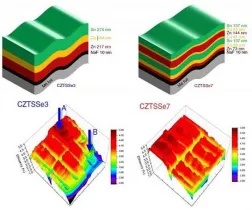
DGIST achieves the highest efficiency of flexible CZTSSe thin-film solar cell
DGIST announced on Tuesday, September 10 that Dr. Jin-Kyu Kang's research team in Division of Energy Technology achieved 11.4% for the photoelectric conversion1 efficiency of flexible CZTSSe thin-film solar cell, the highest in the world.
Sep 30, 2019 // Technology, thin-film solar cell, DGIST, Dr. Jin-Kyu Kang, Division of Energy Technology, flexible CZTSSe, Dr. Kee-Jeong Yang
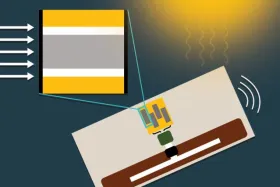
Solar-powered sensors show IoT potential
MIT engineers have combined RFID (radio-frequency identification) tags with thin-film perovskite solar cells to create energy-harvesting IoT sensors.
Sep 30, 2019 // Technology, UK, Europe, MIT, Sai Nithin Kantareddy, IoT sensors, Ian Mathews, RFID
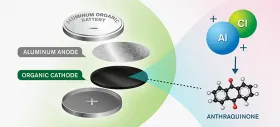
New aluminum batteries for renewables storage
The devices, developed by a European research team, are said to have twice the energy density of conventional aluminum devices. The scientists used a cathode made of anthraquinone, instead of one based on graphene, increasing energy density.
Sep 30, 2019 // Technology, Storage, storage, Sweden, Europe, Aluminum, Slovenia, Chlorine, Patrik Johansson

Is This The Next Big Thing In Solar?
Solar power installations out in the open are a common sight in many parts of the world, but how about household solar generators? A team of Swedish and Chinese scientists recently reported this might become part of our future after they successfully converted indoor light to electricity using organic photovoltaic cells.
Sep 27, 2019 // Technology, Sweden, China, Europe, Asia, Jianhui Hou, OPV cells, Jonas Bergqvist
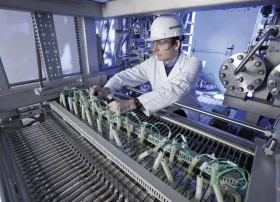
The slow, inexorable rise of green hydrogen
The International Renewable Energy Association says the integration of hydrogen into the energy transition will not happen overnight and electrolysis costs will not be halved until the 2040s. That hydrogen and related products could revolutionize the world energy landscape, however, is not in doubt.
Sep 27, 2019 // Technology, Manufacturing News, Storage, Solar to Fuel, USA, Japan, Canada, Germany, UK, China, Australia, Europe, Asia, IRENA, hydrogen, Oceania, North America, Austria, Solar to Fuel, Solar to Hydrogen, Producing Hydrogen, Hydrogen from renewable, Renewable fuels

The ballooning potential of curved solar cells
Researchers in the U.S. claim to have developed a manufacturing process based on the use of a latex balloon that could lead to the production of more efficient curved electronic devices, including hemispherical solar cells.
Sep 27, 2019 // Technology, USA, Texas, Colorado, North America, flexible PV, hemispherical solar cells
Tuning titanium in perovskite cells
Scientists from Russia’s NUST MISIS institute and the University of Rome have discovered a two dimensional titanium carbide can improve the performance of a halide perovskite solar cell when added in microscopic amounts across the various cell layers.
Sep 25, 2019 // Technology, Italy, Europe, Asia, NUST MISIS institute, Russia, University of Rome, titanium, Aldo di Carlo, Danila Saranin

New efficiency record for flexible CZTS
Scientists at South Korea’s Daegu Gyeongbuk Institute of Science and Technology have set a new efficiency record of 11.4% for a cell based on a copper zinc tin sulfide thin film applied to a flexible substrate.
Sep 24, 2019 // Technology, South Korea, Asia, Daegu Gyeongbuk Institute of Science and Technology, flexible CZTS, Kee-Jeong Yang, thin-film solar cell, Jin-Kyu Kang

Live fast, die young: MIT study proposes use of 10-year panels
Research has found even short-lived, 10 to 15-year solar panels could provide enough return for bankable projects. The researchers believe panel costs, coupled with an industry mindset now fixed on the final solar energy price rather than costs per kilowatt installed, may open opportunities for PV products currently snubbed because of a short lifecycle.
Sep 24, 2019 // Technology, USA, LCOE, MIT, North America, Bertrand Lempkowicz
Siemens and TEIS to open battery research center in China
The facility is set to open this year and will offer battery suppliers digitalization research and manufacturing consulting. Smaller manufacturers will be able to use shared laboratories for research.
Sep 24, 2019 // Technology, Manufacturing News, Storage, LG CHEM, Siemens, TEIS, Hong Li, CATL, Pei Huang

Solar, renewables and hydrogen for greener marine transport
A new report in Sweden suggests that renewables are an ideal source of power for marine vessels, based on a case study in which solar PV and proton-exchange membrane fuel cells, combined with a diesel generator, were used to reduce the greenhouse gas and particulate emissions of cruise ships by almost 10%
Sep 20, 2019 // Technology, Transport, Solar to Fuel, Sweden, Europe, Solar to Fuel, Solar to Hydrogen, Producing Hydrogen, Hydrogen from renewable, Renewable fuels
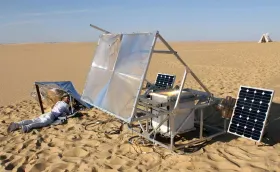
Markus Kayser: solar sinter 3D printer
London-based markus kayser, a masters candidate in design products at the royal college of art, converts the raw resources of sunlight and sand into glass products with his fully automated, solar-powered ‘solar sinter‘ 3D printer.
Sep 20, 2019 // BIPV, Technology, bipv, UK, Europe, London, 3D printer, solar sinter, Markus Kayser, Building-integrated photovoltaics

UK scientists find way to cut down indium
A research team led by the University of Liverpool has developed a transparent conductive oxide material to replace tin with molybdenum. The results demonstrated better performance and potentially lower material costs than the transparent conducting layers used in today’s commercial solar cells.
Sep 19, 2019 // Technology, UK, Europe, TCO, indium, Tim Veal, Liverpool University

A common language for bifacial PV
This week pv magazine was in Amsterdam for the sixth edition of the BifiPV workshop, where the discussion focused on the impressive achievements made by bifacial solar modules and the challenges the technology faces as it moves toward mainstream adoption.
Sep 19, 2019 // Technology, USA, Canadian Solar, Europe, Netherlands, Amsterdam, LONGi, PERC, North America, BifiPV, Jolywood, Jenya Meydbray, Joshua Stein, Netherlands Energy Center, U.K. National Physics Laboratory
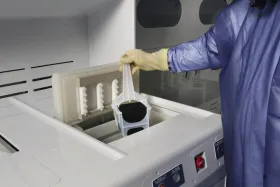
The blackest black for more efficient solar cells
MIT scientists claim to have created a material 10 times more black than anything witnessed to date. It is said to be able to absorb more than 99.96% of incoming light and reflect 10 times less light than other superblack materials. The invention may be interesting for the development of black silicon PV technology and carbon nanotube-based solar cells.
Sep 19, 2019 // Technology, USA, Canadian Solar, Massachusetts, solar cells, MIT, North America, Brian Wardle
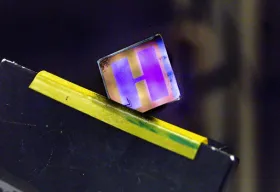
An organic solar cell for indoor light
A Swedish-Chinese research team has developed an organic cell said to be ideal for wide use in daily life to power internet of things-enabled devices. The cell could be used to power sensors that detect and measure moisture, particle concentrations, temperature and other parameters indoors.
Sep 17, 2019 // Technology, USA, Sweden, UK, China, Europe, Asia, North America, Linköping University, Academy of Sciences, Jianhui Hou, organic solar cell
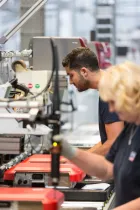
SMA: We can’t be credible if we’re not sustainable
Credibility comes not just from offering products that generate clean electricity, but also from the way in which those products are manufactured, says SMA Solar Technology CEO Jürgen Reinert. Here, transparency and sustainability are key. That’s why one of the world’s largest PV inverter producers has partnered with pv magazine’s UP sustainability initiative. In the following Q&A, Reinert lays out what SMA is doing to step UP its green game.
Sep 16, 2019 // Technology, Manufacturing News, Inverters, Opinions, Germany, Europe, SMA
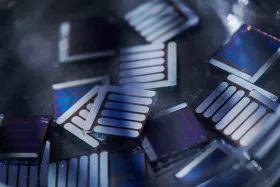
Silicon and perovskites should stick together, say Korean scientists
Researchers from the Ulsan Institute of Science and Technology have demonstrated a new method of fabricating perovskite-on-silicon tandem devices, using a transparent conductive adhesive to combine the two cells. The scientists have developed devices with demonstrated efficiencies of 19.4%, and propose strategies to bring that above 24% using existing technology.
Sep 13, 2019 // Technology, South Korea, Asia, silicon, Ulsan Institute of Science and Technology, Young Choi
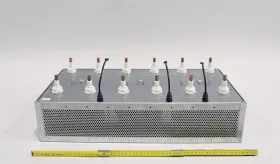
Swiss scientists identify causes of defects in silicon carbides for power electronics
Carbon clusters of a few nanometers in size could be responsible for the defects affecting the thermal stability of SiCs. The defective carbon accumulations arise during the oxidation of silicon carbide to silicon dioxide under high temperatures
Sep 13, 2019 // Technology, Inverters, Europe, Switzerland, carbon, Dipanwita Dutta

This solar panel- like device can generate electricity in the dark
Electrical engineer Aaswath Raman, at the University of California in LA, has come up with a device that can harness energy from a dark night sky to power an LED — hinting at a new frontier in renewable energy.
Sep 12, 2019 // Technology, California, USA, North America, Aaswath Raman, LED — hinting, Jeffrey Grossman

Discovery challenges accepted wisdom on organic PV
Researchers at the University of Warwick in the U.K. have made a discovery that could lead to new designs for organic PV devices. Their findings could open up a new range of materials for the electrode layer and bring low cost, flexible organic PV devices a step closer commercial reality, say the academics.
Sep 12, 2019 // Technology, UK, Europe, University of Warwick, flexible organic PV, Dinesha Dabera, Ross Hatton
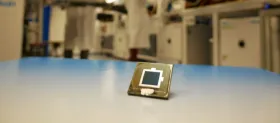
HZB hits 23.26% efficiency with CIGS-perovskite tandem cell
Scientists from the Helmholtz Zentrum Berlin research institute this morning presented a new world record efficiency for a tandem cell combining CIGS and perovskite technology at the EU PVSEC conference in Marseille. The development of an organic coating layer between the two semiconductors was key.
Sep 11, 2019 // Technology, Germany, Europe, eu pvsec, Helmholtz Zentrum Berlin, Amran Al-Ashouri
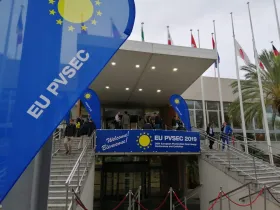
New methods for fault detection revealed at EU PVSEC
Quality control and problem detection and classification was brought into focus at the conference in Marseille. A packed house at a session focused on the latest fault detection techniques indicated the high level of interest in the field.
Sep 11, 2019 // Technology, Solar, France, Engie, pv modules, Europe, eu pvsec, Marseille, Jay Lin, PV Guider, UVFL, Stijn Scheerlinck, Chantelle Clohessy, Nelson Mandela University

Opportunities for integration: EU PVSEC 2019
Germany’s Fraunhofer ISE is presenting a wide range of solutions for integrated PV – alongside farming, vehicles, the built environment and more, at the 2019 EU PVSEC show happening this week in Marseille.
Sep 10, 2019 // Technology, Germany, floating PV, Europe, Fraunhofer ISE, eu pvsec, integrating PV, Andreas Bett

French start-up launches solar engine
The invention converts the energy produced by PV cells directly into mechanical motion without the need for batteries or power electronics. Its developers claim the robustness of the solar motor can drive water pumps and ventilation turbines for more than 20 years without the need for maintenance.
Sep 10, 2019 // Technology, France, Europe, PV cells, Saurea, Isabelle Gallet-Coty

Solar powered elevator unveiled in Spain
The ‘green’ version of the ION Green Solar lift – designed, developed and manufactured in Spain by Fain Ascensores – can cut carbon emissions 86%. That figure rises to 100% with the PV-powered ‘solar’ model.
Sep 10, 2019 // Technology, Spain, Europe, ION Green Solar, Fain Ascensores
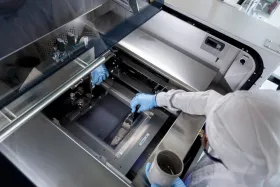
New metallization process cuts silver demand for modules by 30%
Fraunhofer ISE has worked with German technology companies to improve the metallization process in silicon solar cells. The result could drive down module costs quite a bit.
Sep 8, 2019 // Technology, Manufacturing News, solar cell, Fraunhofer ISE, PERC, metallisation, wickon hightech, koenen, murakami, Florian Clement
Top Software
Solar SoftwareSolar Design Software
Solar Monitoring Applications
Asset Management Software
Solar Proposal Software
Solar Project Management Software
Solar Lead Generation Software
Battery Monitoring Software
Storage & Hybrid System Design
Top Products
Best Solar Power BanksBest Portable Power Station
Best Portable Solar Power Generators
Solar Energy Storage Products
Solar Panels
Solar Inverters
Top Stocks
Solar StocksSolar Indices
Renewable Energy Stocks
Energy Storage Stocks
Energy Commodities
Hydrogen Fuel Cell Stocks
EV Stocks
Top ETFs
Solar Energy ETFsEnergy Storage ETFs
Renewable Energy ETFs
Lithium Battery ETFs
Energy ETFs