How Industrial Air Cleaning Improves Workplace Safety and Productivity
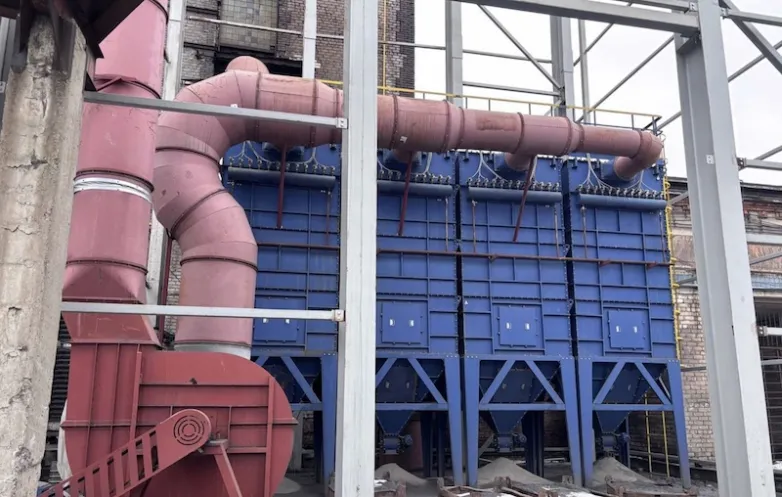
Walk through a fabrication shop at shift change and you can usually see the air. A haze over the welding bays, a film on the light fixtures, grit sitting on top of the electrical cabinets. Most plants file that under cosmetics. It isn't. Airborne particulate is a live ignition risk, a maintenance cost, and a quiet drag on throughput — usually in that order of severity, and almost always in reverse order of how much attention it gets. That gap is why industrial air cleaning has shifted from a janitorial line item to a production decision in a growing number of facilities.
The safety case is not theoretical
Fine dust suspended in the right concentration is fuel. NFPA 660, the consolidated combustible dust standard that took effect in December 2024, replaced six older documents and requires facilities handling combustible dust to complete a Dust Hazard Analysis and act on what it finds. Capture at the source is one of the controls that analysis tends to point toward, because dust that never reaches the rafters can't accumulate there.
Then there's exposure. OSHA's permissible exposure limit for respirable crystalline silica is 50 micrograms per cubic meter over an eight-hour shift — a threshold you cannot see, smell, or estimate by eye. Welding fume, wood dust, and metallic particulate carry their own limits. Properly specified industrial air cleaning systems are how most plants stay under them without putting every operator in a respirator for the whole shift.
Where clean air shows up on the P&L
Safety managers argue for capture. Plant managers approve it when they see the production side. Both are looking at the same equipment:
- Uptime. Particulate loads bearings, linear guideways, cooling fins, and drive electronics. Filtered air extends service intervals instead of shortening them.
- Scrap and rework. Contamination on a weld seam, a paint surface, or an adhesive bond is a defect nobody catches until final inspection.
- Sensor reliability. Laser optics, vision systems, and photo-eyes fault on dust long before anything mechanical does.
- Attendance. Respiratory irritation drives absenteeism in dusty departments, and the replacement operator is slower.
- Housekeeping hours. Every kilogram captured at the source is a kilogram nobody sweeps off a mezzanine at premium rates.
None of this requires an exotic business case. It requires counting the hours already being spent on consequences.
Matching the equipment to the process
There is no single industrial air cleaner machine that suits every operation, and specifying by price alone is how plants end up with a unit that blinds every four weeks. The main categories of industrial air cleaning equipment each solve a different problem:
- Baghouses — high dust loads, coarse and abrasive particulate, continuous processes. The workhorse where volume is the issue.
- Cartridge collectors — fine dry dust in a smaller footprint, with pleated media giving far more filtration area per cubic metre of housing.
- Portable industrial air cleaners — mobile weld stations, maintenance bays, changing cell layouts. When the dust source moves, the capture point has to move with it.
- Wet scrubbers — combustible metal dust, sticky or hygroscopic particulate, and gas streams where a dry filter is the wrong answer entirely.
Choosing an industrial air cleaner for dust starts with the material: particle size, moisture, abrasiveness, explosibility, and how much of it the process actually generates per hour.
Filters decide how well any of it performs
Housings last decades. Media does the work. Two identical collectors running different filters will not deliver the same industrial clean air, the same energy bill, or the same service interval.
Watch differential pressure rather than the calendar — rising resistance means the fan works harder for less airflow, and hoods start losing capture velocity before anyone notices at the machine. Match the media to the dust, not to the catalogue price. Confirm the collector's pulse-cleaning cycle is actually restoring pressure instead of driving fines deeper into the pleats.
Industrial clean air systems reward the plants that treat them as process equipment. Ignore them and they degrade quietly, one millibar at a time, until the shop floor looks hazy again at shift change.
Also read
- Commercial Solar Engineering: What PE-Sealed Plansets Must Cover for AHJ and Utility Review
- How Can You Plan Solar Powered Lighting for a Garden Shed Without Overbuying?
- How Can You Make a Solar Installation Proposal Easier for Homeowners to Understand?
- What Should You Ask About Electrical Connections Before Buying a Home Solar System?
- How Can You Plan Portable Solar Power for a Weekend Away?