The state plans to achieve half the amount by 2021-22 under its new draft solar policy. The package also suggests establishing a research hub, privately financed solar parks and encouraging commercial self-consumption of clean energy.
The tender produced lower bids than previous rounds but again allocated less generation capacity than planned. The Japanese government initially accepted bids for a combined 589.9 MW but ended up assigning only 195.8 MW of capacity. The final average price for procured solar power was $0.1222/kWh.
pv magazine publisher Eckhart Gouras spoke to Carolina Obando, regulatory coordinator at renewable energy association SER Colombia, to discuss the country’s first renewable energy auction. The delayed tender promises to boost a solar industry with a 4.3 GW pipeline.
Demand for systems with a generation capacity of up to 750 kW is driving the market. The 52 GW capacity cap for solar under the national FIT scheme is approaching. In September, feed-in tariffs and market premiums will fall a further 1.4%.
The levelized cost of energy produced by large scale PV projects ranges from €24/MWh in southern Spain to €42/MWh in Finland. New research states that is already cheaper than the average spot market electricity price and that the figure for big facilities in southern Spain may fall to €14 in 2030 and €9 in 2050.
Mathematicians at Canada’s University of Waterloo who turned their attention to solar power have developed an algorithm they say offers better control over PV plant output. The researchers estimate the algorithm could improve the output of a 100 MW power plant by almost a million kilowatt-hours per year.
The Uzbek government last week opened a rooftop solar program which provides 30% of the initial costs for buying and installing a PV system, up to around $320 per project. Tax incentives are also available.
Japanese developer Eurus Energy and Australian-headquartered wind developer Windlab have signed a deal with Kenyan authorities to develop an 80MW solar-plus-wind-plus-storage facility in central Kenya.
The SMSL reported second-quarter PV module shipments of 3,386MW, an increase of 11.5% from 3,037MW in the first quarter of 2019 and an increase of 21.2% from 2,794MW in the second quarter of 2018.
Solar winners of the first Brazilian A-6 auction ever to admit PV bids will be offered 20-year supply deals with the government, newly-released official documents show.
Fifth Third Bancorp and SunEnergy1 have opened the 120MWdc/80MWac Aulander Holloman Solar Facility in Hertford County, North Carolina. The facility, developed by SunEnergy1, is expected to generate clean power that is more than or equal to the total that Fifth Third uses in a year, which is enough to cut out 143,000 metric tons of greenhouse gases and power 25,000 households.
Indian energy giant Adani Green Energy Limited has inked a deal to purchase 205MW of contracted and operational solar assets from Essel Group for an enterprise price of INR1,300 crore (US$182 million).
The pressure building for the US to water down decades-old federal energy policy risks further tilting the scales in utilities’ favour, according to the Solar Energy Industries Association (SEIA).
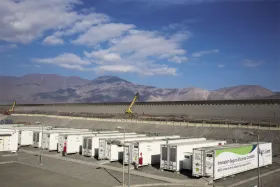
Chile is home to a massive 10.3 million tons of lithium reserves, most of which is found in the Atacama Desert in the northern part of the country. With some of the highest solar irradiation levels on Earth, this region also boasts the perfect conditions for generating solar power. Developments in the photovoltaic market, alongside implementation of more efficient energy storage systems, are positioning Chile as a regional leader in this field. So what does the future hold for battery energy storage systems (BESS) in Chile, and what obstacles lie in their way?
The nation’s Ministry of Energy and Water is seeking developers for a plant on an industrial park at the center of a previous 40 MW procurement exercise.
The Norwegian developer has opened plants in Ukraine and Egypt. Scatec Solar recently announced it managed to triple energy production in the last year.
The country is steadily expanding solar generation capacity as it aims for 5 GW by 2022, helped by an influx of foreign investment from China’s Belt & Road infrastructure program and World Bank capital.
The managing director of London-based energy infrastructure company Statera has told pv magazine a clean energy grid in the U.K. will require as much flexible gas plant capacity as battery storage.
New analysis predicts more than 150 GW of tracker capacity will be installed in the next five years – around a third of all ground mount projects up to 2024. Rapid growth in Europe, the Middle East and Africa; and the better cost structures possible from combining trackers and bifacial modules are singled out as key trends.
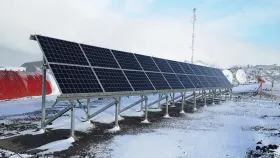
Inverter company ABB supplied equipment for a second PV plant at the Artigas base. Its collaboration with the Uruguayan Antarctic Institute helps facilitate climate change research.
The Chinese giant has argued its 166mm M6 product should be the new iteration used worldwide, even though larger products have been launched by rivals. Longi says the fact existing cell and module production lines can be adapted for the M6 means rising demand for solar worldwide can be swiftly satisfied.
With the benefits solar panels can bring to cropland being considered in Europe, PV and aquaculture are working in tandem in Vietnam. Shrimp and fish farming requires land and lots of water but solar panels are helping mitigate those demands.
The state government of Victoria has approved three projects in the Shepparton region which have a combined generation capacity of 175 MW. However, some residents are upset at the loss of prime agricultural land and now-redundant irrigation equipment which had been upgraded using government grants.
While the damage is largely done for cells, modules and inverters, increased tariffs on U.S. module components and 15% measures on lithium-ion batteries are not good news for either sector.
Two sponsors of one of Spain’s iconic subsidy-free plants have sealed a deal to deploy a smaller successor in the same area, planned again without support from government money.
The pressure building for the US to water down decades-old federal energy policy risks further tilting the scales in utilities’ favour, according to the Solar Energy Industries Association (SEIA).
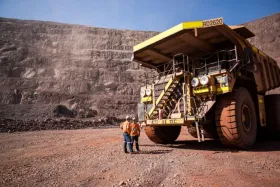
Australian miner Oz Minerals is turning to wind and solar power for operations at what is billed as the largest unexplored nickel-copper deposit in Australia, it order to curb the need for "high cost fossil fuels."
India’s Maharashtra state has launched a process to procure a major slice of grid-linked solar power, pushing for low prices in line with earlier tenders this year.