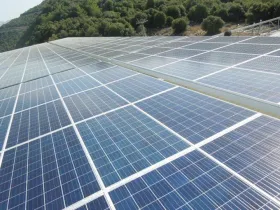
Quick Mount PV, an American manufacturer of solar roof mounting and racking systems, is launching the new QRail Tilt System. Quick Mount PV’s QRail Tilt System allows installation of the QRail Racking System on a variety of low slope commercial and residential roof types — the most common type of commercial roof type in the United States.
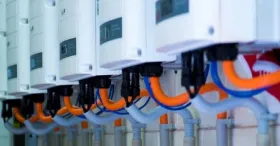
Fronius is bringing its new hybrid Primo GEN24 inverter to Salt Lake City for Solar Power International 2019. The new solution provides all the benefits of the SnapINverter and additional features, such as being incredibly compact, easily scalable, quick to commission via an app, and easily serviceable. This new all-in-one hybrid inverter combines the functions of multiple devices in one compact device: battery charger, battery inverter, controller and the intelligence to be the operating system of your home’s energy supply. However, the product won’t be available to the public until 2020.
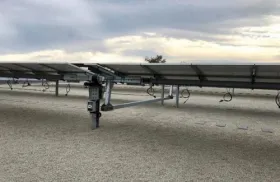
PV Hardware has introduced its new dual-row solar tracker, Axone Duo, which combines features of its Axone and Monoline mounting products. This confluence results in a tracker with a better balance of controllers and motors between the two types of photovoltaic trackers, establishing a single row of up to 128 modules for each solar tracker.
SMA has unveiled a new and improved version of its Sunny Boy-US line of inverters, part of the company’s Power+ residential solar offering. The new Sunny Boy will offer the latest technology and include enhanced safety features to comply with current industry regulations.
Daqo New Energy has agreed to supply 112,800 MT of polysilicon to Longi Green Energy Technology. The two parties did not disclose the financial terms of the three-year deal.
Back-contact module manufacturing equipment supplier Eurotron said its previous MWT (Metal Wrap Through) order from China-based PV module manufacturer, Sunport Power had been installed, qualified and begun volume production.
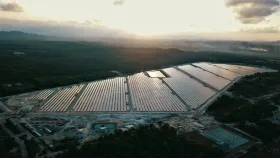
The Swiss battery maker Leclanché will build a 35.6 MW / 44.2 MWh solar-plus-storage power plant, which will provide with clean power state-owned St.Kitts electric utility Skelec over a 20-year period. The new facility will be able to cover around a fourth of the archipelago’s total electricity demand.
Chinese thin film producer Hanergy has set a new record of 24.85% module efficiency for silicon heterojunction technology. The record was achieved at the company’s research & development center in Chengdu, China, and has been confirmed by the Institute for Solar Energy Research in Hamelin, Germany.
Energy analysts from the United Kingdom have found that many of the world’s largest car manufacturers that are launching EVs, or looking to launch EVs, are engaged in an “unprecedented” level of collaboration in order to share the costs and risks inherent in EV development. Cornwall Insight found that the collaboration could see a major boom in supply from the early 2020s.
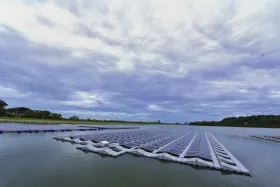
Pestech, a Malaysia-based electrical power technology company, has entered into a partnership with Chinese inverter maker Sungrow to jointly develop new floating solar solutions.
Perovskite solar cell developer, Oxford PV is to become a merchant heterojunction with perovskite top cell manufacturer with orders placed with Meyer Burger that will provide an initial 250MW of cell capacity that will enter production by the end of 2020.
The MNRE has invited proposals for high-efficiency perovskite solar cells, solar panel recycling, hybrid inverters and new applications that combine solar and storage, among others.
The researchers have developed a new manufacturing process by using an ultra-thin absorbing layer made of 205-nanometer-thick gallium arsenide (GaAs) and a nanostructured back mirror.
The industrial development of the bifacial solar module over the last few years represents one of the most significant events in the world of photovoltaic systems. Today, this technology constitutes one of the most promising trends in the global solar market. During Intersolar South America, Convert will present its bi-facial tracker, an innovative solution to gain more solar energy from the panels.
Major PV inverter manufacturer, SolarEdge Technologies has been forced to accelerate expedited shipping via air freight, despite a 25% increase in manufacturing capacity as the company continues to set quarter sales records.
Six months after settling claims in the Chapter 11 bankruptcy case of its U.S. distribution subsidiary, the Chinese PV maker says it has signed more than 500 MW of U.S. module supply contracts.
The Israeli inverter manufacturer saw its net profit decline 4% year-on-year to $33.1 million in the second quarter, despite shipping 1.3 GW and seeing a 43% increase in turnover. Gross margins were affected by the increase in U.S. tariffs on China made products.
First Solar reported a bumper quarter during Q2 by most metrics. The company’s net sales of $585 million were nearly double the previous year, on shipments 1.4 GW of product – the most in its history. Additionally, First Solar booked more than 2.1 GW of orders in July alone, a very positive start to Q3.
Major China-based polysilicon producer, Xinte Energy has signalled a significant decline in expected profits for the first half of 2019, due to polysilicon ASPs declining 43% from the prior year period.
New textile-based solar cells developed by Fraunhofer researchers, semitrailers could soon be producing the electricity needed to power cooling systems or other onboard equipment. In short, textile-based solar cells could soon be adding a whole new dimension to photovoltaics, complementing the use of conventional silicon-based solar cells.
Researchers at Siberian Federal University, together with colleagues from the Royal Institute of Technology (Stockholm, Sweden), discovered new properties of material based on palladium, which can increase the performance of solar cells.
PV technology has made significant progress in a short amount of time, leaving solar enthusiasts chuffed. Opponents, on the other hand, brand it as unworkable boondoggle, surviving on the crutches of subsidies and only salving the conscience of the green-minded companies cosseted by political forces. The naysayers do have partial truth in their argument - governments the world over have been supporting the growth of this child with the moniker “solar” with public finances. So, this is the partial truth and the enthusiasts have just enough firepower to say that all energy is, after all, subsidised one way or another – in terms of uncompensated costs of air pollution, congestion and global warming and the consequential irreversible damage these fossil fuels have done to the planet. Perhaps more important and statistically relevant is a report published by the IMF in 2015, which had pegged subsidies to fossil fuels at US$5.3 trillion.
The state enterprise Solar Energy Corporation of India (SECI) issued at the beginning of the month a tender for 1,200MW of renewable power that can be used to alleviate peak demand issued on the grid, in effect mandating the use of energy storage systems (ESS).
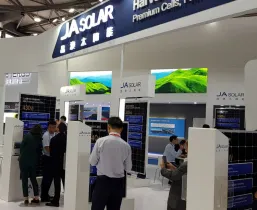
‘Solar Module Super League’ (SMSL) member JA Solar has supplied its bifacial double-glass PERC modules to a 2.5MW rooftop project at a Goodyear tire manufacturing facility in Shah Alam, Malaysia, the country's largest such project.
Ongoing US-China trade tensions will not ruin solar fortunes on either side as players adapt by redrawing the lines of global supply flows, Fitch Solutions has predicted.
Leading microinverter supplier, Enphase Energy shipped over 1.2 million units in the second quarter of 2019, with its latest IQ 7 model accounting for around 98% of shipment total.
As clean energy stakeholders urge Arizona regulators to adopt stronger renewable energy standards, Arizona Public Service Co. (APS) has announced plans to add new solar and wind resources, helping expand the company’s renewable energy portfolio to about 2.5 GW by 2021, which would be enough to power more than half a million Arizona homes.