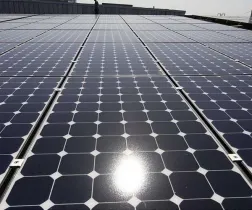
Solar to Fuel. Hydrogen production from solar energy

Inverters ·

DEWA and Huawei hold strategic summit

The Emirati utility and the Chinese communications giant and inverter maker have discussed how they can work together to roll out solar and storage in Dubai as well as collaborating on cyber security and the use of AI to analyze cyber threats.

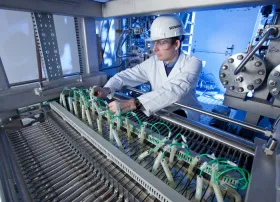
Plants ·

DEWA to use solar to power new pumped-storage project

The Dubai Water and Electricity Authority will use energy from the gigawatt-scale Mohammed Bin Rashid Al Maktoum Solar Park to provide a new hydropower plant with pumped storage capacity. The state-owned utility has announced a number of innovations for the project in recent months, including plans for hydrogen and large-scale storage capacity.

Technology ·

A close look at nature could lead to cheaper hydrogen

Scientists at the Australia National University have observed a key stage in the process of photosynthesis which could be copied to greatly increase the efficiency of sunlight-powered water splitting processes used to produce hydrogen.

Opinions ·

The weekend read: Perovskites step out of the labs

Michael van der Gugten, Sales and Marketing Executive at Smit Thermal Solutions, is convinced that perovskite solar cells have reached maturity, and that they are ready to make the step from the lab to production. He is leading the organization of a conference on this topic and expects that the perovskite community, production equipment suppliers and crystalline silicon cell manufacturers will discuss the implementation of perovskite-silicon tandem cells or the production of standalone perovskite modules.

Storage ·

Neoen gets green light for PV-wind-battery hub in South Australia

French renewables developer Neoen has won development approval from the South Australian government for a major renewable energy project, with 125 MW of wind, 150 MW of solar PV and 130 MW/400 MWh of lithium-ion battery storage. The project could also include up to 50 MW of on-site hydrogen production capability.

Storage ·

Materials scientists uncover source of degradation in sodium batteries

Batteries power our lives: we rely on them to keep our cell phones and laptops buzzing and our hybrid and electric cars on the road. But ever-increasing adoption of the most commonly used lithium-ion batteries may actually lead to increased cost and potential shortages of lithium - which is why sodium-ion batteries are being researched intensely as a possible replacement. They perform well, and sodium, an alkali metal closely related to lithium, is cheap and abundant.