UNSW Catalyst Lifts Hydrogen Output 10-Fold From Biodiesel Glycerol
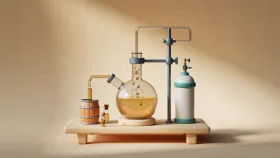
UNSW-led team lifts hydrogen output from biodiesel glycerol about 10-fold with a nickel-cobalt photocatalyst that also makes chemicals worth up to US$150/kg.
UNSW research links “no-clean” solder flux residues to contact corrosion and efficiency loss in TOPCon cells under damp-heat, with guidance for manufacturers.
International team develops PDAI₂ “cosmic veil” that lets perovskite solar cells survive decades of space radiation, paving the way for lighter, cheaper satellite power.
The University of New South Wales Sydney have actually been awarded $30 million under ARENA R&D Program to sustain R&D and commercialisation activities to significantly reduce the cost of solar. The scientists are going to receive $30 million for 9 projects across the cells and also modules stream, and the Balance of System, Operations as well as Maintenance stream.
Perovskite solar cells are at risk to serious reverse bias obstacles beyond those of traditional silicon cells, which might stand for more obstacles to the modern technology's commercialisation, according to new research.
‘Solar Module Super League’ (SMSL) member, JA Solar has licensed a number of patents from Shin-Etsu Chemical on doping Ga in silicon crystals and using the Ga-doped p-type crystalline silicon wafers for making solar cells to mitigate the impact of Light Induced Degradation (LID).