UNSW Catalyst Lifts Hydrogen Output 10-Fold From Biodiesel Glycerol
- A UNSW-led team raised a light-driven catalyst's hydrogen output from biodiesel glycerol about 10-fold, ANSTO said on Oct. 16, 2026.
- Crude glycerol sells for as little as US$0.11/kg; co-products glyceraldehyde and dihydroxyacetone fetch about US$75 and US$150/kg.
- The work is lab-scale; ANSTO says the approach could extend to other biomass feedstocks but gives no pilot or timeline.
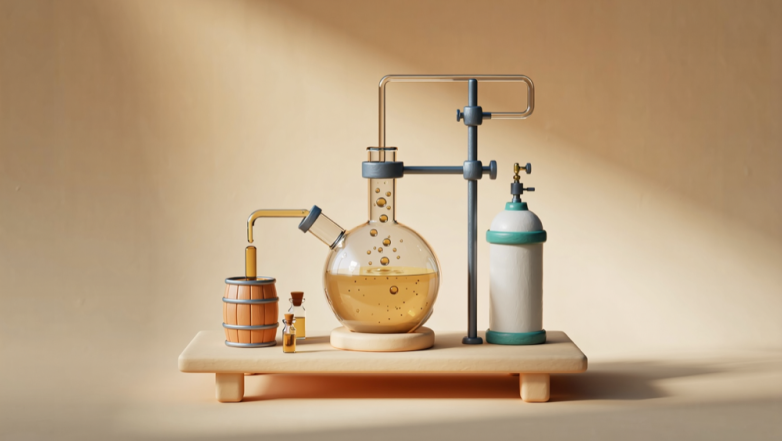
A UNSW Sydney-led team got a light-driven catalyst to make hydrogen from biodiesel glycerol about 10 times faster, ANSTO said on Oct. 16, 2026.
The process, photoreforming, is a solar fuels route: light makes hydrogen and turns an organic feedstock into useful chemicals at once. The catalyst is zinc indium sulfide with traces of nickel and cobalt. The tenfold gain was measured under visible light, against the same material without the two metals. The study, co-written by scientists at the Australian Nuclear Science and Technology Organisation (ANSTO), appeared in Applied Catalysis B: Environment and Energy.
The by-products carry the economics. Biodiesel plants yield about 100 kilograms of glycerol per tonne of fuel, ANSTO said. Crude glycerol can sell for as little as US$0.11 per kilogram. Two of the products, glyceraldehyde and dihydroxyacetone, are used by chemical and pharmaceutical makers.
The metals also changed which chemicals form. On bare zinc indium sulfide, the reaction went mostly to hydroxyacetone and released little hydrogen, the paper's abstract says.
The result in numbers
- About 10 times the hydrogen evolution rate of the unmodified catalyst under visible light.
- 94.9% selectivity to hydroxyacetone on bare zinc indium sulfide.
- 3.9% to 34.8%: the rise in dehydrogenation selectivity, the route to glyceraldehyde and dihydroxyacetone, after nickel and cobalt were added.
- US$75 and US$150 per kilogram for glyceraldehyde and dihydroxyacetone, against US$0.11 for crude glycerol.
- About 1,360 times the crude glycerol price for dihydroxyacetone, and about 680 times for glyceraldehyde (list.solar calculation).
- US$1 per kilogram by 2031: the US Department of Energy's Hydrogen Shot target for clean hydrogen, an 80% cost cut.
"Rather than using an expensive feedstock simply to produce hydrogen, photoreforming gives us the opportunity to do two useful things at once," UNSW's Denny Gunawan said in the statement.
X-ray measurements at ANSTO's Australian Synchrotron showed the nickel and cobalt sites changing chemical state within a second of the light coming on. The changes reversed in the dark.
This is laboratory-stage solar technology research. ANSTO says the hydrogen rate under simulated sunlight is competitive with other reported glycerol photoreforming systems. Neither the release nor the abstract gives a reactor size, run time or solar-to-hydrogen efficiency.
ANSTO said the approach could be extended to other biomass-derived feedstocks. It named no pilot plant, industrial partner or timeline.
Also read
- CHN Energy Switches On 120-MWh Battery at Rudong Solar-Hydrogen Hub
- Sparc Hydrogen Owners Commit A$1.3 Million to Solar Water Splitting
- SunPower Origin Launches in Europe With 505 W, 40-Year Warranty
- JinkoSolar Reports 28% Peak Efficiency for Back-Contact TAC Cell
- Saft Starts Solid-State Battery Cell Production in Bordeaux