CIGS Solar Cell Breaks Efficiency Record, Challenges Silicon
Breakthrough in CIGS solar cell efficiency sets new world record, paving the way for competitive renewable energy options in the market.
Breakthrough in CIGS solar cell efficiency sets new world record, paving the way for competitive renewable energy options in the market.
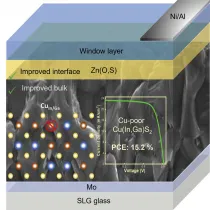
Uppsala University breaks world record with 23.64% efficiency in CIGS solar cells, aiming for over 30% efficiency with reasonable production costs.
A solar cell established by physicists from the University of Luxembourg and Uppsala University has actually lately been licensed with a performance of 14%, which resembles the globe record of 15.5%. These brand-new searchings for have actually been recently accepted for publication in the worldwide journal of power study Joule.
In a brand-new write-up published in the scientific journal Communications Chemistry, a research group at Uppsala University program, utilizing computer system simulations, that ions do not constantly behave as anticipated. In their study on molten salts, they had the ability to see that, sometimes, the ions in the salt combination they were researching influence each other so much that they might even relocate the "incorrect" instructions-- that is, in the direction of an electrode with the exact same charge.
A brand-new mathematical model for anticipating variations in solar irradiance has actually been established at Uppsala University. It might assist to promote extra effective use electrical energy from solar energy. In examinations of numerous data models, the model confirmed with the ability of making highly reputable forecasts, and also emerged as the very best for this purpose in some areas. The results have actually now been published in two write-ups in the journal Solar Energy.
A paper from Sweden has attempted to discover why the conversion performance of solar cells based upon cheap, abundant iron pyrites continues to suffer below 3% despite the evident optoelectronic guarantee of the material.
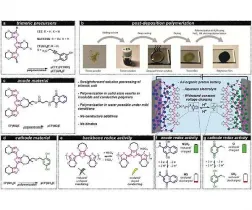
A team of scientists at Sweden's Uppsala College have actually created a proton battery based upon abundant natural products. They claim the battery can be charged "immediately" while running at reduced temperatures, and can be cycled more than 500 times without considerable capacity loss.
Lasting power storage space remains in excellent need. Scientists at Uppsala University have actually as a result established an all-organic proton battery that can be butted in an issue of secs. The battery can be billed as well as released over 500 times with no considerable loss of ability. Their job has actually been released in the clinical journal Angewandte Chemie.