Sungrow files for Hong Kong IPO to accelerate global expansion
Chinese inverter and battery giant Sungrow filed for a Hong Kong listing, aiming to fund international growth, R&D and new manufacturing capacity.
Chinese inverter and battery giant Sungrow filed for a Hong Kong listing, aiming to fund international growth, R&D and new manufacturing capacity.
Tongwei Solar, EGing PV and LONGi have been shortlisted as candidates for the 5th module purchase round of Hong Kong energy business China Resources Power.
Lithium-ion battery pack prices, which were above $1,200 per kilowatt-hour in 2010, have fallen 89% in genuine terms to $132/kWh in 2021 [1] This is a 6% decline from $140/kWh in 2020.
Solar photovoltaic (PV) designer and also financier in carbon nonpartisanship services, NEFIN Group, has actually introduced the start of its planetary system installation at Hong Kong's Cyberport Business Centre, a key fintech hub in the city state. Nefin was designated by Hong Kong Cyberport (Cyberport).
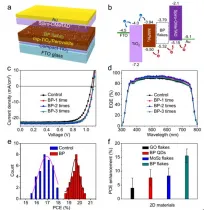
Grain limits (GBs) in PSCs have actually been found to be harmful to the photovoltaic or pv efficiency of the tools. Countless documents reported that the problems in perovskite GBs should be passivated by ideal products, such as quaternary ammonium halide, fullerene by-products and also CH3NH3I, to alleviate service provider recombination and also as a result boost the gadget performance.
While the power conversion efficiency of perovskite solar cells (PVSCs) - a future of solar cells - has currently greatly enhanced in the past decade, the problems of instability and also potential ecological influence are yet to be gotten rid of. Lately, scientists from City University of Hong Kong (CityU) have developed a novel technique which can concurrently tackle the leakage of lead from PVSCs as well as the stability problem without compromising efficiency, paving the way for real-life application of perovskite photovoltaic or pv technology.
The poly producer discussed the impact of Covid-19 on its solar as well as wind project development company as well as fleshed out details of international polysilicon excess during a pandemic-hit initial half of the year.
All the indicators are directing progressively in the right instructions as brand-new owner Beijing Energy quotes to place a sizzling year behind the solar developer as well as the firm has revealed its intent to enter the European solar market and explore hydrogen and also power storage.
There was rare great news for the continuing to be independent investors of the state-controlled solar programmer, as the past due 2019 numbers were lastly published, with new auditor PwC shaving virtually $15 million off a near-$540 million loss.
The decision to eliminate its cell production capability has actually motivated significant impairment losses which, along with a Covid-19-related depression sought after, will certainly erase the gains used by new solar ingot, wafer and module assembly line.
Whoever released the numbers for a revenue warning issued by the poly manufacturer on Friday could have scared financiers also additionally with a stray decimal point.
Li Hong, previous chief finance policeman of the now-state-owned Chinese solar programmer has supposedly told Panda Green the details he offered KPMG detectives concerning $146 countless missing job legal rights settlements 'might not be precise.' He has actually rejected to be spoken with once more by the investigators.
The auditor mentioned the danger presented to the financial debt saddled business as the factor for resigning its function, reliable from today.
The spectacular searchings for of an examination by the auditor right into RMB1,022 million paid by Panda Green for the right to develop solar projects which never ever materialized consisted of verification by the previous chief financing policeman documents were created after the reality.
The accounting professional is expected to reveal the results of its investigation right into RMB1,022 numerous missing out on solar job growth rights settlements early next month.
Xinyi Solar today stated it is preparing for a bumper make money from the very first half of the year-- an announcement most likely to bring wry smiles at the board of parent business Xinyi Glass, which not long after introduced fairly the opposite prospects after liquidating shares in the PV subsidiary in 2019.
Today's announcement indicates either the board or the listing board of the Hong Kong exchange where the business is noted put a spanner in the jobs.
The state-owned building organisation which conserved Singyes Solar with a US$ 200 million bail-out is currently preparing to purchase a 75% risk in debt-saddled peer China Solar, whose shares have actually been unpublished considering that August 2013.
Beijing Energy, which is amongst a collection of public entities holding risks in the developer, is suggesting among its subsidiaries provide $211 countless renting choices to debt-saddled Panda Green.
State-owned solar firm Panda Green will certainly miss out on Friday's due date for releasing its audited numbers for in 2015 as well as brand-new proprietors Beijing Energy have actually revealed the development of a board to examine the repayment of $144 million in down payments to protect advancement legal rights for projects which never ever occurred.
SFCE has actually disclosed, in a string of stock exchange updates this year, the coronavirus pandemic is complicating its initiatives to sell PV projects quickly sufficient to repay lenders.
Watson Farley & Williams (WFW) advised loan provider Asian Development Bank (ADB), in funding the US$ 37 million setup of floating solar photovoltaic power generation panels.
Xinyi Solar reported document earnings previously this month, not remarkably motivating favorable broach prolonging its strategies to increase manufacturing capability this year as well as following. Nonetheless, with PV need in Europe trick to its returns, the firm has actually approved the coronavirus epidemic might have an influence this year.
Hongkongese scientists have created all organic perovskite solar cells claimed to reach 16.1 percent efficiency. The technology is based on Lewis-base small molecules passivating the layer of inorganic perovskite.
The Chaoyang facility is the largest of the first batch of central-subsidy-free solar projects approved in the world’s biggest solar marketplace. China Power has awarded three construction contracts to entities owned by its SPIC parent company.
Shareholders in the heavily-indebted solar project EPC and building-integrated PV manufacturer will vote on the last day of the month on the proposed takeover of the business by a Chinese state-backed entity. No news has emerged of a winding-up order due to be heard yesterday.
The Hong Kong-based solar manufacturer appears to have posted impressive revenue gains this year, based on preliminary, unaudited operating results for the first three quarters of 2019. But as the troubled company continues to pin its hopes on a much-anticipated turnaround in Chinese solar demand, its long-term outlook remains uncertain, mere weeks before the scheduled de-listing of its shares in Taiwan.
GES to build 97MW solar plant for Engie in Chile. Sterling & Wilson bags 200MW EPC order in Australia. BHEL tenders for Floating solar equipment at Indian coal plant. ACC and Hyperion for JV in Hong Kong.
The PV project developer and BIPV manufacturer has seen a glowing set of first-half figures published last year become a nightmare of lost income, debt defaults and frozen bank deposits. All eyes now turn to the business’ high court date on Wednesday.
The ever worsening balance sheet of the Hong Kong-based solar manufacturer has triggered the removal of shares listed in Taiwan, which is likely to leave the company with a $2.84 million bill for buying them back.
The solar manufacturer today moved to reassure investors ahead of what promises to be another rocky set of first-half figures in two days’ time. The Hong Kong company says it wants to add another 3.6 GW of mono ingot and wafer capacity by early 2021.
The opening pages of the first-half update published on the Hong Kong exchange made all the right noises with the company set to be acquired by a Chinese state-owned entity. But the balance sheet makes for shocking reading.
The heavily-indebted Chinese BIPV manufacturer has warned the petition issued by the German lender to recover a disputed $6.27 million debt could threaten the survival of the business as it would halt a planned bail-out by Beijing.
The High Court has approved plans for the Chinese state-owned power company to reassume control of its Hong Kong-listed solar project development business.
Holders of almost two-thirds of the miner’s Hong Kong listed stock voted down a proposal to issue new non-Chinese shares that would dilute their investment by around a quarter. The board had proposed the move to raise funds for further lithium extraction overseas.
The German lender has issued a winding up petition over a $6.27 million debt and could scupper the manufacturer’s plans to restructure its defaulted payments and be taken over by a Chinese state-backed entity.
The business will come under the control of its Chinese state-owned parent power company after a shareholder vote agreed the move earlier this month.