
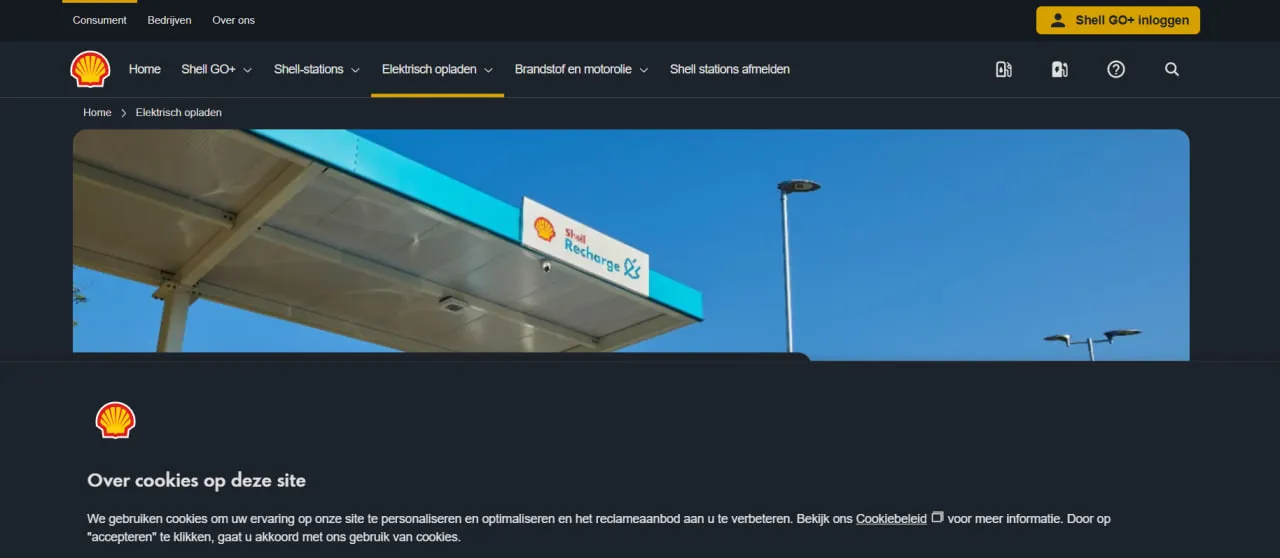
What Is Shell Recharge?
Shell Recharge is Shell’s EV charging business and sits in the EV Charging Network Management category. It operates public charge points at Shell forecourts, at destination sites such as Waitrose, Aldi and Roadchef, and on-street, and it supplies depot charging hardware and software for fleets. In the UK and five other European markets, home and workplace charge points are now installed and operated by Shell’s partner 50five.
For fleets, Shell connects its depot chargers to cloud software that tracks usage, keeps demand within the site’s grid connection and handles billing. For drivers, the Shell App and card open over 70,000 public charge points in the UK and more than a million across Europe. Shell runs nearly 40 charging hubs in the UK; the flagship in Fulham, London, a converted fuel station, has ten 175 kW chargers partly powered by solar panels on the canopy.
Shell Recharge serves two groups. Drivers get one app or charge card for Shell’s own hubs and for chargers run by 60+ partner operators, which matters most on long trips. Fleet operators can have Shell design, supply and run depot charging, from van depots to heavy-duty truck sites.
It is not the cheap option: pay-as-you-go prices at Shell-branded sites are higher than some competitors, and the bigger discounts need a paid subscription. It is also the wrong place to look for a home or workplace charger, which Shell’s partner 50five now handles, or for software to run chargers you already own, since depot projects are built on Shell-supplied hardware.
Pros and Cons
Pros
- One app or card covers Shell’s hubs and 60+ partner networks, so long trips need no separate accounts.
- Paying in the app saves 10p per kWh over contactless at participating Shell Recharge sites and adds live session updates and a receipt.
- Branded UK sites are 100% matched with REGO-certified renewable electricity, useful for fleet sustainability reports.
- App, card and, at selected chargers, contactless all work, so a flat phone or poor signal does not stop a charge.
- Fleets get depot charging from one supplier (design, Shell DC chargers, cloud software and energy management) instead of coordinating several vendors.
- The £9.99 subscription (30% off app prices) pays for itself after about 42 to 52 kWh of DC charging a month.
Cons
- Pay-as-you-go is expensive: contactless DC at Shell Recharge sites costs up to £0.89 per kWh, more than some rivals charge.
- Reliability varies across the partner network, and some user reviews report broken chargers at third-party sites.
- Each app or contactless session holds £55 on the payment card (£40 for on-street QR payments), and banks can take days to release it; users also report app errors at this step.
- Home and workplace charge points in the UK now come from partner 50five, so businesses deal with two companies and two apps: 50five for those chargers, Shell for the card and public charging.
- Live support is weekdays only: the Shell Virtual Assistant reaches a human agent Monday to Friday, 8:00 AM to 4:45 PM, excluding public holidays.
Features
Charge Point Management
Cloud software for fleet operators to monitor and run the Shell-supplied chargers at their depots.
Smart Charging and Load Management
Shares the available power across multiple chargers so total demand stays within the site’s grid-connection capacity.
Fleet Depot Solutions
Depot charging design and installation for commercial fleets, either as private depots or as depots opened to selected third parties; heavy-duty truck depots are delivered through Shell group company SBRS.
Real-Time Network Map
Enables drivers to find the nearest compatible charger, filter by speed or connector type, and check real-time availability before arrival.
Unified Payment Processing
One app or charge card pays for sessions on Shell’s own chargers and on partner networks, so drivers do not need a separate account with each operator.
Automated Reimbursement
Calculates and pays back the electricity employees use to charge company cars at home; this now runs through Shell’s partner 50five, and drivers use the Shell Card to start sessions and claim the costs.
Renewable Energy Matching
In the UK, all electricity Shell buys for its Shell Recharge branded sites is matched with 100% renewable units backed by REGO certificates; chargers on partner networks are not covered.
Shell Recharge Pricing
Public charging is billed per kWh with no subscription required. Prices vary by site, so check the Shell App or the charger’s payment terminal before you start.
Free App and Card: There is no initial fee to download the Shell app or order a basic Shell Recharge card.
Pay-As-You-Go: At UK Shell Recharge sites, rapid and ultra-rapid (DC) charging costs £0.64 to £0.79 per kWh in the Shell App and £0.74 to £0.89 by contactless, depending on location; partner networks set their own prices. Night Saver rates from £0.60 per kWh apply between 7pm and 7am at participating sites.
Shell Recharge Subscription: £9.99 per month in the UK for 30% off Shell App prices on up to 1,000 kWh a month. Combined with Night Saver hours, charging starts from £0.42 per kWh at participating sites, and on-street charging from £0.38.
Shell GO+ Rewards: Members earn points when charging at Shell Recharge branded points. The 10p per kWh saving over contactless (the gap between the app and contactless rates above) applies when the charge is started in the Shell App; Shell Recharge AC points at Aldi, “Shell Recharge in Partnership with Osprey” sites and on-street chargers are excluded.
Connection and Transaction Fees: A flat 35p transaction fee applies to sessions on third-party networks, and some roaming partners such as Source London may add blocking fees; Shell Recharge branded points charge no blocking or transaction fees.
Custom Enterprise Pricing: For businesses requiring depot installation and management software, Shell provides custom quotes based on site audit results.
Integrations
Shell Recharge links drivers to third-party charging networks and links fleets to their own systems through the Shell Card and Shell APIs.
- Network Integrations: Connects with over 60 different charging network operators, allowing users to access tens of thousands of third-party chargers through a single interface.
- Hardware Compatibility: Depot projects use DC chargers supplied by Shell, managed through Shell’s cloud-based charging software and depot energy management tools.
- Fleet Management Tools: Charging data can feed business accounting and fleet tracking software for invoicing and expense reporting. Full VAT invoices require a hybrid Shell Card from Shell Fleet Solutions; a Shell Recharge card used through the Shell App only produces a simplified VAT invoice.
- API Access: Provides APIs for enterprise clients to build custom applications or integrate charging data into existing business workflows.
How to Set Up Shell Recharge
- Download the Shell app from the App Store or Google Play and create a user account.
- Order a free Shell Recharge card through the app to use as a physical backup for initiating sessions.
- Add a valid payment method, such as a credit or debit card, to your digital profile.
- For businesses, contact a Shell specialist to perform a site audit and determine infrastructure requirements.
- Install and commission the charging hardware and connect it to the cloud management platform.
- Configure user access and billing rules for employees or public customers.
How to Use Shell Recharge
A driver finds a nearby charger with the right connector on the app’s map, plugs in, and starts the session by tapping the Shell Recharge card on the reader or selecting “Start Charge” in the app.
During the session, the app shows the charging speed and the energy delivered so far. The driver stops the session in the app or by tapping the card again; payment goes through automatically on the saved card, and the receipt appears in the transaction history. Contactless payment also works at selected chargers, but without live session updates or a receipt. Fleet managers use a dashboard that shows energy use across the depot and produces reports for energy budgeting.
What You Can Manage with Shell Recharge
- Charging Network Infrastructure: Oversee the deployment and operational status of multiple charging points across different locations.
- Driver Access: Manage who can use specific charging points and set different pricing tiers for guests versus employees.
- Transaction Records: Track all charging costs and energy usage in a centralized invoicing system.
- Sustainability Reports: Monitor the CO2 footprint and the volume of renewable energy used across a fleet.
FAQs
What does Shell Recharge do?
Shell Recharge runs public EV chargers at Shell forecourts, destination sites and on-street locations, and its Shell App and charge card also work on partner networks. For fleets, it supplies depot charging: Shell DC chargers, cloud charging software and energy management. Home and workplace chargers are now installed and supported by Shell’s partner 50five.
Who is Shell Recharge best for?
It suits drivers who cover long distances in the UK and want one app or card across Shell’s hubs and partner networks, and fleet operators who want Shell to build and run depot charging, including heavy-duty sites. It is a weaker fit for drivers chasing the lowest public rates and for businesses that need home or workplace chargers, which now come from 50five.
Is Shell Recharge free?
The app and the basic charge card are free, and pay-as-you-go needs no subscription: you pay only for the energy you use. Starting a charge in the app instead of paying contactless already saves 10p per kWh at participating Shell Recharge sites; the Shell Recharge Subscription (£9.99 per month) takes a further 30% off app prices.
What are the main limitations of Shell Recharge?
Per-kWh prices are above average at some locations, reliability varies across the third-party partner network, and each app or contactless session places a £55 pre-authorization hold on your card that can take days to release. Some users also report app glitches during payment authorization at specific chargers.
What are the best alternatives to Shell Recharge?
Common alternatives for EV charging network management and roaming include Tesla Superchargers, BP Pulse, Ionity, and independent software platforms like ChargePoint. For UK-specific roaming, many users also consider services like Octopus Electroverse.


